Moses Itauma's Heavyweight Lesson: Experience vs. Talent
Moses Itauma walked into the ring as the future of the heavyweight division. He left it with an oxygen mask, a first professional defeat and a harsh lesson in what 12 rounds at world level really feel like.
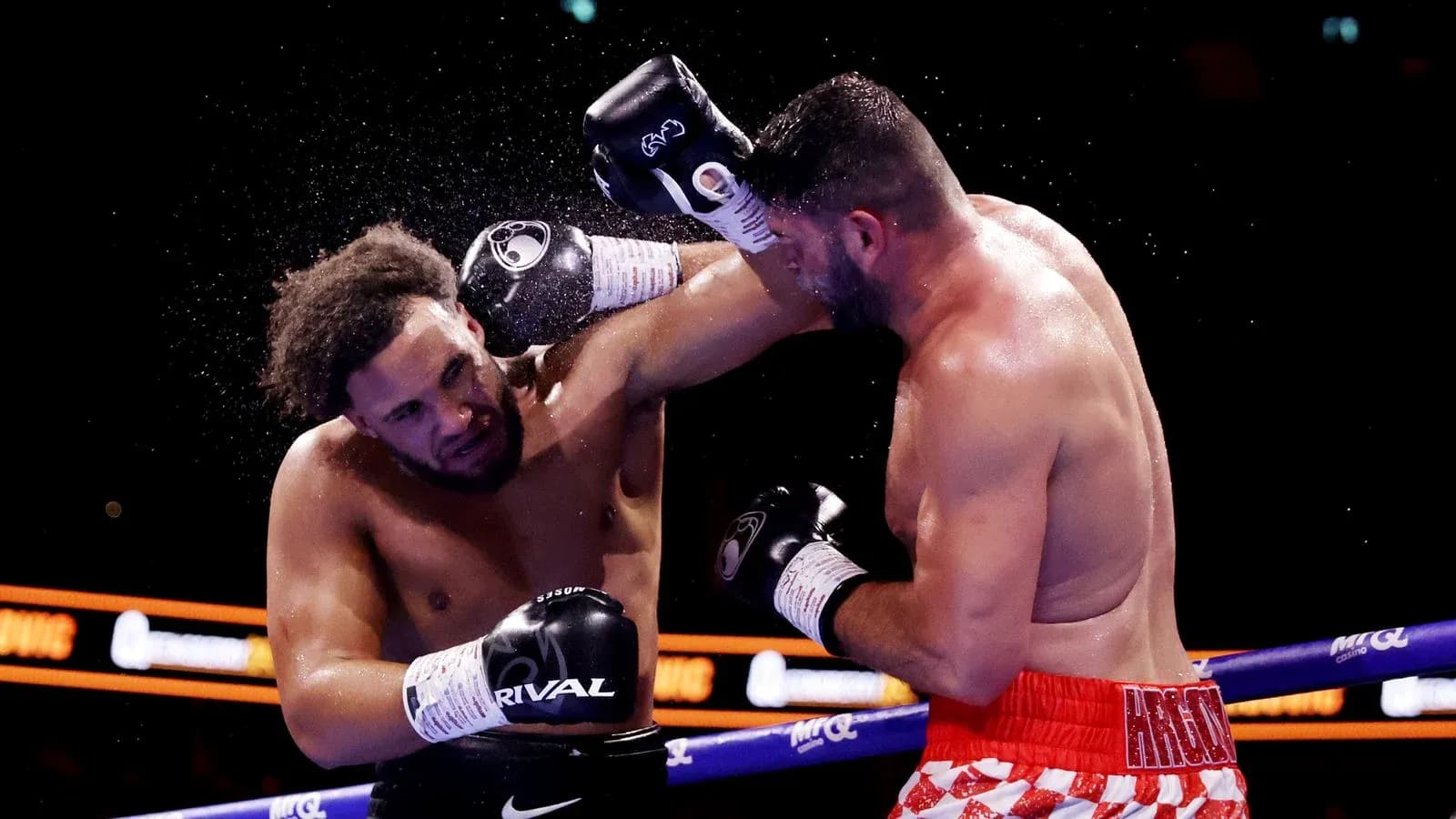
For eight rounds against Filip Hrgovic, the 21-year-old from Kent looked every inch the prodigy. Sharp, composed, in control. Then the tank emptied. Suddenly. Brutally. By the ninth, the referee was stepping in and the questions were already forming.
How does a fighter so gifted, so heavily backed, so dominant on the way up, run out of gas when it matters most?
‘Not doing 12 rounds… is crazy’
Delicious Orie could barely believe what he heard before the fight. Itauma, bidding to become the second-youngest heavyweight world champion in history behind Mike Tyson, admitted he had never sparred 12 rounds in camp.
"It was experience," Orie told Sky Sports. "If I was getting in a ring and knowing I've got 12 rounds ahead of me, I'm doing 15 rounds. For me, not doing 12 rounds going into a 12-round fight is crazy."
That word hangs over the whole night: experience.
Itauma had never been beyond six rounds as a professional. He had flattened everyone in front of him. That kind of run can seduce a young puncher into thinking the hard questions will never be asked. Hrgovic, hardened and seasoned, asked all of them in one punishing session.
"Moses boxed so perfectly but it was gradual rather than sudden," Orie said. "It goes back to experience. Hrgovic won that night because of it."
The Croatian didn’t out-skill Itauma. He outlasted him. He waited for the moment the younger man’s legs betrayed him, when his punches lost snap, when the defensive reactions dulled. Then he pressed.
"He blew a gasket," Orie added. "This reminded me of new boxers in a new era taking strength and conditioning so seriously. You've got to find out about yourself before you get into the ring. You cannot learn on the job when it comes to professional boxing."
The 12-round truth
The criticism from those inside the sport has been pointed and specific. Not about heart. Not about talent. About preparation.
"I think he should have beaten Hrgovic," Orie said. "I wasn't in his training camps, but we've all heard it. He didn't spar enough; it's as simple as that. Just because you can lift weights or run fast does not mean you can sustain a 12-round fight. It's a completely different beast."
That “different beast” is what Itauma met in the ninth round. After the fight, the 21-year-old had to be taken to hospital. The price of that step up was not just a blemish on his record, but a physical reminder of what elite heavyweights endure.
Sam Noakes, another ambitious fighter from Kent with world title plans of his own, watched the unraveling with a mix of admiration and frustration.
"I think it was more Itauma beating himself," Noakes said. "With all the success he was having, I think he might have just gone a little too fast out of the blocks. He wasn't out of his depth at all. It was more that he got tired and obviously Hrgovic capitalised on it."
The pattern was clear to anyone ringside. Itauma’s early dominance came at a cost. He spent energy like it was endless. It wasn’t.
"If he'd done a 12-rounder before maybe it might have helped," Noakes added. "It's all well and good in hindsight but he was blasting out serious level opponents. That was the next step for him. He just came up short in a world title fight at 21. That's boxing unfortunately."
Was he rushed?
When a hyped young heavyweight loses for the first time, the post-mortem usually includes one accusation: he was pushed too quickly.
Itauma’s case looks, at first glance, like a textbook example. He had stopped every opponent inside six rounds before challenging Hrgovic for a world title. No slow-burn apprenticeship. No late-round marathons on small-hall shows. Just a straight line to the top – until Hrgovic cut it off.
Orie, though, rejects the idea that the match-making itself was reckless.
"I don't think he was being rushed. I think that was a good step up with Hrgovic," he said. "I do think there was a lot of hype. I don't think it would have had a massive impact on the fight. Itauma doesn't strike me as someone who loves all that hype. He's just a normal guy from Kent."
The issue, in Orie’s eyes, is not the ambition of the move but the preparation behind it. The opponent was right. The camp, perhaps, was not.
And in Frank Warren, Orie believes Itauma has exactly the promoter he needs for the rebuild.
"Frank will more than anybody else know what the best thing is to do," he said. "I think his mindset is the question here. In his mind, his world's fallen apart. What he does in the next one or two years will be the deciding factor in my opinion for the rest of his boxing career."
Time, scars and heavyweight history
The good news for Itauma? Time is on his side. A lot of it.
"One thing Itauma does have is the greatest asset known to man: time," Orie said. "21 years old, he has a lot of time in front of him and depending on his mindset, this is just the beginning. This is part of becoming a world champion."
History backs him up. Heavyweight greats rarely glide through their 20s untouched.
"We've seen it time and time again with the likes of David Haye and [Wladimir] Klitschko losing in their early to mid-20s," Orie pointed out. "It's the standard process.
"People just think it's smooth sailing, you turn professional, you beat Mike Tyson's record, you become world champion and retire into the sunset. Boxing doesn't work like that unfortunately and we've seen it here."
Noakes, still an active contender himself, understands the emotional crater a first defeat leaves.
"The experience everyone was saying he lacked, he has now gained," he said. "When he comes back, he'll be even better. As a fighter, the loss is terrible. It's like the end of the world.
"My advice to him would be just get back in the mix as quick as you can and back onto that world title chase. I have no doubt the ending will still be the same; he'll still be undisputed heavyweight champion."
That is the paradox of nights like Itauma’s. The aura of invincibility is gone, but something more valuable might be forming in its place: substance.
He has felt what it’s like to empty the tank under the brightest lights. He has learned that world title fights are not won in two-minute highlight reels but in the lonely, unseen rounds in the gym when the body screams to stop and the clock says there’s still work to do.
The hype has taken a hit. The story hasn’t. The next chapter, written in how he responds over the next year or two, will tell us whether this was a detour on the road to the top – or the night his ceiling quietly revealed itself.