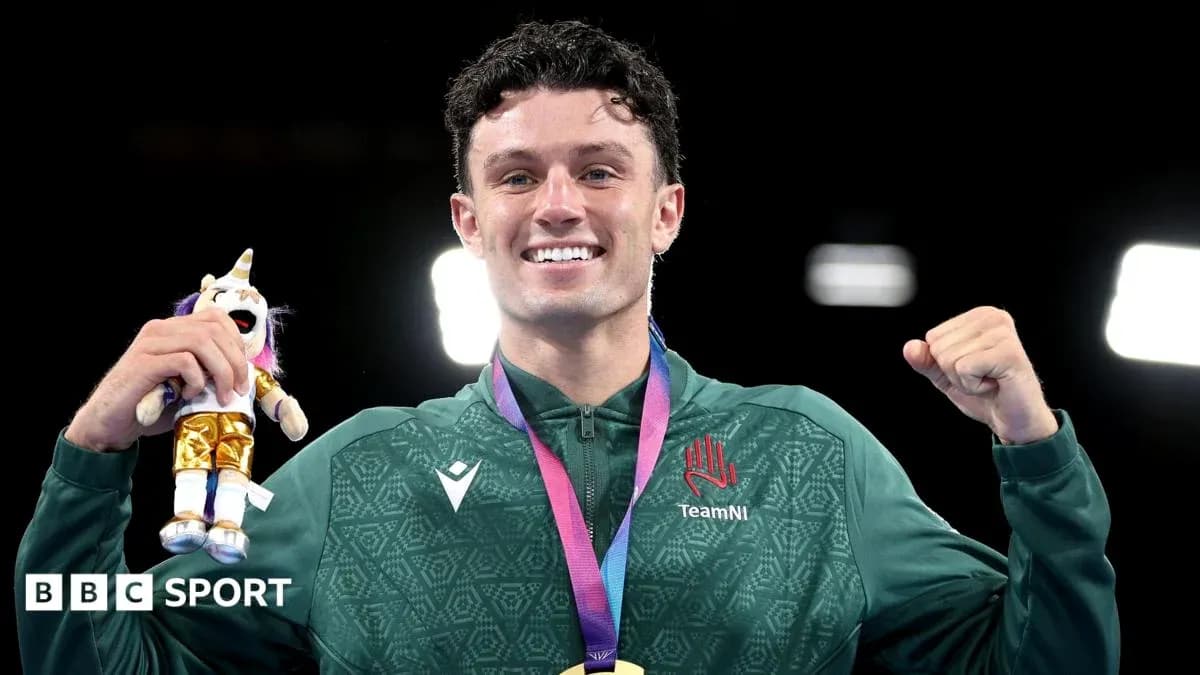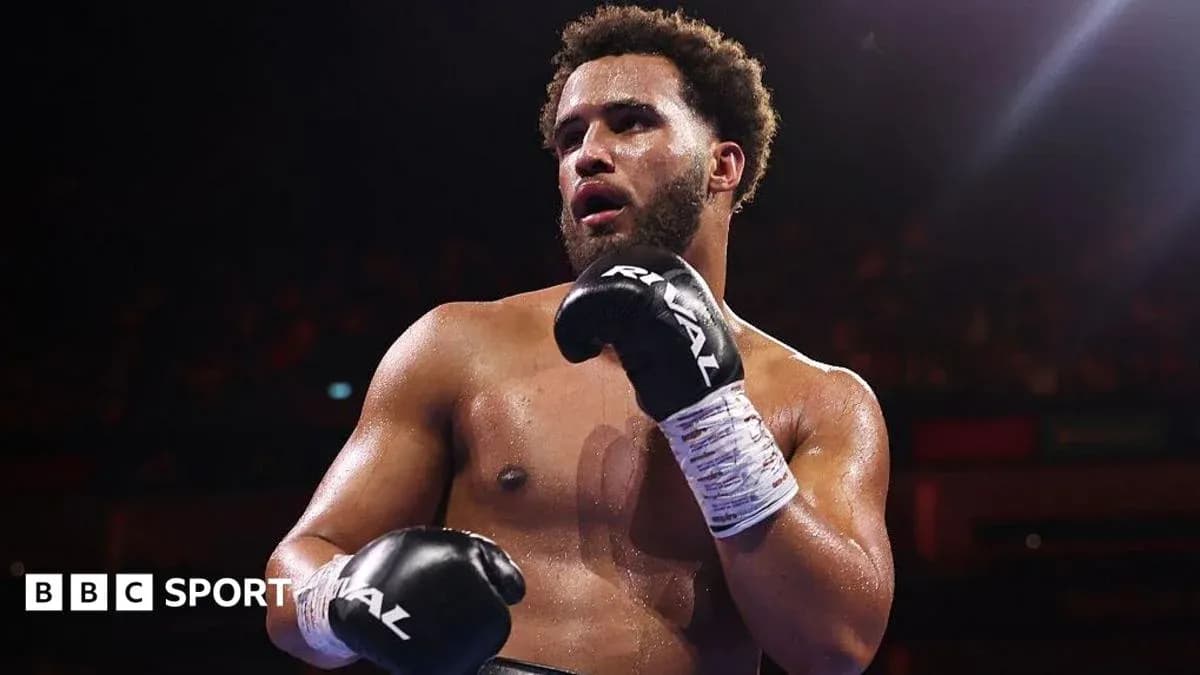
Moses Itauma's Heavyweight Lesson Against Filip Hrgovic
Moses Itauma used to walk into gyms in his school uniform and beat up grown men. On Saturday night at the O2 Arena, the lesson finally came the other way.
The 21-year-old Briton dazzled in flashes but emptied his tank too early, and Filip Hrgovic – all scar tissue and hard miles – walked him down to claim the vacant IBF heavyweight title. The referee stepped in during the ninth round as Itauma’s corner threw in the towel, ending a fight that had slowly, almost inevitably, turned against the young contender.
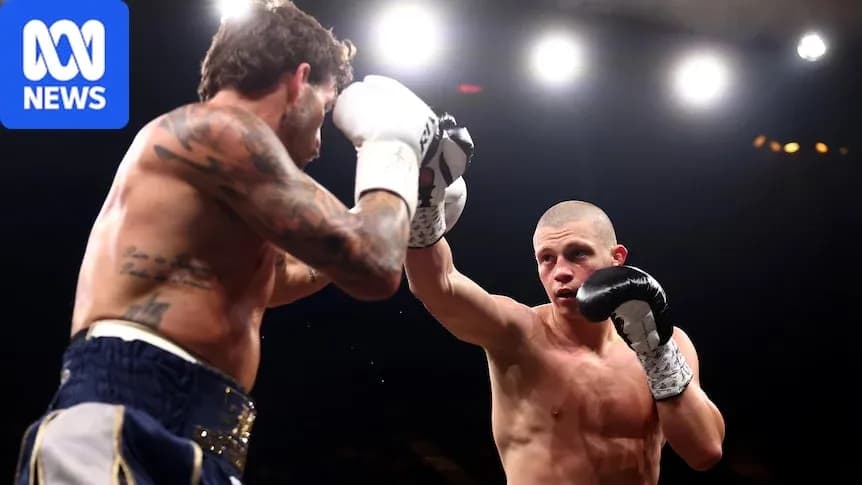
For long stretches, though, Itauma looked every inch the future champion people have been raving about. He was quicker. Sharper. More inventive. The southpaw left hand kept slamming into Hrgovic’s head and chest, snapping the Croatian’s neck back and making a 34-year-old Olympian look slow and one-paced.
But while Itauma was winning rounds, he was losing the fight.
His mouth hung open, desperate for air. His legs, so springy early on, began to drag. Hrgovic, who has lived through the kind of nights Itauma had only read about, simply waited. He knew the body in front of him would betray its owner long before the mind did.
By the time it was over, the scene was jarring. Itauma, beaten for the first time in his 15-fight professional career, left the arena on a stretcher and went straight to hospital.
"It's precautionary that he's gone to the hospital. That's what we always do to make sure because the most important thing is the boxer's health," promoter Frank Warren said. "He's done something to his leg as well and he was quite tired. It was a high paced, fast fight for both the guys."
Talent Meets the Truth of 12 Rounds
This was not a night that exposed Itauma as a fraud at world level. His boxing did the opposite. It exposed the gap between raw world-class talent and the hardened, ugly craft needed to survive 12 rounds in a title fight.
He had never been beyond six rounds as a pro. He admitted beforehand he had never even sparred 12. That inexperience showed in every heavy breath down the stretch, every burst of punches that emptied the tank a little more.
That is not just on the fighter. A young heavyweight is supposed to be protected from his own ambition by the people around him. His conditioning was not where it needed to be for a championship distance, and that responsibility is shared by an experienced team that signed off on his preparation.
Still, the ingredients are clearly there. Itauma’s chin held up; there was no single shot that shattered some imagined fragility. His hands were fast enough to trouble Hrgovic all night. His timing made the Zagreb man look leaden at times. The skills that had shredded lesser opponents held up against a genuine world-level heavyweight.
What didn’t hold up was the engine.
The Mind Games and the Mistake
Hrgovic had been poking at Itauma all week. He called him "just a kid", questioning his age, his readiness, his right to be there. As the days passed, Itauma’s irritation grew. At the weigh-in, he finally snapped, shoving Hrgovic, who replied with a slap.
Itauma prides himself on being unusually cerebral for a heavyweight. He reads psychology and self-help books. He talks about sharpening the mind, about introspection, about understanding himself better than most 21-year-olds ever try to. That can be a weapon. It can also turn into a trap.
Deep thinking becomes overthinking. Anthony Joshua has heard that accusation more than once in the latter half of his career. Itauma may now recognise the warning signs.
Once the bell rang, his intention was obvious: he wanted to finish it early.
"Someone said to me he doesn't feel like he'd win a world title unless he knocks him out. I didn't like that," Warren admitted afterwards.
The mindset made sense. Itauma had crushed everyone put in front of him. Why not this man too? But Hrgovic is not “everyone”. He is an Olympic bronze medallist who went 12 hard rounds with the giant Zhilei Zhang. Against Daniel Dubois – his only defeat – he was ahead on two of the three cards when cuts forced the stoppage.
This is a man who knows what it is to be hurt, to be exhausted, to be losing, and still be there when the other guy fades. Itauma did not know that world yet. On Saturday, he walked straight into it.
The Eighth-Round Gamble
The eighth round told the whole story. Itauma, already fading, decided to empty the clip. He threw more punches in that three-minute spell than in any other round of the fight, trying to blast out a man who had already proved he does not go away easily.
Hrgovic just tightened his guard, rode out the storm and waited.
"He was throwing too much. He was fighting like an amateur," Hrgovic said later. "I knew I needed to endure it. I need to stay there. He will get tired and I'll get him in the later rounds."
He was right. The young lion, all heart and ego, tried to knock the door down. The old campaigner leaned on it and watched the hinges fail.
By the ninth, Itauma had little left. The legs weren’t there, the snap had gone from his punches, and the accumulation of Hrgovic’s pressure and experience began to tell. His corner saw enough and threw in the towel as the referee moved in.
Rebuild or Ruin?
So where now?
Hrgovic, the man who beat him, offered the kind of advice only a victor can give without sounding patronising.
"Don't give up. Don't lose confidence. Get a few easy fights, easy wins. Build again and learn off these mistakes. You can't box like an amateur. It's a 12-round fight, you need to pace yourself."
Warren still talks about Itauma as one of the most exceptional talents he has ever handled. He points to Daniel Dubois, a two-time world champion who rebuilt after his own painful setbacks, as the template. A young heavyweight can be dropped, doubted and dismissed, then come again.
British boxing also knows the darker version of that tale. David Price was once the next great hope, a giant with a hammer of a right hand. Successive defeats chipped away at his aura until it never really came back. That shadow will now follow Itauma into every ring he walks into.
From here on, audiences will watch him differently. They’ll study his breathing. They’ll count his punches. They’ll look at his legs in the seventh, eighth, ninth rounds and ask: has he learned?
Paradoxically, that vulnerability may make him a more compelling figure. The air of invincibility has gone. The schoolboy bully has finally been taught a lesson.
Now the only question that matters is what kind of man – and what kind of fighter – he becomes because of it.