Moses Itauma vs Filip Hrgovic: A Heavyweight Showdown
Moses Itauma walked in first, head bowed, shoulders loose, as if this were just another night and not a tilt at history. The arena had other ideas. His name rolled down from the stands in full-throated waves, the sound following him all the way from the dressing room to the ropes. Twenty-one years old, chasing the status of second-youngest world heavyweight champion. It felt like destiny.
For eight rounds, it looked like it.
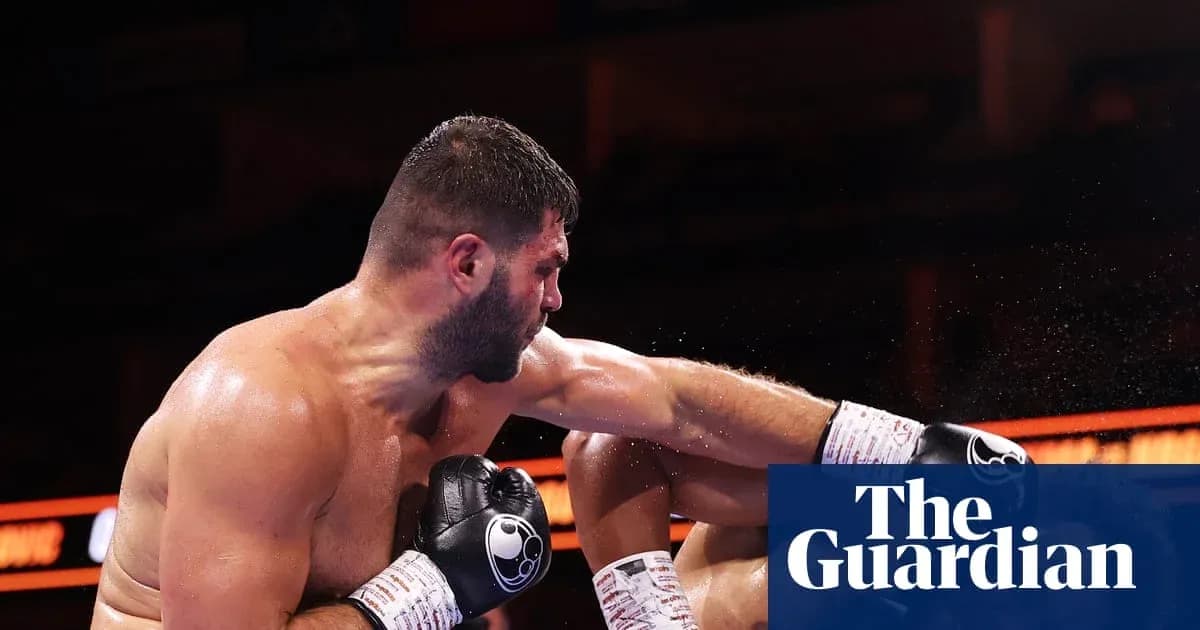
From the southpaw stance, Itauma struck first. A sweeping right hand found Filip Hrgovic early, a statement punch that set the tone. Itauma moved with a kind of cold menace, stepping in behind fast, cuffing shots that snapped the bigger man’s head and forced him backwards. A shuddering right cross rattled Hrgovic, who suddenly looked far less imposing than his reputation.
Then came the second round, and with it the first great swing of the night.
Itauma missed with a scything left but reset instantly. Hrgovic walked straight into a short, jolting right hook, the sort of shot you barely see until you’re on the floor. Down he went, stunned, taking a count of eight. The crowd roared for the coronation that now seemed inevitable. Hrgovic tried to answer late in the round, only for Itauma to lash back with another blistering combination that reminded everyone who was dictating the terms.
By the third, sweat shone on both men under the lights. Itauma snapped Hrgovic’s head back with a sharp left, then dug cruelly to the body, sinking a heavy shot into the Croat’s midriff. Hrgovic did not fold. His supporters, wedged into pockets at ringside, sensed the danger and screamed him forward. For the first time, he found some success, enough to show that his ambition had not been crushed along with his early momentum.
Still, Itauma looked the more complete fighter. In the fifth, a beautiful short left threaded through Hrgovic’s guard, a surgeon’s punch against a man trying to fight like a tank. Yet Hrgovic kept marching, stoic, plodding, unshaken in his purpose. Itauma’s chest began to heave. Between exchanges he used a glove to shove his black gum shield back into place, an unguarded little act that betrayed the strain. His previously impassive mask flickered with the first signs of distress.
Right on the bell, he snapped back Hrgovic’s head again with a spiteful uppercut that landed flush on the base of that thick neck. The crowd rose. Itauma, even tired, still looked a level above.
Blood soon joined the drama. A cut over Hrgovic’s right eye began to leak, a thin, red line creeping down his face. The damage seemed to energise him. Just before the bell, he answered with heavy shots of his own. Itauma took them, fired back, and suddenly the fight caught fire. The exchanges grew wilder, the margins thinner.
Then the unknown arrived.
Itauma had never been past six rounds as a professional. The seventh was uncharted territory. He stepped into it with admirable ambition, again forcing Hrgovic onto the back foot and stitching together deft combinations that spoke of class and clarity. The younger man still looked like the better boxer.
But the clock was turning against him.
In the eighth, Itauma’s work remained sharp in flashes. He landed meaty blows that would have broken many heavyweights’ resolve. Hrgovic absorbed them and kept coming. The Briton’s legs began to look heavy, his movements less fluid, his breathing ragged. The fatigue that had been whispering at him all night finally started to shout.
Hrgovic, 34 and hardened by nine years as a professional, sensed it. He rallied with almost unbelievable stubbornness, his punches not always pretty but increasingly purposeful. Itauma, instead of easing off, instead of boxing conservatively and buying time, stood and traded. The slugfest that followed suited only one of them.
By the ninth, the fight had turned into a storm, and Itauma was stuck in the eye of it.
His stamina drained, he began to weave, his balance gone, his responses dulled. Hrgovic, fuelled by that granite resolve, opened up with renewed conviction, pounding Itauma back against the ropes. Each shot seemed to push the younger man deeper into trouble. The crowd’s early songs gave way to a different sound: anxiety.
The end came with a flurry and a surrender of sorts, but not from Itauma. As Hrgovic unloaded, the referee moved in to intervene at almost the exact moment Ben Davison, Itauma’s trainer, hurled the white towel over the ropes. It floated down like a final, sad punctuation mark on a night that had promised so much.
Itauma, devastated, left the ring on a stretcher, apparently with a knee injury. The physical damage, though, told only part of the story. His hopes of smashing his way into the record books had been broken not by a lucky punch, but by a veteran’s stamina, will and refusal to accept the script.
For Hrgovic, this was more than a comeback win. It was history. He became Croatia’s first world heavyweight champion, a landmark for a nation with almost no boxing tradition to lean on. His record, blemished by only one defeat before this night, now carries the weight of genuine accomplishment at the highest level.
The build-up had hinted at the psychological edge he intended to wield. Throughout fight week, Hrgovic prodded at Itauma’s youth and ambition, warning that becoming world champion so young would be “bad for his soul”. Itauma, wary of fame and all that comes with it, did not entirely dismiss the idea. There were moments when he seemed to wrestle with the scale of what he was attempting, as if unsure whether his shot had come too early.
Once the bell rang, his talent shone. Footwork, hand speed, angles that produced power from nowhere – all the traits that had made him such a lauded prospect were on display. Yet Hrgovic was always going to be the acid test, the kind of seasoned, unyielding opponent who asks questions you cannot answer on raw ability alone.
In the end, Itauma was not undone by a lack of skill, but by experience and endurance. Hrgovic simply refused to go away. His superior engine, his bludgeoning self-belief and his refusal to bow to the narrative dragged the fight into deep water and left the younger man floundering.
Afterwards, Hrgovic tried to make sense of the turnaround in his own way. “Let me tell you something,” he said. “It was not me tonight. It was Jesus Christ in me. Holy Spirit. Father, Son and the Holy Spirit. It was not me. I was losing every round. I was outboxed. And I don’t know from where I got energy in that ninth round. And it was really not my strength. It was the Holy Spirit.”
He did not forget the man he had just beaten. “He’s an amazing fighter,” Hrgovic said of Itauma. “I want to thank him for accepting this fight, to give me a chance to become a new superstar in the heavyweight division. I’m the present and he’s definitely the future.”
That future now looks different, but it is far from diminished. Itauma is young enough, talented enough and driven enough to rebuild from a night like this. Heavyweight boxing has always been merciless to prodigies who rush the throne. On this occasion, the lesson came with a world title at stake and a Croat with an iron will standing in the opposite corner.
Hrgovic leaves as champion, the belt around his waist and a slice of Croatian sporting history secured. Itauma leaves with scars, questions and, crucially, time. In this division, how he answers those questions will matter far more than how early he tried to write his name into history.