Muchová and Menšík Claim Mixed Doubles Title at US Open
On a US Open grounds obsessed with cameos from legends and prodigies, the real show arrived late and stayed late.
Serena Williams’ brief return after four years away and Carlos Alcaraz’s comeback from a wrist injury drew the early-week crowds and the cameras. By Wednesday night, both were gone, ushered out in the quarter-finals. What remained under the Arthur Ashe Stadium lights was a different kind of spectacle: a $1m mixed doubles final that belonged entirely to Karolína Muchová and Jakub Menšík.
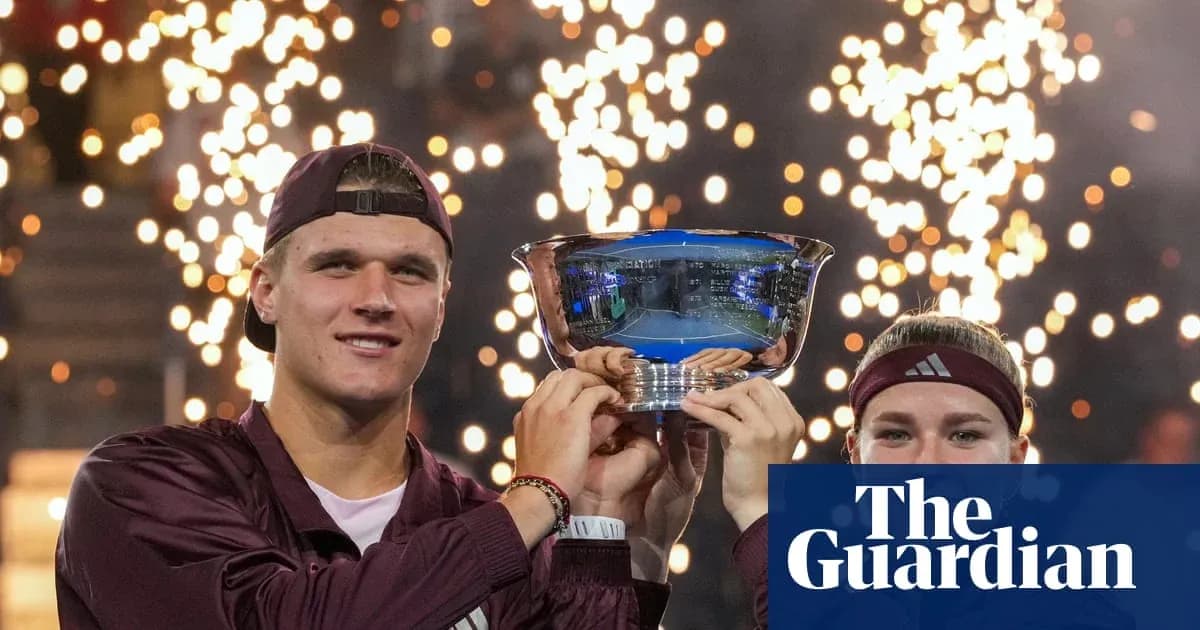
They took it with nerve and precision, beating Belinda Bencic and Flavio Cobolli 6-3, 1-6, (10-6). A title, a cheque, and a statement that this remodelled event now has teeth.
Singles stars, doubles stage
For years, mixed doubles at the majors has been the preserve of specialists, technicians who live in the alley and at the net. Not this fortnight. The US Open’s revamped format, designed to lure singles names, finally delivered on its promise.
Muchová and Menšík, both better known for their solo work, fought through a brutal semi-final against Mirra Andreeva and Andrey Rublev, edging it 5-4 (8-6), 3-5 (11-9) in a match that stretched beyond an hour and demanded every ounce of touch and nerve. On the other side of the draw, Bencic and Cobolli survived Elina Svitolina and Gael Monfils 4-5 (7-9), 4-1 (10-5), another long, tense contest that bled late into the New York night.
It set up a final that didn’t start until late and didn’t finish until just before midnight, the kind of occasion that feels very US Open: noisy, slightly chaotic, and high on drama.
“This format of a tournament, it went really quickly,” Muchová said, still processing a week that doubled as her return to competition after losing the Wimbledon final in June. “I’m obviously super happy that we managed to win. It was not my expectation.”
Her surprise was understandable. This was her first match play in months. It was Menšík’s first-ever mixed doubles campaign. Yet they walked away with the trophy.
A controversial experiment finds its footing
The mixed doubles event is still new in its current guise. Last year, tournament officials ripped up the old script: they moved the competition to the week before singles, slashed the draw to 16 teams and hiked the winners’ purse from $200,000 to $1m. It was a clear pitch to the sport’s biggest names.
The backlash came just as quickly. Doubles specialists, suddenly locked out, questioned the legitimacy of a grand slam title decided by four-game sets, no-ad scoring and a 10-point match tiebreak. Even as Sara Errani and Andrea Vavassori, both doubles experts, won the 2025 edition, the debate didn’t die down.
Organizers adjusted this year. An eight-team qualifying draw opened the door to more specialists and, crucially, more stories. They also got the star power they craved: Williams back in New York for the first time since her 2022 farewell, Novak Djokovic, Aryna Sabalenka, Felix Auger-Aliassime, Alex Eala. On paper, it was a dream.
By Tuesday night, the dream names were gone. So were all four specialist doubles pairings, beaten by players who treat mixed as a side gig.
What remained was something else: a stripped-back, personality-driven event that leaned into the looseness of the format and the intimacy of doubles.
Beer, maroon and a family act
The semi-final line-up lacked the star wattage of Williams or Djokovic, but not the entertainment.
Asked how she planned to fill the hours before the final, Bencic answered with one word: “Beer.” Cobolli’s mock panic said the rest.
Muchová and Menšík, meanwhile, turned their run into a low-key fashion project, turning up in matching pink-and-maroon outfits. When Muchová first suggested maroon, Menšík had to ask what it was. He now knows it looks good under Ashe’s floodlights.
On the other side of the net earlier in the week, Andreeva admitted she once had a crush on Rublev, nine years her senior. In this format, the confessions and jokes come as easily as the forehands.
No pair embodied that blend of familiarity and novelty more than Monfils and Svitolina. Married since 2021, parents to a three-year-old daughter, they had somehow never played doubles together before this week. Svitolina arrived as the world No 9, Monfils as the No 307, a showman in his final season on tour, playing singles on a wild card and staring down retirement.
Neither has ever been beyond a grand slam semi-final in singles. Mixed doubles gave them a different kind of stage.
Bencic and Cobolli turn the tide
In their semi-final, Monfils and Svitolina carried the momentum of two wins into a tight first set against Bencic and Cobolli. They held serve, stretched rallies, and leaned on Monfils’ court craft and Svitolina’s consistency. The first-set tiebreak turned on inches and instinct.
At 7-7, Bencic’s backhand clipped her out-of-position partner. Cobolli then double-faulted. Set gone, shoulders slumped, the Italian stalked back to his chair.
The frustration lingered into the second set. Cobolli opened with another double fault, but something in him snapped back into place. He saved triple break point in a crucial hold that flipped the match. From there, he and Bencic surged.
They earned the first break in the third game, again from three points down, then broke Monfils with ease two games later. As the match crept past an hour, the French-Ukrainian pair faded. The Ashe crowd tried to will them on, roaring through every long rally, but Bencic and Cobolli were ruthless, winning 21 of the final 26 points.
The romance story was over. The title chase was not.
Czechs survive a classic
The second semi-final was even tighter, a showcase of what this format can do when two aggressive teams refuse to blink.
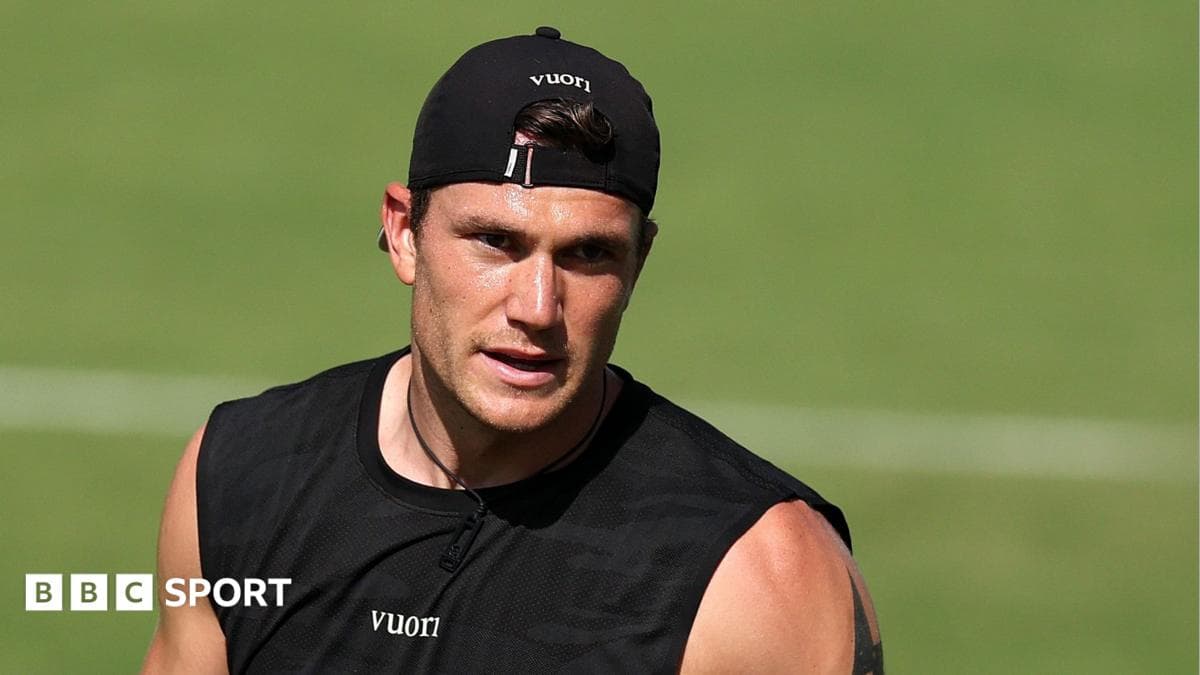
Menšík, all 6ft 5in of him, prowled the net, cutting off angles and finishing points. Muchová returned with depth and bite. They took the opening set in an 8-6 tiebreak, sealed by a delicate backhand volley from Muchová that barely kissed the strings.
Andreeva and Rublev answered in the second, ripping winners down the alleys and forcing the Czechs into longer, more physical exchanges. The match tensed into another tiebreak, the kind that can tilt a tournament.
Twice, Andreeva and Rublev stood on match point. Twice, Menšík’s serve and the pair’s composure bailed them out. They reeled off the final four points, stealing it 11-9 and booking a place in the final.
Their reward? Seventeen minutes. That was all the time they had between the handshake and the walk-on for the title match.
A final decided at the wire
Fatigue should have caught them. It didn’t. Not at first.
Muchová and Menšík came out swinging, riding eight winners and four Menšík aces to take the first set 6-3. The scoreboard looked comfortable. The legs and lungs told a different story.
The pressure finally told in the second set. Bencic and Cobolli, as they had against Monfils and Svitolina, found a surge. They broke a shaky Muchová to go 4-1 up, pinning her into the corners and forcing errors. By the seventh game, Bencic’s cross-court forehand ripped past the Czechs and dragged the match into a deciding tiebreak.
One race to 10 points. One $1m prize on the line.
In that sprint, the margins turned brutal. Muchová and Menšík landed their first serves when it mattered. Bencic and Cobolli didn’t. Three of four crucial points ended with the Swiss-Italian pair finding the net.
On triple championship point, Menšík stepped up and fired his seventh ace of the night. No rally, no doubt. Title sealed.
By the time they lifted the trophy, Ashe had thinned out. But the earlier crowds told a bigger story.
A three-week show
The US Open has quietly expanded into a three-week festival. Wednesday’s semi-finals played to a mostly full Ashe. On Tuesday night, the stadium was packed for exhibition matches celebrating Roger Federer, with Andy Roddick, John McEnroe, Andre Agassi and Federer himself trading nostalgia and winners.
Within that broader spectacle, Muchová and Menšík treated mixed doubles as a warm-up act for their main jobs. They never pretended otherwise.
Muchová, ranked No 6 in the world, has already reached two major finals and a semi-final in New York. Menšík is in the middle of a career-best season and chasing his first run beyond the third round at a slam. Singles begins Sunday. The grind starts again.
For them, this title is more than a novelty. It is proof of form, of feel, of timing under pressure.
“We had really great matches to play,” Menšík said. He had never played mixed doubles before this week, yet left with a trophy and a new perspective. “It’s a pretty different discipline [from singles, but] at the same time it’s good that we tried a lot of things on the court. So, of course, it gives you a little bit of boost of confidence.”
The question now is simple: after conquering Ashe as a team, how far can they go alone?