Nagoya Asian Games 2023: A Stripped-Back Opening
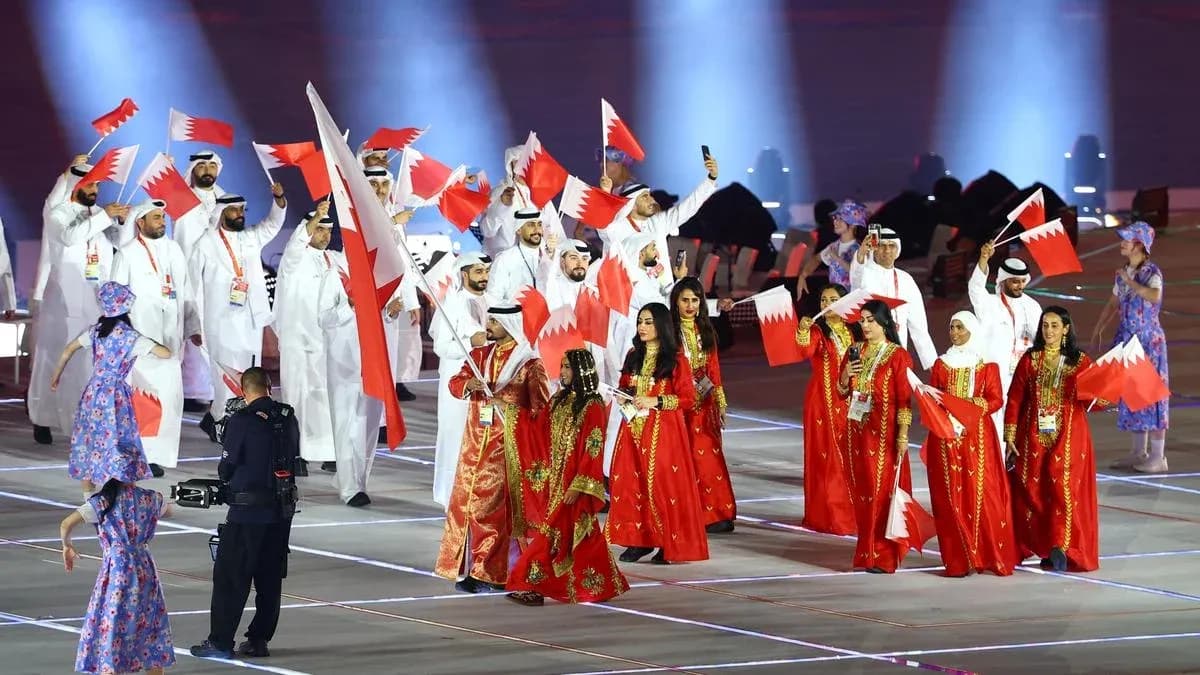
The flame finally burned through the uncertainty in Nagoya on Saturday night. At the Paloma Mizuho Stadium, under a crisp Japanese sky, the 20th Asian Games opened with colour, choreography and a hint of defiance after a messy, cost-cutting build-up that has tested organisers and athletes alike.
Japan chose frugality over grandeur. No gleaming athletes’ village this time, no sprawling new complexes to show off. Instead, a cruise liner in the port, rows of wooden huts, and hotel rooms scattered across Aichi prefecture are housing more than 17,000 participants in Asia’s biggest sporting showpiece.
The pictures beamed out from the opening ceremony told a different story: spectacle, tradition, and a continent ready to compete.
A stripped-back Games, a bold experiment
This is not the usual template for a multi-sport event of this scale. About 4,000 athletes are living aboard the cruise ship Costa Serena, anchored in Nagoya’s port. Another 2,000 are in the wooden, shipping-container-style huts that have drawn complaints from several delegations about cramped spaces and basic facilities. The rest have been scattered across hotels.
The logistical strain has been clear. Long travel times from hotels to training venues, tight rooms, and a sense of improvisation have marked the final days before the cauldron was lit.
Yet, from the Olympic movement’s vantage point, Japan’s gamble has its admirers. Olympic Council of Asia director general Husain Al-Musallam praised the hosts for trying something different, holding up the model as a potential blueprint for countries wary of the spiralling costs that usually accompany mega-events. A Games on a budget, without bankrupting the host — Nagoya is the test case.
India arrives in numbers, but with caveats
For India, the challenge is twofold: navigate the chaos off the field, and match — or better — the unprecedented success of Hangzhou.
Three years ago, India returned from China with 106 medals and a fourth-place finish behind China, Japan and South Korea. This time, the contingent is smaller. Rationalisation has cut the numbers from over 650 athletes across 40 disciplines to roughly 500 in Nagoya. The idea: fewer passengers, more contenders. Less chasing of perks, more focus on podiums.
Despite the trimmed squad, expectations remain sky-high. Indian officials still talk of a 100-medal haul, which, if achieved, would significantly sharpen the athlete-to-medal ratio and reinforce India’s growing clout at continental level.
But the start has not been smooth.
Accommodation shortages forced India to move some athletes out of huts and into hotels. Sahdev Yadav, India’s chef de mission and treasurer of the Indian Olympic Association, confirmed that rooms have been booked across the city, yet the back-up plan underlines how stretched the system is: Indian families living in Japan are on standby to host athletes if the crunch worsens.
“They are all more than happy to welcome the stars at their homes,” Yadav said. It is a warm, human safety net — and also a stark reminder of how tight the margins are behind the scenes.
Chaos, complaints, and a captain’s call for calm
The rumblings have been loud. Athletes and officials from several countries, including India, have spoken of organisational mismanagement, cramped lodgings and exhausting commutes to training venues. Social media has amplified every grievance.
Into that noise stepped Manu Bhaker, one of India’s shooting stars and a flag-bearer for the opening ceremony. Her message to her compatriots was clear: don’t let the mess become the main story.
“To all my fellow athletes from India, we will have some issues,” she said in a video posted by the Indian Olympic Association. She acknowledged the problems circulating online, but urged the team to see the bigger picture. This, she reminded them, is “probably once in a lifetime” and must be enjoyed, not drowned in complaints.
It was a timely intervention from an athlete who knows the weight of expectation and the thin line between distraction and focus.
A flag-bearer switch and a kit scramble
Even the ceremonial details have carried a hint of disorder. Seasoned kabaddi raider Pawan Sehrawat walked out as India’s flag-bearer at the opening ceremony, replacing shot-putter Tajinderpal Singh Toor. The reason was as mundane as it was telling: Toor did not have the ceremonial kit in his luggage, which ruled him out of the gala.
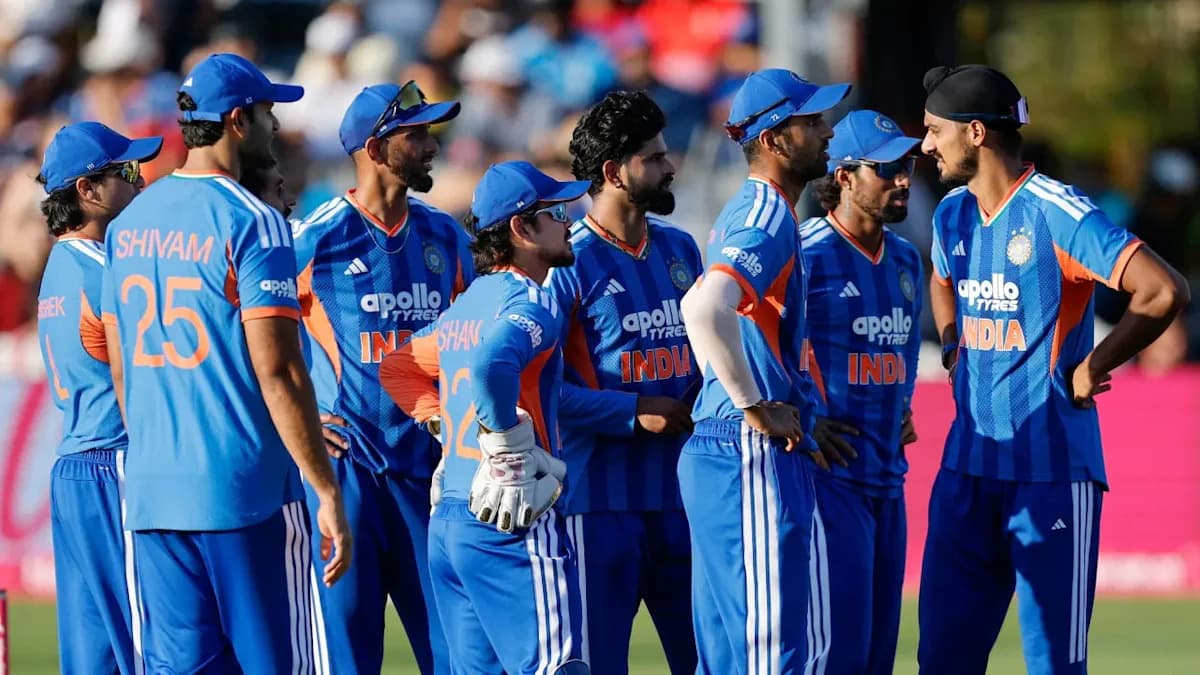
Elsewhere, the men’s cricket team, defending champions at this level, were wrestling with something as basic as clothing. Players awaited correctly sized kits on the eve of their departure in the early hours of Sunday, forcing the BCCI to step in and make independent arrangements. It is hardly the ideal prelude to a campaign in which India is expected to dominate.
Old powers, new frontiers
On the field, India’s ambitions cut across familiar strengths and new frontiers. The country arrives as defending champion in both men’s and women’s cricket, and in both men’s and women’s kabaddi. The men’s hockey team also carries the weight of a title defence.
Around them, a cluster of established names headline India’s push: PV Sindhu in badminton, Mirabai Chanu in weightlifting, Manu Bhaker herself in shooting, and a deep cast of wrestlers, boxers and track athletes.
Yet Nagoya is not just about traditional power bases. The Games have opened their doors to six debut sports, a nod to a changing sporting landscape and younger audiences. Teqball and virtual taekwondo lead that list, promising fast-paced, visually striking contests that sit comfortably in the era of clips and streams.
India has wasted little time in making a mark in one of those new arenas. In teqball, Quimcy Dsouza reached the women’s singles semifinals and came agonisingly close to the final before Indonesian player Sumaya turned their three-game duel around. Dsouza will now play for bronze — and with it, the chance to secure India’s first-ever Asian Games medal in the sport.
A new discipline, a new opportunity. One match to etch a first.
A veteran’s last stand — or one more push?
For some, Nagoya is a farewell tour in everything but name. Veteran shuttler H.S. Prannoy has made it clear this Asian Games is most likely his last. The grind of elite badminton, the toll on the body, and the rise of a younger generation all frame his reality.
Yet he has left one window open. Prannoy will give himself another year before deciding whether to chase the 2028 Los Angeles Olympics. If he feels there is still enough in the tank to mount a “realistic” bid, LA remains on the horizon. If not, Nagoya could be the last time he wears Indian colours at a continental Games.
That tension — between endings and new beginnings — runs through this Indian campaign.
The race begins
By Sunday morning, the pleasantries will be over. The first gold medal of these Games is expected to come from the men’s individual triathlon, the first of 469 titles that will be decided across more than 40 sports before the curtain falls on October 4.
India’s reduced but sharpened contingent will be judged not by the size of its delegation, but by the weight of its medals. The stage is set: a cost-conscious host, an improvised athletes’ village, a team juggling logistics and ambition.
Nagoya has lit the flame. Now comes the real question — can India turn this stripped-back, chaotic Asian Games into its most efficient statement of sporting power yet?