Piero Ausilio's 28-Year Legacy at Inter Milan Ends
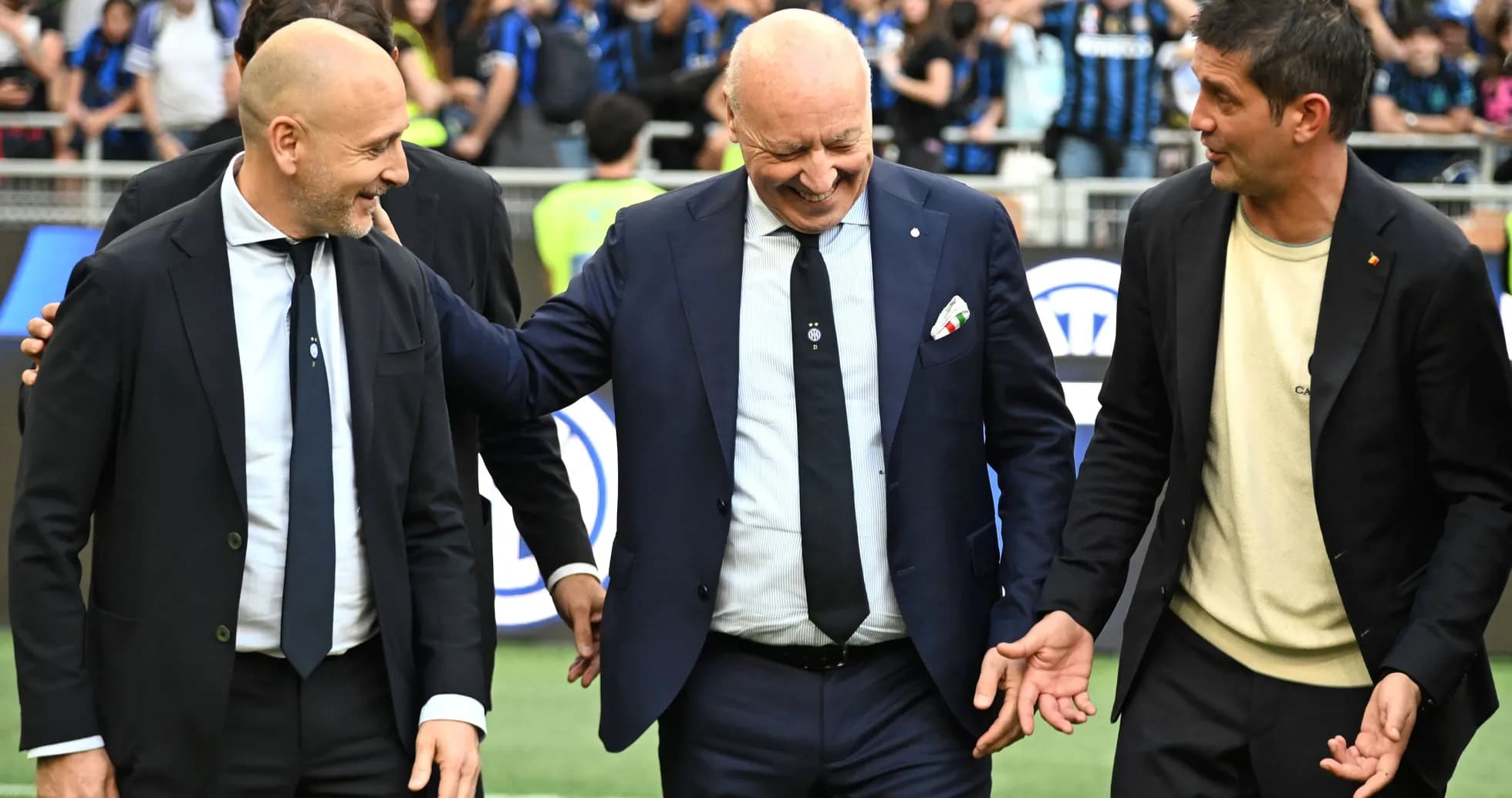
Piero Ausilio is preparing to walk away from Inter Milan, closing the book on one of the longest and most influential executive careers in the club’s modern history.
According to Corriere dello Sport, the sporting director has already informed the club that he does not intend to extend his contract, which currently runs until June 2027. Inside Inter, the message has landed with the weight of a bombshell. This is not just an executive changing jobs. It is the slow, deliberate ending of a 28-year thread woven through almost every version of Inter since the late 1990s.
From youth secretary to architect of a champion
Ausilio joined Inter in 1998 as a youth sector secretary. No spotlight, no headlines, just the grind of academy paperwork and logistics. From there he climbed, step by step, into the heart of the club’s technical structure, eventually becoming sporting director in 2010.
Once in that role, he helped reshape Inter’s transfer strategy. Working in tandem with Beppe Marotta, Ausilio assembled squads that could win titles while navigating the financial realities of the modern game. Inter did not always have the deepest pockets, but they had a director who knew where value lived.
The list of deals tells its own story. Free transfers and low-cost operations like Hakan Calhanoglu and Marcus Thuram, turned into cornerstones of a title-winning side. Lautaro Martinez, discovered and backed, became club captain and one of the defining forwards of his generation at San Siro. On the other side of the balance sheet, Ausilio oversaw major sales that kept the books steady without completely dismantling the team’s competitiveness.
These were not isolated hits. They formed a pattern: a director who could spot opportunity where others saw risk, and who could sell at the right time without losing the dressing room.
Still decisive to the final days
This is not a case of a fading influence quietly stepping aside. Ausilio remains deeply involved in Inter’s current project.
He played a central role in the summer’s squad adjustments, again working to refresh a winning group without breaking its spine. He also moved to secure the long-term future of Pio Esposito, tying down one of the club’s promising assets with a contract extension that fits a broader strategy of continuity and controlled renewal.
Yet, despite his ongoing importance, there has been no counter-offer, no public push from the club to reverse his decision. For now, the signals point in one direction: Inter are bracing themselves for life without one of the most experienced and successful sporting directors in European football.
The void will be enormous. Ausilio does not just occupy a position; he embodies a way of operating. Removing him from the structure forces Inter’s hierarchy to rethink the entire shape of their technical department. Who replaces a figure who has seen every cycle, every crisis, every rebuild for nearly three decades?
A final season in the boardroom
As the new campaign unfolds, the season takes on a different tone for those inside the club. This is Ausilio’s last dance in the Inter boardroom.
He leaves with his reputation at a peak. In 2024, he was voted Best Sporting Director at the Globe Soccer Awards, formal recognition of the work that has underpinned Inter’s recent resurgence domestically and in Europe. The club stands on a stable sporting platform, built on a mix of smart recruitment, timely exits, and a clear idea of what an Inter player should look like.
That stability is his parting gift. What comes next is the real test.
Inter must now decide how to evolve without the man who has quietly shaped their squads for nearly three decades. Do they try to replicate his profile? Do they split his responsibilities across multiple roles? Or do they pivot to a new model entirely, accepting that the Ausilio era cannot be cloned?
One thing is certain: when he finally steps away, Inter will not just lose a director. They will lose a living archive of their own modern history. The question now is whether the club can turn that ending into the start of another winning cycle, or whether this departure marks the first crack in a structure he helped build.