Roger Federer: The Emotional Journey of a Tennis Legend
Roger Federer always seemed to have time. Time on the ball, time in the rally, time in the biggest moments. What he never seemed to have control over were the tears.
The first time they came, he didn’t even recognize himself.
It was Wimbledon, 2001. Centre Court. His debut on the sport’s most hallowed rectangle of grass, facing the man who owned it. Pete Sampras, seven-time champion, the ruler of that lawn. Federer beat him, dropped to his knees, then walked to the net to shake hands with his hero.
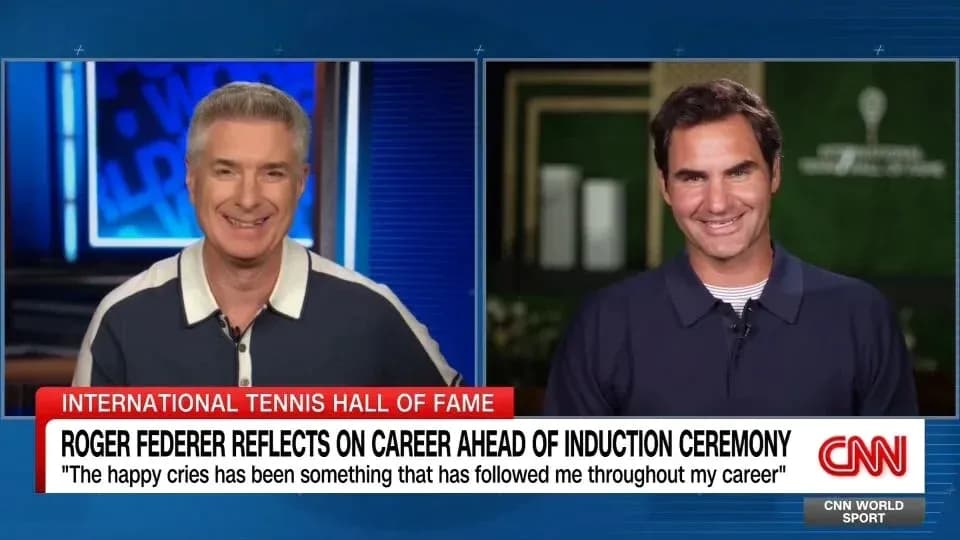
“I go to my knees, (then) I shake hands with Pete and he's my hero … and these emotions came all over me,” he told CNN Sports. “And I was like, ‘What is going on?’ This is not who I am normally.”
From that afternoon, when a skinny 19-year-old with a ponytail toppled Sampras, to his tear-streaked farewell in 2022, Federer built one of the great careers in tennis history and, almost by accident, became sport’s most famous crier.
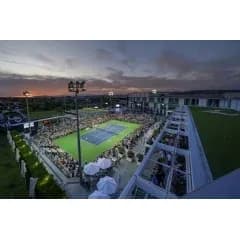
This weekend, in Newport, Rhode Island, the tears may return. The Swiss is being inducted into the International Tennis Hall of Fame, and he sounds braced for another emotional storm.
“If I'm speaking about the game and all the gratitude that I have, and having my entire family there – from my parents to my wife to my four children and my whole team from coaching staff and physios, etc. I think it could hit home very hard,” he said in the hours before the ceremony.
“If it happens, it will be more memorable for me personally, but I hope I get through the speech without too many hiccups. We'll see.”
For his supporters, this honor has felt inevitable for two decades. The destination was clear by 2004, when Federer ripped through the season, winning three of the four grand slam singles titles and climbing to world No. 1. He then refused to move. He stayed at the top for 237 consecutive weeks, a record that still stands and may never be touched.
The numbers from his prime remain staggering. In 2005, he won more than 95% of his matches. Then came 2006, the season many point to as his absolute peak: three more majors, 12 titles in total, a 92-5 record. A win rate of 94.8%. Dominance, disguised as effortlessness.
Sampras’ 14 grand slam titles once looked untouchable. Federer flew past that mark on the same Centre Court where he had first stunned his idol, capturing major No. 15 at Wimbledon in 2009 and never looking back. He finished with 20.
He won hearts as easily as he won matches. The grace, the footwork that looked like dance, the forehand that seemed to paint lines rather than hit them. Then the contrast off court: relaxed, self-deprecating, approachable. The superstar who never looked in a hurry.
Federer insists there is one thing he might change—not the trophies or the losses, but the perception that it all came naturally.
“It looked like I wasn't actually hitting the ball so hard,” he said of how people viewed him as a junior. “But it was kind of flying off of my racket with a lot of power. People always thought, like, ‘It's so simple for you,’ because it looked like elastic. But it wasn't the case. There was a lot of work and effort put into it.
“When I would lose, they say, ‘Why don't you try harder?’ And when you win, they would say, ‘Oh my God, it's so easy for you!’”
Buried in that frustration is a clue to all those tears.
“The sacrifice was massive and I was holding a lot of pressure in.”
The pressure is gone now. The void, he says, never arrived. No desperate urge to chase one more roar, one more night match, one more final.
“I'm actually really happy going through everyday life at a lower pace,” he said.
Lower pace doesn’t mean idle. Federer is a father of four, a philanthropist, an investor, a businessman. The calendar remains full. The suitcase is often packed.
“I've always been a guy who loves being on the road,” he said.
Newport offers something different: a chance to look back without the need to prepare for the next opponent. He has let his mind wander to the fantasy of stepping on court with the legends whose plaques he now joins.
“I would have a little list,” he admitted, before rolling through the names: Rod Laver, Bjorn Borg, John McEnroe, Stefan Edberg, Boris Becker, and Sampras again. “I think these would be my favorite players to play against. I've always admired their personalities, what they have achieved, and what they represent in the game.”
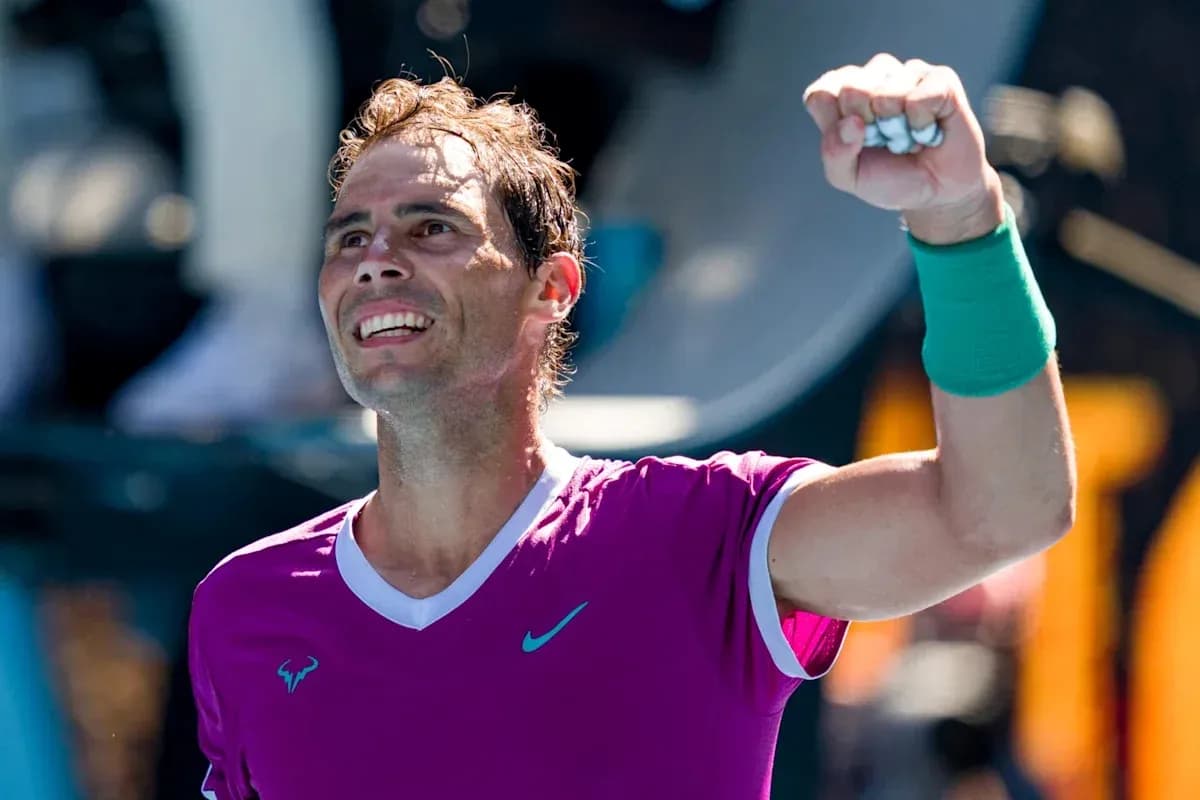
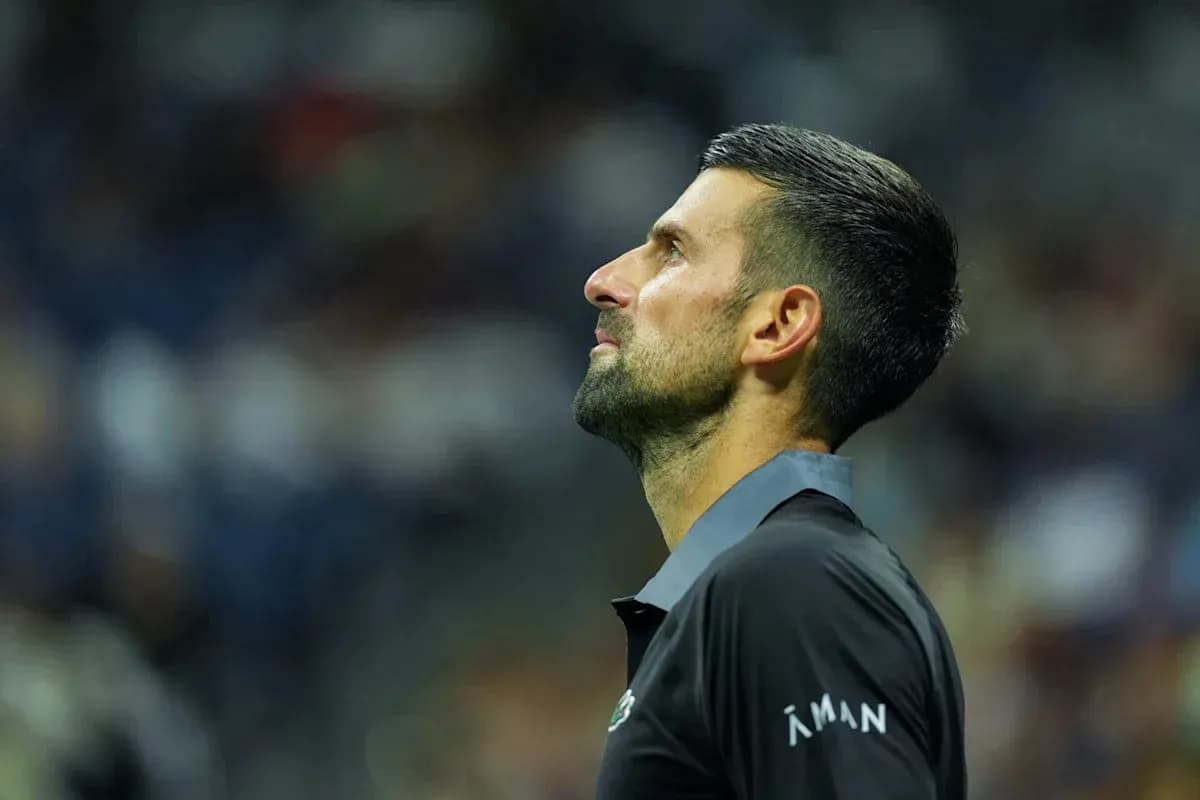
His total of 20 grand slam titles has been overtaken by Rafael Nadal and Novak Djokovic. The numbers have shifted; the debates have not. For his army of followers, he remains the greatest of all time, the player who made tennis look like art.
Asked what he excels at now, away from the furnace of competition, Federer’s answers drift away from sport.
“I'm trying to get better at golf,” he said. “I would love to start with an instrument again. I used to play the piano, so when I have more time, I'd like to dive into that because my four children and my wife play the piano.
“I hope I'm a good listener and a good decision-maker. Hopefully I'm a guy who people enjoy being around. I'm a big family guy. I love being surrounded by my friends – that's really the priority in my life.”
On court, Federer chased perfection. In Newport, as he stands among the game’s immortals, he seems content with something simpler: being present, being grounded, and, if the tears come again, letting them fall.