Roger Federer: A Legacy of Emotion and Excellence
Roger Federer has cried on some of the sport’s greatest stages. The first time, he didn’t even understand why.
It was Wimbledon, 2001. Centre Court. His debut on the game’s most sacred patch of grass. Across the net: Pete Sampras, the man who owned the place. Federer beat him, dropped to his knees, shook hands with his hero—and suddenly, the tears came.
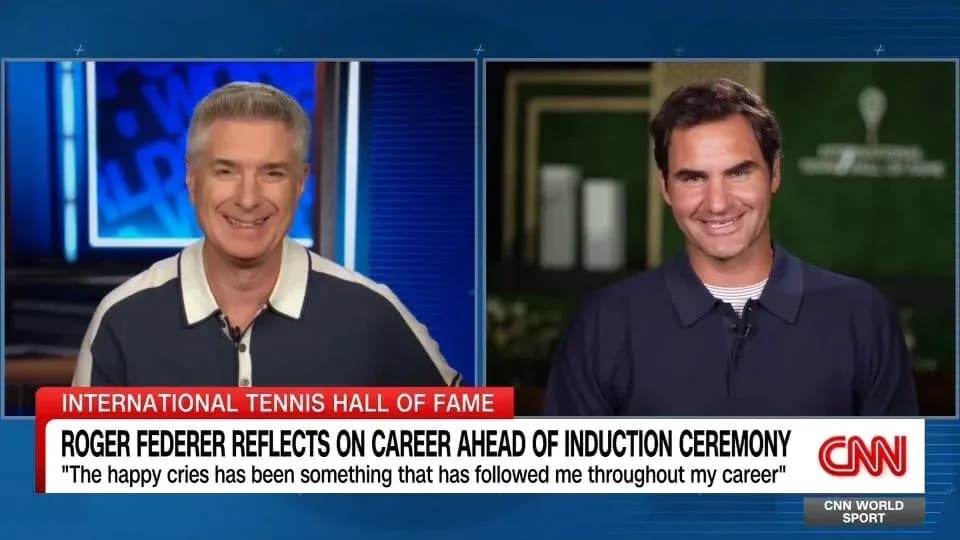
“I go to my knees, (then) I shake hands with Pete and he's my hero … and these emotions came all over me,” he told CNN Sports. “And I was like, 'What is going on?' This is not who I am normally."
From that afternoon against Sampras to his raw, trembling farewell in 2022, Federer built not just one of the greatest careers tennis has ever seen, but a legacy that turned him into perhaps the most famous crier in sport. The emotions never really left him. They just kept finding bigger stages.
This weekend, they’re likely to find him again.
The Hall of Fame, and the weight of a life’s work
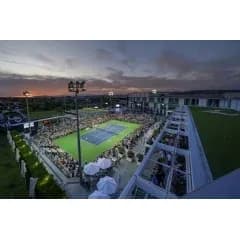
Federer is being inducted into the International Tennis Hall of Fame in Newport, Rhode Island. The numbers alone always made this feel inevitable, but for the man at the centre of it, the moment still threatens to overwhelm.
"If I'm speaking about the game and all the gratitude that I have, and having my entire family there – from my parents to my wife to my four children and my whole team from coaching staff and physios, etc. I think it could hit home very hard," he said in the hours before the ceremony.
"If it happens, it will be more memorable for me personally, but I hope I get through the speech without too many hiccups. We'll see."
For his supporters, this has felt like a destination marked on the map for two decades. The route was clear as early as 2004, when Federer ripped through the season, winning three of the four grand slam singles titles and climbing to world No. 1. Once he got there, he simply refused to move. He stayed at the top for 237 consecutive weeks, a record that still stands and a symbol of his iron grip on the sport.
In 2005, he won more than 95% of his matches. Then came 2006, the year many still regard as his peak. Three more majors. Twelve titles in total. A 92-5 record, a 94.8% win rate, and the sense that the sport was bending to his will.
Pete Sampras’ 14 grand slam titles once felt like a mountain no one would climb. Federer not only scaled it, he passed it, overtaking Sampras at Wimbledon in 2009 and then disappearing into the distance. The numbers told one story; the way he did it told another.
He glided where others ground. He floated where others fought. Grace and elegance on court, easy charm off it. For many, he became the blueprint of how a champion should look, play, and carry himself.
The price behind the elegance
Federer insists he carries no real regrets. If anything, his only frustration is how his genius was sometimes misread.
"It looked like I wasn't actually hitting the ball so hard," he said of how people viewed him as a young player. "But it was kind of flying off of my racket with a lot of power. People always thought, like, 'It's so simple for you,' because it looked like elastic. But it wasn't the case. There was a lot of work and effort put into it.
"When I would lose, they say, 'Why don't you try harder?' And when you win, they would say, 'Oh my God, it's so easy for you!'"
Behind the silk, there was steel. Behind the smooth timing, sacrifice.
"Perhaps within that answer lies the clue to all those famed tears.
"The sacrifice was massive and I was holding a lot of pressure in."
Those tears, then, were never just about winning or losing. They were the release valve for years of expectation, of travel, of training, of being the man everyone assumed found it all so simple.
Now, that pressure has gone. And he doesn’t seem to miss it.
Life at a different speed
"I'm actually really happy going through everyday life at a lower pace," he said.
The days are still full. Father of four. Philanthropist. Investor. Businessman. The calendar hasn’t exactly emptied; it has just changed shape. The competitive edge that once carved through grand slam draws now sits alongside school runs, boardrooms, and foundation work.
And there is still the road.
"I've always been a guy who loves being on the road," he admitted. Retirement has not tethered him to one place. It has simply freed him from the need to chase ranking points and trophies.
Newport offers something else: a chance to look back without a racquet in hand. To relive the days when he was not the elder statesman, but the kid with the ponytail trying to punch holes in the old order.
He has even allowed himself to imagine a fantasy schedule, one where time bends and the greats share the same draw.
"I would have a little list," he said, before rolling through names that helped shape the sport he came to rule: Rod Laver, Bjorn Borg, John McEnroe, Stefan Edberg, Boris Becker, and Sampras again.
"I think these would be my favorite players to play against. I've always admired their personalities, what they have achieved, and what they represent in the game."
Now he will sit alongside them in the Hall of Fame, his name etched into the same firmament.
Legacy beyond the numbers
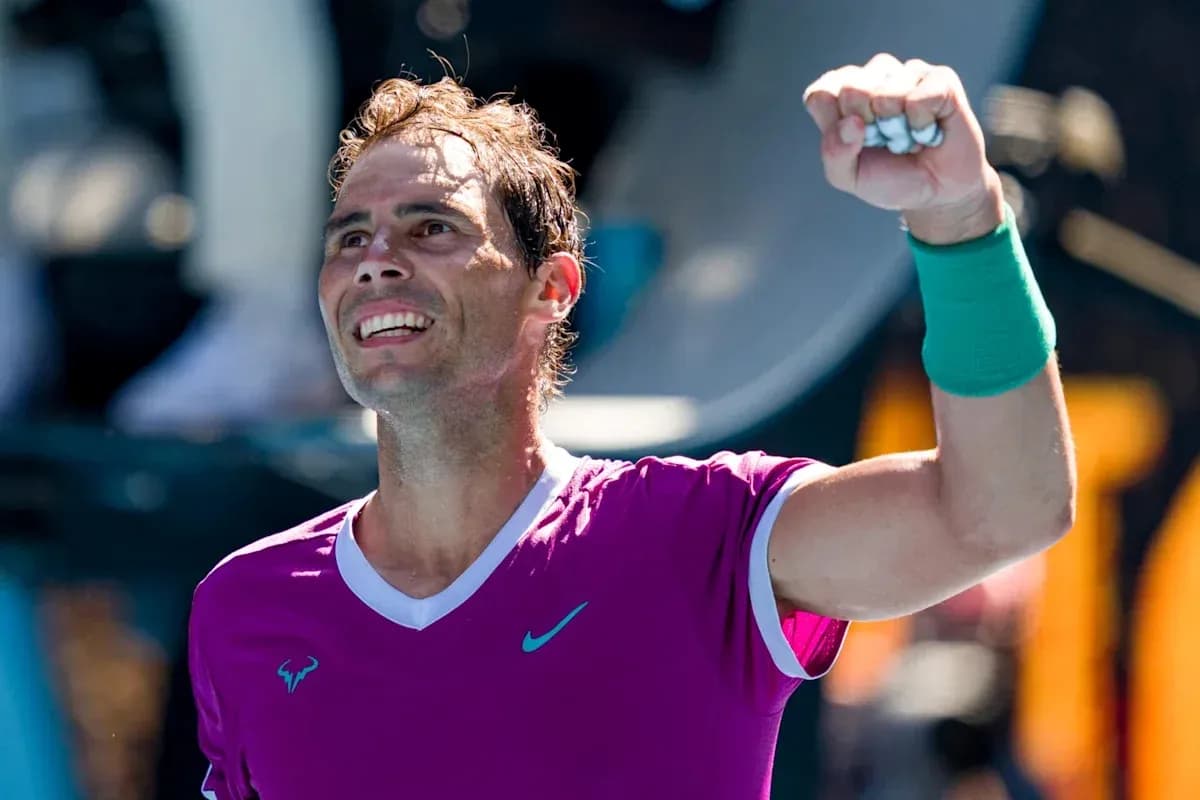
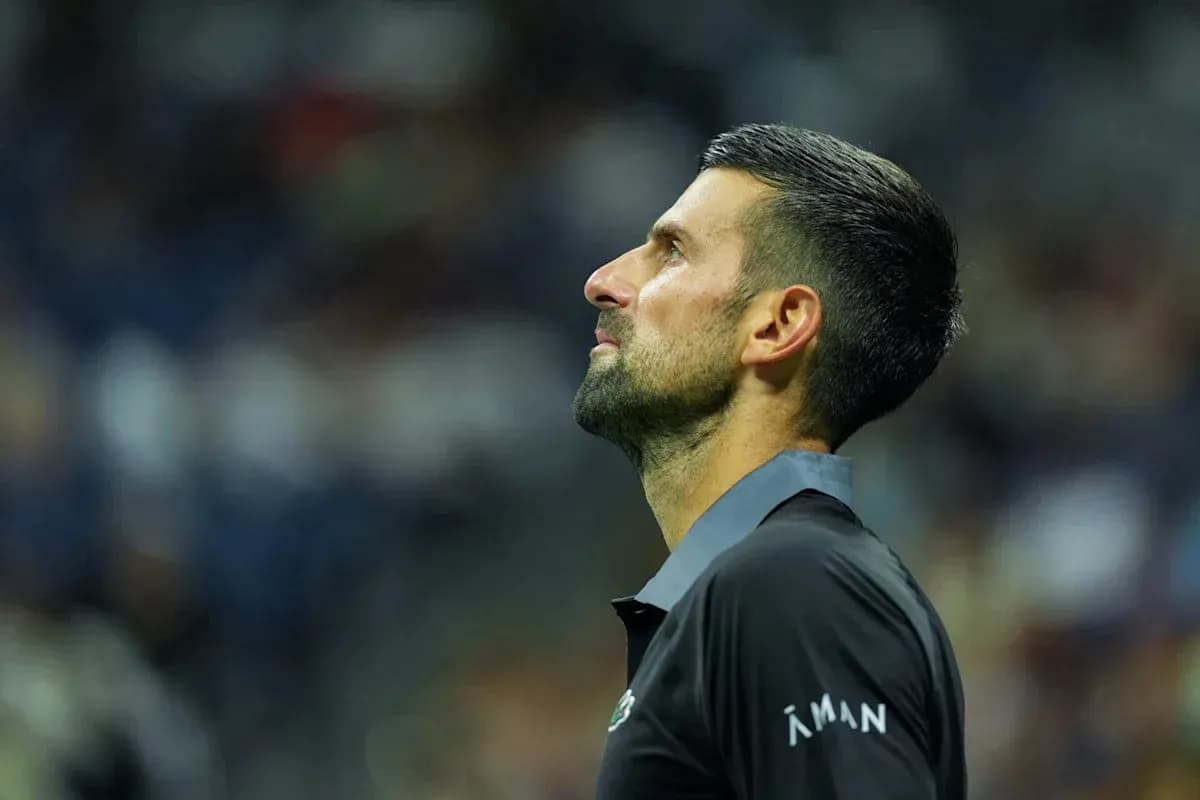
Federer’s once-record haul of 20 grand slam titles has been passed by both Rafael Nadal and Novak Djokovic. The numbers have moved on; the arguments over the greatest of all time have become more complex, more statistical, more entrenched.
His fans don’t care. For them, he is the greatest, full stop. The man who made the game look like art.
Asked what else he considers himself good at, away from the sport he mastered, Federer’s answer drifted away from forehands and backhands.
"I'm trying to get better at golf," he said. "I would love to start with an instrument again. I used to play the piano, so when I have more time, I'd like to dive into that because my four children and my wife play the piano."
The list then moved from hobbies to something more revealing.
"I hope I'm a good listener and a good decision-maker. Hopefully I'm a guy who people enjoy being around. I'm a big family guy. I love being surrounded by my friends – that's really the priority in my life."
On court, Federer chased perfection and records. In Newport, the numbers will be read out, the titles listed, the dominance relived. But the man walking onto that stage will measure himself by something far simpler: the people around him, the life he has built, and whether, after everything, he can get through one more speech without the tears that helped define his greatness.