Shubman Gill Leads New India Squad for World Cup 2027 Cycle
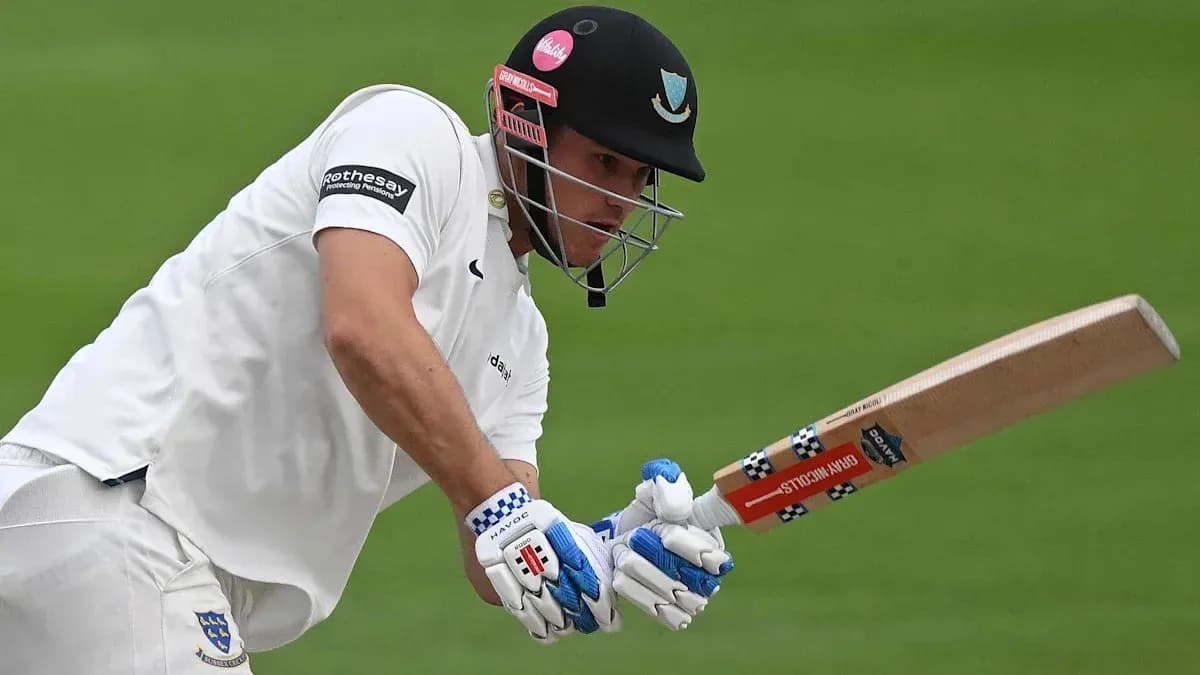
India have quietly drawn a line in the sand. The next one-day chapter will begin with Shubman Gill at the helm, as the selectors hand the 25-year-old the captaincy for the upcoming ODI assignments and, with it, the responsibility of steering the early build-up towards the ICC Men’s Cricket World Cup 2027.
This is not a ceremonial handover. It is a statement about the future.
Fresh Faces for a New Cycle
The squad around Gill carries the clear imprint of transition. Pacer Auqib Nabi has earned his maiden ODI call-up, a reward that has been brewing in the background. He travelled with the Test squad to Sri Lanka in August but never broke into the XI; now, the white-ball door finally opens.
Alongside him, batter Naman Dhir steps into the ODI frame for the first time. His selection underlines India’s willingness to stretch the batting pool early in the cycle rather than wait for a crisis to force experimentation.
The message is blunt: no one will be eased in gently. If you’re in, you’re in to compete.
Experience Returns: Jadeja and Gaikwad Back
Around those new names, familiar figures re-emerge.
Ruturaj Gaikwad returns to the ODI set-up, having last featured in the home series against South Africa last year. He has flickered at the fringes of India’s white-ball plans for a while; now he re-enters at a time when top-order roles and leadership depth are both under review.
Ravindra Jadeja’s comeback to the ODI squad adds immediate balance. His last appearance in the format came against New Zealand in January, but his presence changes the texture of any XI: control with the ball, depth with the bat, and the kind of fielding that can flip tight games in a single over.
With Gill leading, Jadeja’s experience becomes an anchor in the dressing room as much as on the field.
Asian Games Shake-Up: Injuries and Opportunity
While the ODI squad takes shape, the ripple effects are already being felt in India’s Asian Games plans.
Varun Chakravarthy has been ruled out of the tournament with a side strain, a significant blow given his role as a specialist mystery spinner in T20 cricket. His absence rips out a tactical option India would have leaned on in spin-friendly conditions.
Nitish Kumar Reddy, originally named in the Asian Games squad, has been pulled out of that campaign and redirected to the ODI series against West Indies instead. That switch tells its own story: India see him as part of the longer-format white-ball project and want him tested in 50-over cricket sooner rather than later.
To plug the Asian Games gap, Vipraj Nigam comes in as Reddy’s replacement, stepping into a squad that still bristles with quality.
T20I v Japan and Asian Games Squad
The group tasked with the T20I against Japan and the Asian Games carries a strong core of IPL-hardened names mixed with emerging talent:
- Shreyas Iyer (c)
- Tilak Varma
- Ravi Bishnoi
- Jasprit Bumrah
- Varun Chakravarthy
- Shivam Dube
- Ishan Kishan (wk)
- Vipraj Nigam
- Axar Patel
- Sanju Samson (wk)
- Abhishek Sharma
- Arshdeep Singh
- Vaibhav Sooryavanshi
- Washington Sundar
- Yash Thakur
There is pace in Bumrah and Arshdeep Singh, craft in Bishnoi and Washington Sundar, finishing power from Shivam Dube and Abhishek Sharma, and a leadership core in Shreyas Iyer that can carry a multi-event campaign.
Between Gill’s elevation in ODIs and the recalibrated Asian Games squad, India have started to show their hand for the next cycle. The names are changing, the roles are shifting, and the question now is simple: who will turn these early chances into a long-term place in India’s white-ball future?