Spanish Grand Prix Review: Norris and Hamilton Shine at Madring
The Madring did not deliver a classic. No chaos, no late-lap lunges for the win, no generational wheel-to-wheel duel.
What it did do was strip this field back to its essentials. Pace. Execution. Nerve. And on a weekend when strategy windows were narrow and overtaking bordered on theoretical, the margins between a star turn and a missed chance became brutally small.
Here’s how the grid really did in the first Spanish Grand Prix at F1’s newest, most unforgiving venue.
Lando Norris – Started 1st, Finished 3rd
Verdict: Only bad luck cost him victory.
Norris produced the lap of the weekend when it mattered most. McLaren knew it didn’t have the outright quickest car, but Norris dragged it to pole with a qualifying lap that was both ferocious and controlled – right up until the final corner. The rear stepped out, three tenths vanished, and with it a shot at an all-time qualifying benchmark. That mistake was his, born of misjudging how much he’d leaned on the tyres earlier in the lap.
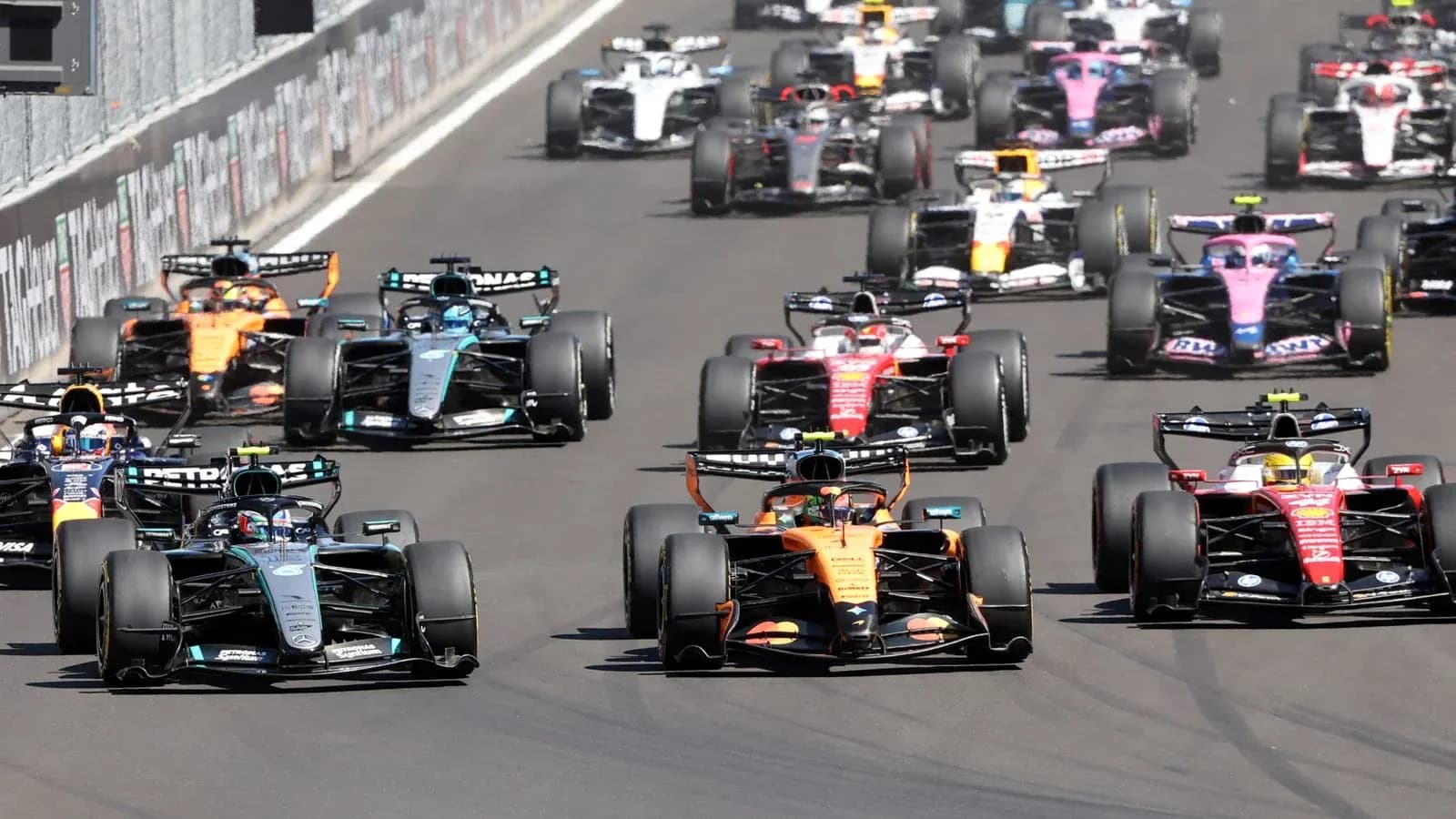
Even so, it was more than enough. He launched cleanly from the less grippy pole box, defended the lead and then built a cushion that looked decisive. On pure race pace, he was the class of the field.
Then came the virtual safety car.
The timing destroyed his advantage and flipped the race on its head. What should have been a controlled run to the flag became a chase. Stuck behind Max Verstappen in the closing laps, Norris simply ran out of tools. At Madring, with its narrow lines and dirty air, even a faster car struggled to convert that speed into a move – especially against a defender as ruthless as Verstappen.
He didn’t win. But this was a champion’s drive, undone by a line of text on the timing screens.
Pierre Gasly – Started 9th, Finished 7th
Verdict: Probably his best through-weekend execution in F1.
Gasly’s weekend started with a scare at La Monumental in Q2, but he gathered it up and then delivered one of the laps of his career. His final Q2 effort, which he himself ranked among his best, vaulted him into Q3 as midfield leader and clear of team-mate Pierre Gasly’s usual reference, Pierre Gasly himself being the benchmark in previous seasons.
In Q3, he beat Arvid Lindblad to secure what was realistically the ceiling for Alpine. He left a couple of tenths on the table – the largest gap to theoretical best of any driver – but it didn’t change his grid slot.
On Sunday he did exactly what a midfield leader must do on a track like this: control the pack, make no mistakes, and resist faster cars when the tyres and circumstances allow. He headed the midfield and even overachieved by keeping Oscar Piastri behind. Passing Gabriel Bortoleto might have opened the door to Liam Lawson, but that was a tall order in these conditions.
This was a rare, complete weekend from Gasly. No drama, no big errors, just high execution from Friday to flag.
Esteban Ocon – Started 13th, Finished 11th
Verdict: A well-executed weekend that merited a point.
Ocon quietly put together the kind of weekend that rarely makes headlines but earns respect in the paddock. His final Q2 lap was tidy and close to the limit of what the Haas could do; the gap to Bortoleto suggested Audi simply had the edge over a lap.
He made his trademark launch count, jumping to 11th and then effectively becoming a points runner once Lewis Hamilton retired. The race turned on the VSC pitstops. Haas’s less advanced pit equipment cost him track position to Nico Hulkenberg, and with it, a near-certain point.
With Ollie Bearman’s weekend compromised, direct comparison was tricky, but there was no obvious time left on the table. In the eighth-best car, Ocon did enough to deserve a top 10. The machinery and circumstances disagreed.
Max Verstappen – Started 3rd, Finished 2nd
Verdict: Largely made the most of the Red Bull.
The Red Bull was sharper on Saturday than Sunday. Verstappen squeezed most of what it had in qualifying, though like many, he still left a sliver of performance unused.
Race day was about management and opportunism. At a circuit where passing bordered on impossible, he kept Norris behind when it mattered and stayed within range of the key strategy moments. The luck of the VSC helped, but even without jumping Norris, third would likely have been close to the maximum.
The one question mark came at Turn 1 on lap one. The move that led to him cutting the chicane ultimately contributed to him falling behind Andrea Kimi Antonelli, another beneficiary of the Hamilton shuffle. It was a marginal call with marginal consequences.
This was not Verstappen at his most devastating, but he extracted what the car and the race gave him.
Lewis Hamilton – Started 2nd, Finished 1st
Verdict: No question about his pace, but a little untidiness.
Hamilton had the measure of George Russell all weekend. On raw speed, the seven-time champion was the clear Mercedes spearhead, and his race craft showed it.
He spent much of the grand prix biding his time behind a long-running Charles Leclerc, knowing the race would be decided not by wild lunges but by positioning and tyre life. When the race opened up, he was in the right place.
He needed luck, though. The VSC and the sequence it triggered gave him the track position over Verstappen and Norris that ultimately secured the win. Without that, the story likely looks very different.
The first lap was messy: track cuts at Turn 1 and Turn 5 dropped him to third and injected avoidable jeopardy into a race he had the pace to control. Once settled, he was immaculate. The speed was never in doubt; the early scruffiness just kept it from being a flawless display.
George Russell – Started 5th, Finished 4th
Verdict: No major negatives, but still not at his absolute best.
Russell arrived with a handicap of his own making – old-spec power unit components left over from his Monza crash. Even so, he came within 0.005s of Hamilton in qualifying, a razor-thin margin that still hinted he’d left something on the table, especially in the early part of the lap.
In the race, he drove cleanly, executed his long hard-tyre stint well, and did what the car allowed. Once Hamilton retired from the fight ahead, fourth became the logical landing spot given Mercedes’ pace.
This was a solid, professional weekend. But in the context of Hamilton’s speed, Russell still looked a fraction shy of his absolute peak.
Sergio Perez – Started 18th, Finished DNF
Verdict: A strong weekend as the quicker Cadillac driver.
Perez owned qualifying inside Cadillac. The headline gap to Valtteri Bottas was exaggerated by traffic and impeding, but even without that, Perez looked the quicker of the two all weekend. His final qualifying lap was sharp, composed, and fully deserved its reward.
In the race he made ground early thanks to the Turn 1 incident and then set about chasing Alex Albon. The performance was there; the reliability was not. A water leak in the power unit first slowed him, then ended his race.
The only negative was one he couldn’t control: the failure that robbed him of a second half of the grand prix that might have yielded something more tangible.
Alex Albon – Started 16th, Finished 15th
Verdict: Strong overall, blemished only by the FP3 wall clip.
Albon’s Friday was messy. Deployment issues left him adrift of Carlos Sainz, and clipping the wall early in FP3 cost him valuable running. When it mattered, though, he responded.
His Q1 lap was excellent, a big step from the struggles of practice, and the Williams simply didn’t have the pace to go any higher than 16th. Without a fresh set of softs for Q2, there was no realistic route further up the grid.
On Sunday he drove well in a car that offered little more than what he achieved. The FP3 mistake remained the lone real blot on a weekend where he otherwise maximised a limited package.
Fernando Alonso – Started 17th, Finished 17th
Verdict: A decent weekend, but Q2 was there for the taking.
Alonso spent most of the weekend as the quicker Aston Martin driver, coaxing speed out of a car that had strong points in certain corners but bled time on the straights.
He missed out on Q2 by a tenth and a half in sector three on his final run, a small but decisive shortfall that swung the battle with Albon against him. From there, the race turned scrappy: deployment problems, a front wing change after Sainz hit him, and a car that never ran at full potential.
He battled on to the finish, but the sense lingered that with a cleaner final qualifying sector, this could have been a very different Sunday.
Charles Leclerc – Started 4th, Finished DNF
Verdict: Pace for more, but a compromised Saturday and brake misfortune hid it.
Leclerc’s weekend never quite ran in a straight line. A crash in FP3 cost him half the session and, crucially, his qualifying simulation. He tried to drag the car back to the pits against the team’s instructions, but the damage was already done.
Qualifying ended up respectable rather than spectacular. He had, by most measures, the stronger underlying pace of the Ferrari pair, but a small early-lap error in Q3 cost him time and left him short of where he might have been.
In the race, brake issues ended any chance of converting that latent speed into a result. This was a weekend that promised more than it delivered, and not all of that was in his control.
Arvid Lindblad – Started 10th, Finished 9th
Verdict: FP2 crash hurt, but the recovery was impressive.
Lindblad flashed serious pace on Friday before it all snapped away in FP2. A heavy crash at Turn 13 cost him track time and dented his confidence enough that he only rejoined FP3 late.
Even carrying that hangover, he still reached Q3. On Sunday he jumped Piastri at the start and ran ahead in the first stint, then later resisted Nico Hulkenberg’s pressure to hold his position.
He couldn’t keep Piastri behind once the McLaren had fresher mediums, but that was more about tyre offset than driver error. Considering the self-inflicted damage from FP2, this was an assured recovery drive.
Nico Hulkenberg – Started 11th, Finished 10th
Verdict: Solid work, putting Audi roughly where it belonged.
Hulkenberg edged his team-mate in Q2 by a clear 0.165s in a session where neither Audi strung together a perfect lap. There was a theoretical route into Q3, but neither driver found it.
Starting on softs and catching the VSC at the right moment proved decisive. Hulkenberg made that strategy count and snagged a point. Late on, there might have been a narrow window to attack Lindblad, but on a day when passing bordered on impossible, that felt more like a theoretical option than a missed opportunity.
He was, on balance, the slightly sharper of the two Audi drivers and left the car roughly where it should have finished.
Liam Lawson – Started 8th, Finished 6th
Verdict: Solid but unspectacular, with an efficient race drive.
Lawson’s qualifying followed a familiar pattern. As Verstappen found time, Lawson couldn’t quite track the same step changes, ending up 0.352s off – respectable, but a gap that still frustrated him.
He lost out to Franco Colapinto at the start but quickly made amends with an important early overtake. Staying out on hards under the VSC looked risky, yet he made the strategy work, benefitting when Bortoleto held up Colapinto and allowing Lawson to come home ahead.
In only his third outing for Red Bull, he sat squarely in the group of “good but not yet threatening” second drivers at top teams. The race was tidy and effective, if not headline-grabbing.
George Russell (Mercedes) – Started 6th, Finished 5th
Verdict: A step back from Antonelli in pure pace.
Russell was one of the few drivers to pull off a clean, decisive overtake, passing Lawson after his second stop. The rest of his weekend, though, underlined the gulf to Antonelli.
Mercedes rolled the dice with a hard-tyre start to keep strategy options open if there was an early interruption. When Leclerc ahead did the same, the plan boxed Russell in: he had to stop, then stop again when the mediums wouldn’t go to the end.
He asked too much of the tyres at Turn 11 on his final Q3 lap, costing time he was already gradually losing to Antonelli. There were no big errors, but at no point did he look like a match for his team-mate’s raw speed.
Oscar Piastri – Started 7th, Finished 8th
Verdict: Lacklustre, and clearly short of Norris.
Piastri’s race was compromised from the opening lap, when front-wing damage – not his fault – forced him into a recovery mode. He did at least execute the basics well, running a hard/medium strategy without the VSC stop and still managing to pass Lindblad after his stop.
But the raw comparison with Norris was stark. Over one lap and in race trim, he never looked close to his team-mate’s level. Late in the race, he couldn’t unlock a way past Colapinto either, even as the laps ran out and the frustration grew.
This wasn’t a disaster, but it was an anonymous weekend in a car capable of much more.
Yuki Tsunoda – Started 12th, Finished 13th
Verdict: Middling, and just shy of Hulkenberg.
Tsunoda’s race had its bright spots. A long stint on hards, during which he kept the quicker Colapinto behind, showcased his tyre management. The VSC timing hurt him after starting on hards, and that limited his ability to convert pace into points.
The damage was done on Saturday. Too conservative into Turn 1 left him on the back foot relative to Hulkenberg, and he admitted he hadn’t extracted the maximum from the car. A poor start, mitigated somewhat by the hard tyres, dropped him further into the pack.
Not a bad weekend, but when stacked against Hulkenberg, marginally the weaker of the two.
Franco Colapinto – Started 14th, Finished 12th
Verdict: Poor qualifying set the tone.
Colapinto’s speed was where it needed to be in race trim. He showed strong pace on Sunday, but the VSC timing locked him into staying out on hards, preventing any late charge into the points.
The real damage came in qualifying. After feeling good in FP3, he was baffled by the lack of grip in Q1 and Q2, blaming poor tyre prep on the outlap. The result was a lacklustre grid slot that didn’t reflect his underlying pace.
To compound things, he picked up a five-second penalty for pitlane speeding. It didn’t cost him a position, but it summed up a weekend where small details kept undercutting his potential.
Valtteri Bottas – Started 19th, Finished 18th
Verdict: Bad luck, but still short of Perez’s level.
The 2.098s qualifying gap to Perez looked brutal on paper and was wildly misleading in reality. Bottas never got a clean final run – traffic ruined one attempt, Sainz impeded another – leaving him stranded on an early banker.
The race offered no real chance to reset. Early damage, not of his making, hamstrung his pace and left him circulating in the shadows.
Even allowing for the misfortune, he never looked like matching Perez’s authority in the other Cadillac. The gap between the two felt larger than the circumstances alone could explain.
Lance Stroll – Started 21st, Finished DNF
Verdict: No chance to shine, and no flashes of Alonso’s speed.
Stroll’s weekend never really started. A water leak in Q1 prevented him from setting a time, wiping out any chance of a meaningful qualifying comparison. With a 40-place grid penalty for power-unit changes, his Sunday was always going to be about damage limitation rather than glory.
He briefly ran ahead of Alonso early on before the balance of the race restored itself. Brake troubles and debris damage then shredded any hope of a representative race.
The bigger issue was the lack of any Alonso-like single-lap pace in practice. Circumstances were brutal, but there were no real flashes to suggest a hidden step was coming.
Daniel Ricciardo – Started 15th, Finished 14th
Verdict: A nothing weekend, undone by qualifying and damage.
Ricciardo never found a foothold. In qualifying he struggled badly, 0.880s off Lindblad as he failed to get comfortable on fresh tyres. The car came alive for him on scrubbed sets, but that’s not where the lap time lives, and he paid for it.
The race offered no redemption. Clattered at Turn 1 by Sainz, he picked up damage that locked him into a low-ceiling afternoon. His pace, given the condition of the car, was respectable, but the combination of Saturday struggles and Sunday damage left this as a write-off of a weekend.
Carlos Sainz – Started 20th, Finished DNF
Verdict: Pace fine, errors costly.
Sainz arrived at qualifying with good Friday speed and the look of a driver ready to haul the Williams into unexpected places. Instead, the session unravelled.
He qualified behind Albon by 0.005s and pointed to poor timing and straightline speed deficits, but the bigger moments came elsewhere. The team took responsibility for not warning him about Bottas in qualifying, yet even with limited visibility, the driver shoulders a slice of the blame for the impeding incident.
At the start, he got caught out by the inevitable Turn 1 concertina, then compounded it by hitting Alonso. The race never recovered from there, and his day ended in retirement.
The raw pace was there. The execution was not.
Ollie Bearman – Started 22nd (pitlane), Finished 16th
Verdict: Race recovery couldn’t erase the FP3 disaster.
Bearman’s Sunday was competent. From the pitlane, he worked his way forward, pulling off two on-track passes – albeit on damaged cars in Bottas and Stroll. He drove with composure and without drama.
The problem lay on Saturday morning. A heavy FP3 crash after tagging the inside wall through the Turn 10/11 sweep destroyed his session and cost him qualifying entirely. It came after a warning shot on Friday, when he clipped the front-left at Turn 15.
By the time the lights went out, his weekend was already broken. The race drive was good; the error that made it necessary was not.
Madring didn’t give us a classic, but it did give us clarity. Norris as a relentless force undone by timing. Hamilton as the sharp end of a resurgent Mercedes. Verstappen still banking big points on imperfect days. And beneath them, a grid where the smallest misstep – a clipped wall, a mistimed outlap, a poor first corner – still dictates whether a weekend becomes a platform or a post-mortem.
If this is how ruthless F1’s new Spanish home is on its debut, what happens when the title fight truly runs through it?