Stephen Fleming Takes Charge as England Men's Test Head Coach
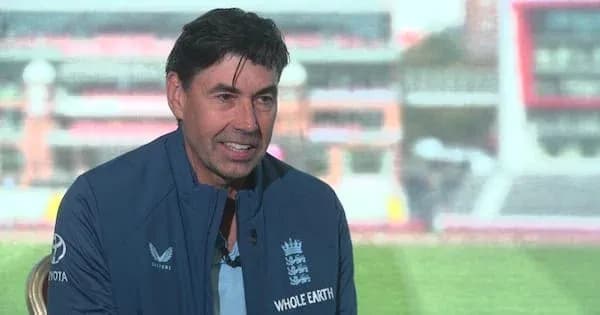
Stephen Fleming has spent most of his cricket life trying to knock over England. Now he’s in charge of saving them.
The former Black Caps captain, one of New Zealand’s modern greats, has taken on the England Men’s Test head coach role and admits the lure of the Ashes was simply “too good to refuse”.
“New Zealanders love beating Australia so that doesn’t change,” he told 1News, half-grinning at the thought. The Ashes, he said, will be a professional highlight. He’s having to “suppress” his excitement.
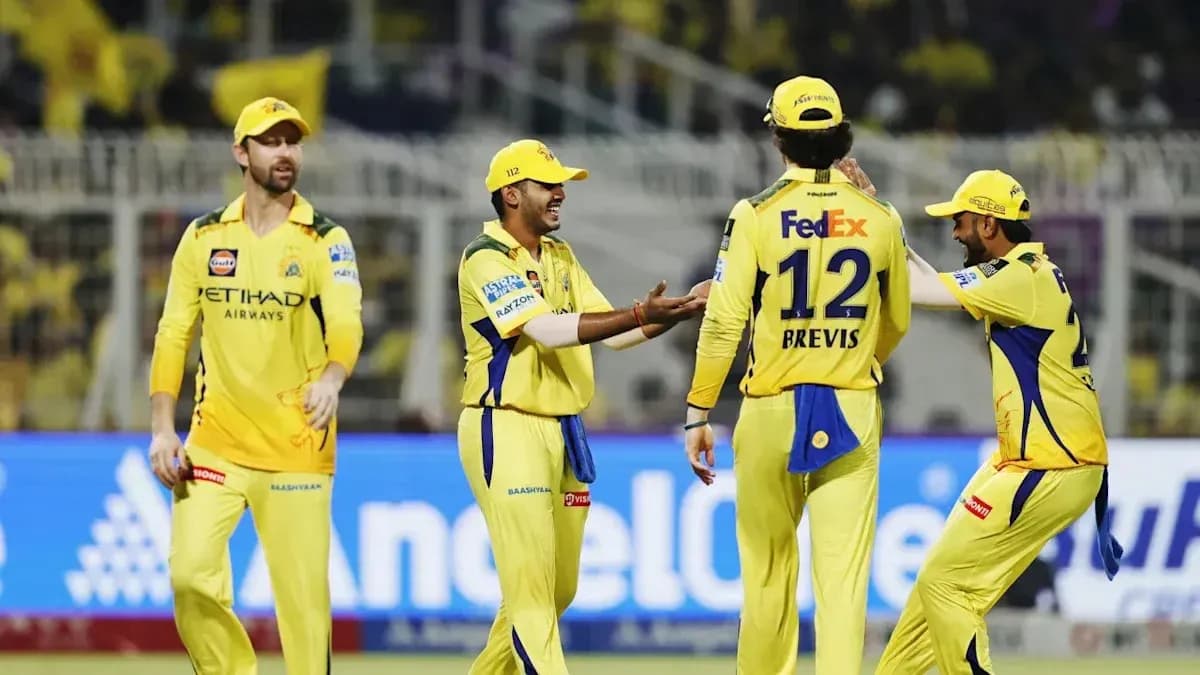
This is no wide-eyed rookie walking into the job. Fleming captained New Zealand for a decade between 1997 and 2007, winning 28 Tests and setting standards that still shape the Black Caps. He retired from international cricket in 2008 and built a second career as one of the most respected coaches in the T20 world, front and centre of Chennai Super Kings’ IPL dynasty.
A job he nearly walked past
Fleming’s first instinct was not to grab the England role with both hands.
“You go through it and think, ‘Can I make an impact?’” he said. After 18 years in the Indian Premier League, he had just stepped away from the grind. The England job opened. The window to decide was brutally short — “three, four days” — to process walking out of one long-term post and straight into another.
He sat down with his family. They weighed the pull of home against the sheer scale of what was on offer.
“The significance of the role and the respect I have for this role” tipped it. As he gathered information, talked to people, thought about the players and the challenge, something “started to burn in the stomach”. The more he learned, the stronger it burned.
For a man who spent some of his best years in county cricket, the attraction of England was never just financial or reputational. “As a cricketer, it’s probably the most prestigious position in world cricket,” he said. His time in the UK left him with “a deep respect for English cricket”.
That respect will be tested quickly.
England’s Test side has been under fierce scrutiny after a 4–1 Ashes defeat in Australia earlier this year and a 2–1 series loss to New Zealand in June. Brendon McCullum was removed as Test coach in July, though he kept charge of the T20 and ODI sides. Ben Stokes retired during the third Test against New Zealand and was then stood down, along with a teammate, for the second Test while under investigation for breaking a midnight curfew. A run of alcohol-fuelled late-night incidents has damaged the team’s image.
Fleming walks into a dressing room that has lost matches, lost leaders and lost some trust.
McCullum, friendship and a handover like no other
Few people in world cricket know Brendon McCullum as well as Fleming does. McCullum debuted for the Black Caps under Fleming’s captaincy. The pair are close friends and business partners. Now they are also colleagues in the England set-up, sharing responsibility across formats.
“It’s a challenge at times but he’s great,” Fleming said of McCullum. Their conversations were central as he wrestled with whether to take the job, and will remain central as they try to balance players, resources and schedules across Test, ODI and T20 cricket.
“He’s loved to bring his flavour to the England team and learning as well, so it’s not just one way traffic… he couldn’t have spoken more highly and endorsed it,” Fleming said. McCullum, he added, was “heartsore” at losing the Test role but “very encouraging” about the opportunity it created.
That relationship could be one of England’s biggest assets. Two New Zealanders, different temperaments, shared history, now trying to drag three formats in the same direction.
“It’s nice to be able to have that friendly face with that professional slant to be able to achieve hopefully some great things,” Fleming said.
He is still finalising his own backroom team and kept names to himself. He joked about the dynamic with McCullum. “I’m a little bit older than him so I’ll still be able to get the key guys although he’s now saying he got more experience so I’m second fiddle so we’ve got a little bit of a battle.”
Why a T20 coach feels at home in whites
Some critics have already questioned whether a coach steeped in IPL life for nearly two decades is the right fit for the longest format. Fleming doesn’t flinch at that.
“My DNA was playing in the whites,” he said. Captaincy, five-day chess, the grind and the reward of Test cricket – that’s where he believes his instincts lie. “I was brought up in the red ball and learned the white ball. Franchise cricket’s been a big part of my life but the deep passion is really test cricket.”
He sees his methodical planning and tactical style as naturally aligned with Tests, which he calls a format with more “substance and strategy”. One detail matters a lot to him: cricket remains one of the few sports still captained “from the inside out”.
That puts a heavy onus on Joe Root and the leadership group. Fleming’s job, as he sees it, is to make sure they are “well equipped”.
He talks often about “cricket smarts” – the ability to adapt when the game turns ugly. “That’s what I find great fun,” he said. Strategy. Identity. Belonging. Standards. Representing the shirt properly.
He learned that as captain of New Zealand, a side that rarely had the deepest pockets but often punched above its weight. He plans to bring that same resourcefulness to England.
The Kiwi coaching edge
Asked whether he had considered a role with New Zealand Cricket instead, Fleming didn’t duck it. It’s “always a consideration,” he said, but the England job was the one on the table. As for the current Black Caps: “No, they’re too good. They’re set, they’re doing so well.” He has “utmost respect” for what they’ve achieved and for players he knows well.
He believes New Zealand coaches bring something specific to the world game.
“We don’t have the resource that other bigger countries have, that’s not just in cricket, so what we do is we look outside the square and we squeeze everything we can out of the stone to make sure that we can compete on the world stage, that’s our DNA, that number 8 wire DNA that we pride ourselves on.”
That scarcity, he says, shapes how Kiwi coaches think and how they treat people. “You can’t burn them in New Zealand if you haven’t got much resource.” Relationships matter. Culture matters. And it has to be lived, not just written on a wall.
His vision for England is blunt: he wants them to be the best Test side in the world.
“It is a challenge, it’s the pinnacle,” he said. The attention is intense, the media unforgiving, but he views that as part of the privilege of the job. He believes there is “room to move around” and build a stronger cultural core and sense of belonging that players are craving.
Bazball, backlash and the next step
Fleming is not about to trash what came before him. On the contrary, his admiration for McCullum’s “Bazball” revolution is clear.
He called it “quite remarkable” what McCullum and former captain Ben Stokes achieved across two years, transforming a faltering side with an aggressive, fearless style that prioritised positive thinking and bold tactical calls. The shift, he said, “culturally changed the cricket landscape”.
It started, fittingly for Fleming, against New Zealand. England’s explosive series win at home was “a stand up and take notice moment” that demanded courage from both leaders. “I have huge respect towards that,” he said.
In his view, the game has now evolved again. Other teams have caught up to those standards and ideas. The plan has been “challenged” late in the McCullum–Stokes partnership. Fleming’s task is not to rip up that playbook but to refine it, add layers, and re-establish England at the top.
He is clear on one wider responsibility: Test cricket itself. Under pressure from the money and spectacle of T20, the long game needs defenders.
“We have a responsibility to entertain and play the game well,” he said. He sees himself as one of the custodians of that.
His first chance to put theory into practice comes in December, when England tour South Africa for a Test series running into early January. He missed the recent Pakistan series because of commitments at home and still has commentary duties during India’s T20 tour of New Zealand, but says he is now ready “to give it everything”.
Discipline, Root and no more curfews
If the cricketing challenge is complex, the off-field one is blunt. The late-night incidents and alcohol issues that have dogged this England team have left him “disappointing” and determined to lift standards.
There will be an education process. The example, he believes, already sits in the dressing room. He points to Joe Root, 35, the former captain who led England from 2017 to 2022, as the model.
“Very similar to Kane Williamson where they epitomise everything great about how you conduct yourself by still being a great player,” Fleming said. That’s the benchmark.
“There’s work to be done,” he added. He will not, though, be reintroducing midnight curfews. Control will come through culture, not clocks.
At some point, he will have to face his old team. England are due to play the Black Caps in two years’ time. He hasn’t allowed himself to picture that yet. “Thankfully there’s two more years to get some performances under the belt and then we’ll come across that, but it will be a good battle.”
A New Zealander, steeped in Test cricket, charged with reviving England and taking on Australia. The Ashes, South Africa, the scrutiny, the culture rebuild – it all lies in front of Stephen Fleming now.
The burning in his stomach will have plenty of fuel.