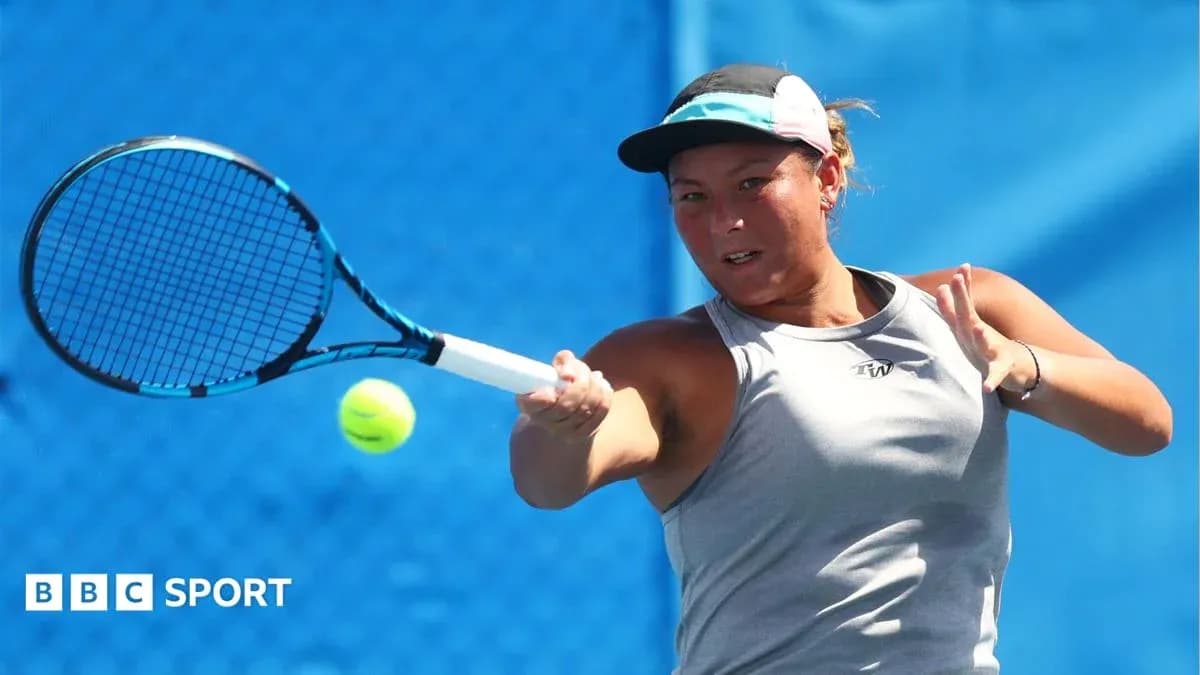
Tara Moore’s Legal Battle with WTA Dismissed
Tara Moore’s £15m legal fight with the Women’s Tennis Association has been shut down in a New York court, drawing a hard legal line under one of the most turbulent doping sagas in recent tennis history.
The 34-year-old Briton, once the country’s leading women’s doubles player, had sought at least $20m in damages, arguing the WTA failed in its duty of care by not warning competitors about the risk of contaminated meat at a 2022 tournament in Colombia.
Judge Andrew Carter of the United States District Court dismissed her motion and ordered the case closed, ruling that Moore’s challenge to an earlier arbitration decision was “not justified” in law.
For Moore, it is another brutal setback in a story that has already cost her prime years on tour. Speaking to BBC Sport after the ruling, she described the process as a “nightmare” and pointed directly at the sport’s policing of performance-enhancing drugs. “It just shows how broken the anti-doping system is in tennis,” she said.
The Saga
The saga began in April 2022 at a WTA 250 event in Bogota, where Moore tested positive for the anabolic agents nandrolone and boldenone. An independent tribunal later concluded in December 2023 that contaminated meat was the source of the substances, clearing her of “fault or negligence”.
That finding did not save her. The International Tennis Integrity Agency appealed to the Court of Arbitration for Sport, and Cas sided with the ITIA. Moore received a four-year ban, ruling her out of the sport until 2028.
Her legal campaign then shifted from sporting courts to civil ones. Moore took her case to the American Arbitration Association, accusing the WTA of negligence and claiming its “failure to warn against eating meat in Colombia was a direct cause of her positive test result and the harm that followed”. She argued that the governing body knew of a “known and specific danger” yet “stayed silent” and then pushed the blame onto the player.
The arbitrator rejected her claim and backed the Cas ruling, a decision Moore then challenged in the United States District Court. She alleged she had been denied a fair hearing in arbitration and pressed again for substantial compensatory damages.
Judge Carter’s decision on Friday closes that route. The court declined to interfere with the arbitration outcome, leaving the ban intact and Moore’s claim against the WTA dead in the water.
For a player who climbed to a career-high doubles ranking of 77 in 2022, the timing could scarcely be worse. The ban runs through 2028, swallowing what should have been the final, seasoned stretch of her career.
The WTA and ITIA have been approached for comment. Their responses, or lack of them, will say plenty about where tennis now stands in the battle between strict liability and player protection.