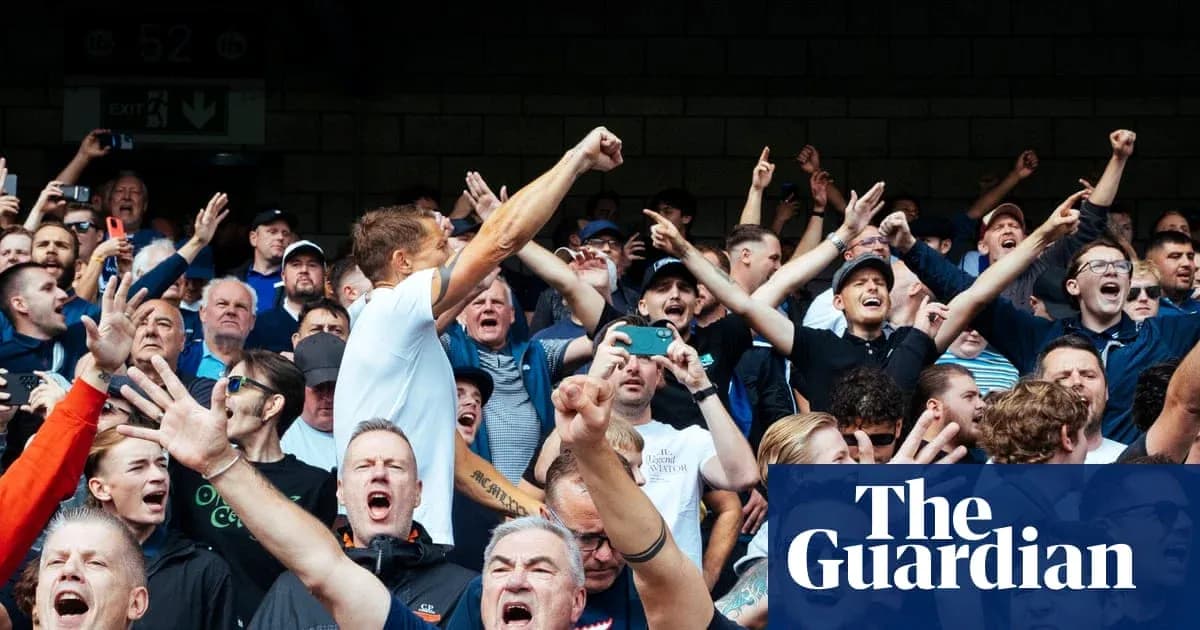
The Thames Derby at 100: A Rivalry Renewed
They came together again on Saturday, Millwall and West Ham, for the 100th competitive meeting of a rivalry that has outlived the very world that created it. Fourteen years since they last faced each other in a meaningful game. Three centuries since they first did. The Den felt it. So did the streets around it.
This is a fixture born on the river and in the yards, not in boardrooms or branding decks. Two clubs separated and bound by the Thames, shaped in the late 19th century by the heavy industry of east London’s docklands. Back then, they were neighbours in a far more literal sense – Millwall on the Isle of Dogs, Thames Ironworks in Canning Town, barely more than two miles of water and warehouses between them.
Before Millwall moved south of the river to New Cross in 1910, both clubs lived north of the Thames, close enough for workers to share pubs, shifts and, eventually, grudges. The Lions were once the Dockers. West Ham, the Irons, took their name from the Thames Ironworks and Shipbuilding Company. These weren’t just nicknames. They were job descriptions.
Dock work was brutal and uncertain. Men queued at dawn with no promise of a wage. Some were picked, many were not. Every day was a trial of strength, luck and reputation. That world forged a code – toughness, loyalty, hard work – that still sits at the heart of how Millwall and West Ham see themselves and sell themselves. The football clubs became the most visible heirs of that culture.
History, though, is never neat. Much of what surrounds this derby lives in the grey area between memory and myth. One story, told and retold for decades, claims the rivalry truly took root during the General Strike of 1926: West Ham dockers, so the tale goes, backed the strike; Millwall’s did not. A clean dividing line. A betrayal that never healed.
Except the historians don’t buy it. David Sullivan and Brian Belton, who have dug through the records and testimonies, argue the reality was almost the opposite. Belton says the strike held firm in the Millwall docks, while only a small number broke ranks around Canning Town. The evidence undercuts the legend, but the legend survives. A century on, it still clings to this fixture like river fog.
The first footballing collisions came in the 1890s, when Millwall Athletic faced Thames Ironworks. Even here, the lines blur. Belton warns against treating Thames Ironworks as a simple early version of West Ham United. The works team folded before West Ham were formed in 1900. The narrative of an unbroken “Dockers Derby” stretching back into Victorian times doesn’t quite stand up under scrutiny.
The real venom arrived later. The 1970s changed everything.
As London’s docks fell silent and cranes rusted into the skyline, the rivalry hardened. Traditional industries collapsed, jobs vanished, and communities that had grown around the docks were left to absorb the shock. It would be too crude to claim that industrial decline directly caused the violence that began to stain this fixture, but the two stories run in parallel. As work and certainty disappeared, football became one of the last arenas where territory, masculinity and local pride could be loudly, physically asserted.
The 1970s brought flashpoints that still echo. In 1972, Harry Cripps – a Millwall icon loved on both sides of the divide – had his testimonial scarred by serious disorder. Four years later, a Millwall supporter died after falling from a train, with some believing West Ham fans were involved. When the clubs met competitively again in 1978 after a long hiatus, the aggression returned with them.
By the 1980s, 90s and early 2000s, the fixture’s reputation had outgrown the football. The most infamous chapter came at Upton Park in 2009, when a League Cup tie descended into chaos outside the stadium, with fighting, a stabbing and pitch invasions. It became the modern reference point, the game that cemented the rivalry’s image in the public mind.
Their Championship meetings in 2011-12 were calmer, far removed from the scenes of 2009, and then the clubs drifted apart again. No league or cup meetings until this season. In the gap, the mythology was kept alive by films such as ID and Green Street, which turned Millwall and West Ham into cinematic shorthand for English football violence. The Dockers Derby became a brand of menace.
That was the backdrop to Saturday. The 100th meeting. Live on ITV. Kick-off dragged forward to 12.30pm to cut down drinking time. Around 400 police officers deployed. West Ham handed just 1,774 tickets in a crowd of about 20,000, their fans advised to travel via London Bridge to South Bermondsey and then escorted to the away end. Most arrived in plain clothes, colours tucked away.
The tension was there, but it was measured, managed. Online, the usual bluster, threats and memes. On the ground, a different picture.
Both sets of supporters treat journalists with a degree of suspicion. Photographers especially. People on both sides warned visiting media to keep their heads down. There were a few sharp words thrown around, a reminder that this is not a neutral environment, but they came from a small minority. What stood out more was the sense of community – families walking together, older fans swapping stories, younger ones buzzing for a game they’d only heard about in stories and on screens.
On the pitch, the script refused to follow the form table. West Ham arrived at The Den top of the league and fresh from a 6-0 dismantling of Wrexham. Millwall, patched up and carrying injuries, were supposed to be clinging on. They did the opposite.
The Lions tore into the first half, imposing themselves, winning duels, dragging the game onto their terms. By half-time, they led 2-0 and deserved it. The old stadium crackled, the noise rolling down from the stands in waves that felt like a throwback to a rougher era.
West Ham, though, carry quality and resilience. The pressure built slowly, then suddenly. They found their way back into the contest, first with territory, then with chances, and finally with goals. With 10 minutes left, they forced the equaliser. The reaction was volcanic. Limbs in the away end, fury and frustration in the home sections. For a brief spell, the atmosphere tilted from fierce to genuinely volatile. Extra police moved into position, eyes fixed on the stands, waiting to see which way it would go.
The game still had one more jolt. In the 89th minute, Kyrell Lisbie burst through on goal, the kind of moment that can write itself into derby folklore. Mohamadou Kanté dragged him down. No hesitation from the referee: straight red. A clear scoring chance denied, and with it, perhaps, Millwall’s winner. The home fans roared for justice; the away end exhaled in relief. The final whistle came with the score locked at 2-2, both sides left to juggle pride and regret.
Outside, the tension flickered again but never truly caught. A few brief skirmishes between Millwall supporters and police quickly fizzled out. Within minutes, the scene had shifted. Young fans clustered by the players’ exit, programmes in hand, waiting for autographs. Others stood in small groups, replaying key moments, arguing over the red card, debating what the draw really meant.
From a distance, the similarities between these clubs can look greater than the differences. Both lean heavily on the same values: working-class London, straight-talking toughness, loyalty, authenticity. Many families are split down the middle – a Millwall dad, a West Ham son, or the other way round. The accents are the same. The stories overlap. The streets aren’t as close as they once were, but they rhyme.
Yet when the shirts face each other, there is still a sharp edge. Real animosity persists in parts of both fanbases, sharpened by history, myth and the need to stand apart. Perhaps that’s the heart of it: two clubs fighting, in different ways, to claim the same cultural ground, to say, “We are the truest voice of this place.”
The docks that named this derby are mostly gone now, replaced by glass, steel and speculative capital. The clubs have moved, modernised, commercialised. Their meetings on the pitch have become rare events rather than regular battles. But the argument over what they represent – and who represents it better – remains stubbornly alive.
On Saturday, under early kick-off skies and heavy police presence, that old argument flickered again at The Den. Not with the chaos of 2009, not with the violence of the 70s, but with something more enduring: two clubs still trying to prove that, in a city that keeps changing, their version of London is the one that lasts.