UFC 331: Shocking Wins and Brutal Moments in Los Angeles
The bright lights of Los Angeles have seen their share of chaos, but UFC 331 carved out its own place in the city’s fight history. In a card stacked with names on the rise and veterans with a point to prove, the night delivered exactly what the promotion promises at its best: brutal clarity. Careers surged, reputations cracked, and in one stunning moment, a heavyweight prospect’s aura vanished in just 12 seconds.
Jon Jones Watches a Giant Fall
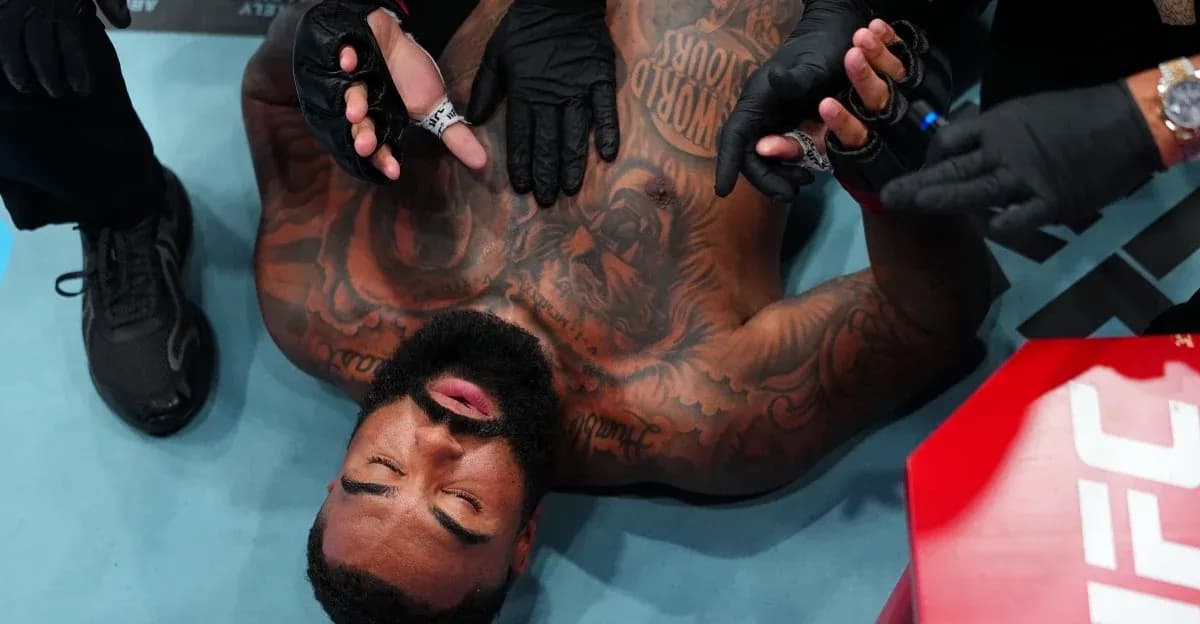
All it took was one clean shot and 12 seconds.
Gable Steveson, the Olympic wrestling phenom once tipped as a future heavyweight force, suffered a shocking knockout defeat that sent a jolt through the arena and the wider MMA world. Cameras quickly cut to Jon Jones, the reigning standard of greatness at the top of the sport, whose stunned reaction told the story.
No words were needed. Jones’ expression — eyes wide, mouth open, a mix of disbelief and recognition — captured the brutality of heavyweight reality. Hype doesn’t buy you time. Reputation doesn’t buy you recovery. One mistake, one punch, and the narrative flips.
Steveson’s loss will echo long after the cage door closes. For a fighter with that level of expectation, this isn’t just a blemish; it’s a crossroads. For everyone watching, including Jones, it was a reminder that in this division, potential is fragile and the climb is merciless.
Menifield vs. Baraniewski: Power Meets Ambition
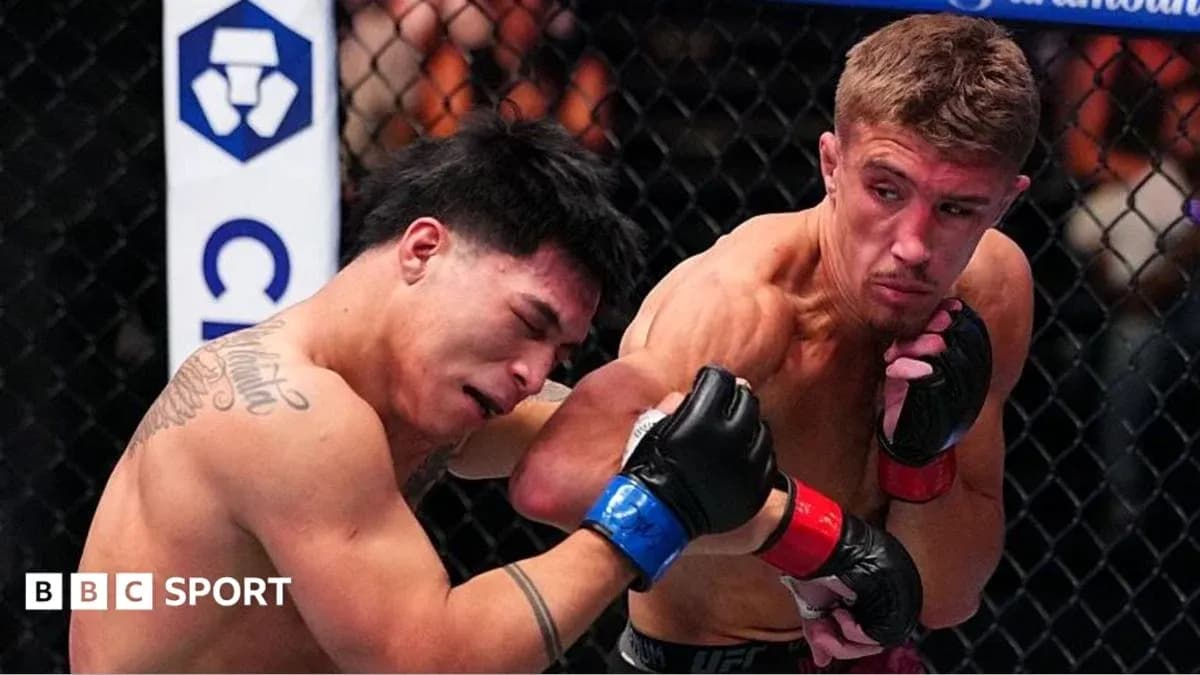
Earlier in the night, Alonzo Menifield and Iwo Baraniewski delivered the kind of fight that shapes the middle of a card and the direction of two careers.
Menifield, known for his raw power and willingness to bite down on the mouthpiece, stepped in as the more seasoned name. Baraniewski brought the urgency of a man trying to crash the rankings, the sort of fighter who treats every exchange like an audition.
From the opening bell, Menifield stalked, looking to land heavy and early. Baraniewski tried to answer with movement and volume, refusing to be a stationary target. The exchanges crackled with danger. Every time Menifield closed distance, the tension spiked; every time Baraniewski escaped, you could feel his confidence grow.
The bout turned into a test: Menifield’s experience and power against Baraniewski’s hunger and resilience. It wasn’t just about who landed more. It was about who could impose their rhythm under pressure, who could hold their nerve when the cage started to feel small.
Vera vs. Jourdain: Violence with a Tactical Edge
Marlon Vera and Charles Jourdain stepped into the cage with a simple, shared truth: neither man really knows how to be boring.
Vera, all cold eyes and quiet menace, brought his trademark slow-burn violence — the kind of fighter who doesn’t rush, just suffocates. Jourdain, fluid and creative, came armed with movement and angles, eager to turn the fight into a striking showcase.
The early going belonged to the Canadian’s footwork and variety. Kicks, feints, combinations off the jab — Jourdain tried to keep Vera at the end of his weapons, refusing to let the Ecuadorian plant his feet. But Vera doesn’t chase. He cuts off. He waits. He punishes.
As the minutes ticked by, Vera’s pressure started to bite. Every leg kick landed with intent. Every counter felt heavier. Jourdain still fired back, still showed flashes of the flair that made his name, but the fight’s gravity shifted. Vera dragged it into his world: slower, nastier, more inevitable.
By the closing stretch, you could see the marks of Vera’s work written across Jourdain’s body. It was less a sudden swing than a steady takeover, the kind of performance that reminds everyone why Vera remains a permanent threat to anyone near the top.
Gandra vs. Diaz: A Battle for Space and Control
Ryan Gandra and Osman Diaz fought like two men who understood exactly what this stage meant.
Gandra tried to assert himself behind structure — measured entries, disciplined combinations, calculated pressure. Diaz answered with grit and defiance, refusing to concede any part of the cage without a fight.
The bout unfolded as a tug-of-war for control. When Gandra found his range, his strikes came clean and organized, the kind of work that impresses judges and coaches alike. Diaz, though, wouldn’t go away. He fired back in the pockets, forced scrambles, and made every second feel contested.
Momentum swung in surges. One minute Gandra looked in command, the next Diaz dragged him into rougher waters. It was less about highlight-reel moments and more about who could sustain their game plan when fatigue crept in and the lungs started to burn.
By the end, both men had made their case. One with structure, one with stubbornness. Both left with more respect attached to their name than when they walked in.
O’Neill vs. Moura: A Statement in the Women’s Ranks
Casey O’Neill came to Los Angeles with something to prove. Eduarda Moura arrived determined not to be a stepping stone.
From the outset, O’Neill pushed a fierce pace, blending pressure striking with the threat of level changes. Her intent was clear: make Moura uncomfortable, make her react, never let her settle. Moura stood her ground, answering with sharp counters and physical strength in the clinch.
The fight became a test of layers. O’Neill’s volume and relentlessness versus Moura’s composure and resistance. When the exchanges spilled into grappling, both showed their craft — O’Neill chaining attempts, Moura fighting hands, digging for underhooks, refusing to give up dominant positions cheaply.
As the rounds wore on, the tempo favored O’Neill’s style. Her willingness to work in every phase, to accept a bit of damage in exchange for forward momentum, slowly carved out the edge she needed. Moura never folded, but the accumulation of pressure told its own story.
On a night full of violent reminders, O’Neill’s performance carried a different kind of message: she’s not just a name on a prospect list. She’s part of the division’s present.
Brito vs. Chikadze: Technique, Timing, and Thin Margins
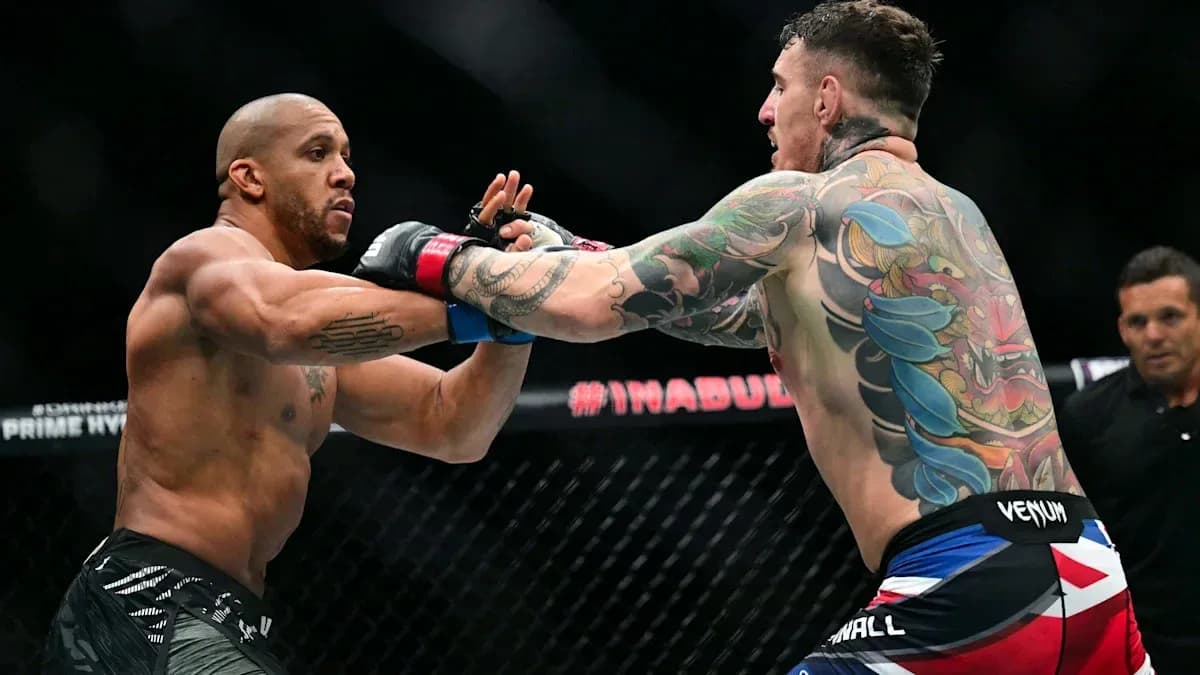
Joanderson Brito against Giga Chikadze was always going to be about timing and nerve.
Chikadze, one of the most dangerous kickers in the sport, tried to turn the cage into a striking laboratory. Distance, angles, and those whip-crack kicks — body, legs, head — all designed to keep Brito guessing and out of rhythm. Brito, compact and explosive, looked to break that pattern with pressure, takedown threats, and sudden bursts of power.
The first exchanges were a chess match wrapped in violence. Chikadze snapped out kicks and straight shots, testing Brito’s reactions. Brito answered with feints, level changes, and the kind of forward march that forces strikers to make quick decisions under fire.
Every time Brito closed the gap, the air changed. Chikadze had to choose: circle and reset, or stand and trade. Every time Chikadze created space, Brito had to reset his entries. It was a constant recalibration on both sides.
In fights like this, the margins are razor-thin. One slip on the entry. One misread on a kick. One exchange that lasts a second too long. Brito’s persistence and Chikadze’s precision clashed in a way that reminded everyone why featherweight remains one of the sport’s most unforgiving divisions.
A Card That Asked Hard Questions
By the time the final walkouts were done and the last scorecards read, UFC 331 had done what the best cards always do: it stripped away illusions.
Gable Steveson discovered how cruel this sport can be when the margin for error is a single punch. Jon Jones, watching cageside, saw a glimpse of the chaos that still rules even as legacies are built. Across the rest of the card, Menifield, Vera, Jourdain, Gandra, Diaz, O’Neill, Moura, Brito, and Chikadze all stepped into that same unforgiving light.
Some left with momentum. Some left with questions. All left with a clearer picture of where they truly stand.
The only real mystery now is who will turn this night in Los Angeles into a launchpad — and who will look back on UFC 331 as the moment everything started to slip away.