Untold Raygun: Breaking Badly - A Polarizing Olympic Debut
On screen, it starts like a love story.
Netflix’s Untold Raygun: Breaking Badly opens not with controversy, but with Rachael Gunn and her husband Samuel Free — “Sammy (Sex)” in the film — moving in sync on a dance floor and in life. They bonded over a shared obsession with movement, with Sammy eventually stepping into the role of coach as Gunn, now known globally as Raygun, chased an Olympic dream.
Their wedding footage drops viewers straight into that world: choreography instead of tradition, dance breaks instead of stiff formalities. It feels intimate, almost disarmingly so, for someone who would soon become one of the most polarising figures of the 2024 Paris Olympics.
Then the story shifts. Hard.
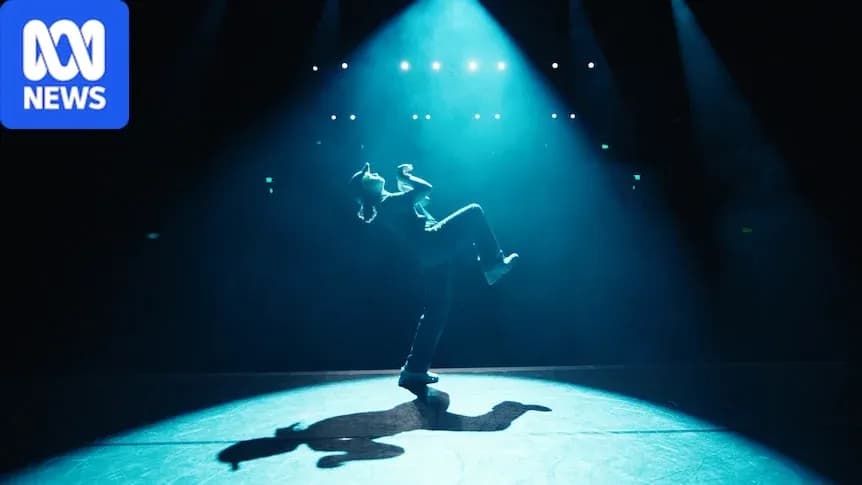
Raygun, an academic turned unlikely Olympian, went viral after her breaking performance in Paris. Her routine — complete with the kangaroo and the sprinkler — detonated across the internet. Memes, comedy skits, and elaborate conspiracy theories flooded social feeds. Opinion hardened quickly. Some loved the absurdity and individuality. Others saw only embarrassment.
She became a pop culture lightning rod overnight. American rapper Snoop Dogg had a say. British star Adele weighed in. Everyone, it seemed, had a take on Raygun.
The documentary peels back what sat behind that moment. In the countdown to the Games, Raygun appears startlingly undercooked for someone about to debut in a new Olympic sport. The film makes clear she had very few people around her with genuine experience of preparing an athlete for a stage this big. The gap between her ambition and her support network is laid bare.
She did, though, see the danger coming.
“Right before the Olympics, I went to my therapist and panicked,” she says. The therapist asked her to name the worst possible outcome. Raygun’s answer is chilling in hindsight: that the whole world could laugh at her. Paris would come close to fulfilling that fear.
Her parents, Russell and Beverly, remember a very different girl. “She was just a normal suburban girl,” her mother says, recalling a childhood of ballet, tap, and jazz classes long before breaking entered the picture. Her father jokes that when he flew to Paris, he thought he was going there to console his daughter, not watch a global storm break around her.
Not everyone in the breaking community found the saga funny.
B-Girl Tinylocks, a key voice in the film, is appalled by Raygun’s performance. “Who could have imagined it would have gone so wrong?” she says, summing up a sentiment that rippled through parts of the scene. Tinylocks never tried out for the Olympics herself — a decision framed in the documentary as coming from her fierce protection of breaking as an art form.
That tension sits at the heart of the story. This wasn’t just Raygun’s Olympic debut. It was breaking’s first appearance on the Games programme. For many purists, the art form’s global coming-out party ended up defined by a routine they felt did not represent them.
B-Girl Flix, who says she considered Raygun a friend for 15 years, goes even further, calling herself “offended” and “embarrassed” by what she saw in Paris. The personal sting is obvious. This is not detached critique; it’s a community wrestling with how one performance, and one personality, came to symbolise their sport on the biggest stage.
The film rewinds to Raygun’s Olympic qualifier, showing her beating B-Girl Molly. Both look tight, nerves etched into their movement. There is little of the swagger or polish usually associated with elite breakers. Neither looks especially professional in the footage, a point that lands heavier once viewers know what’s coming in Paris.
At the Games themselves, the numbers were brutal. Raygun failed to earn a single vote from any of the judges in her rounds. No grey area. No near misses. Just a clean sweep against her.
The documentary gives her room to process it all. She narrates the build-up, the performance, and the aftermath with a mix of disbelief and weariness. “Sometimes this all feels like a really wild dream,” she says in voiceover early on. “It’s like I’ve been charged with some crime.” The line hangs over the film as social media clips and headlines flash past, each adding weight to that sense of public trial.
By the end, the fallout has already reshaped her life. Raygun reveals she has left her job in academia, stepping away from the security of that world without a clear next chapter. The film closes with that uncertainty intact.
Untold Raygun: Breaking Badly doesn’t answer what comes next for her — or for Olympic breaking. It leaves that question, and the sport’s uneasy reflection in the mirror of Paris 2024, hanging in the air.