Wasim Akram's Message on India-Pakistan Rivalry: It's Just a Game
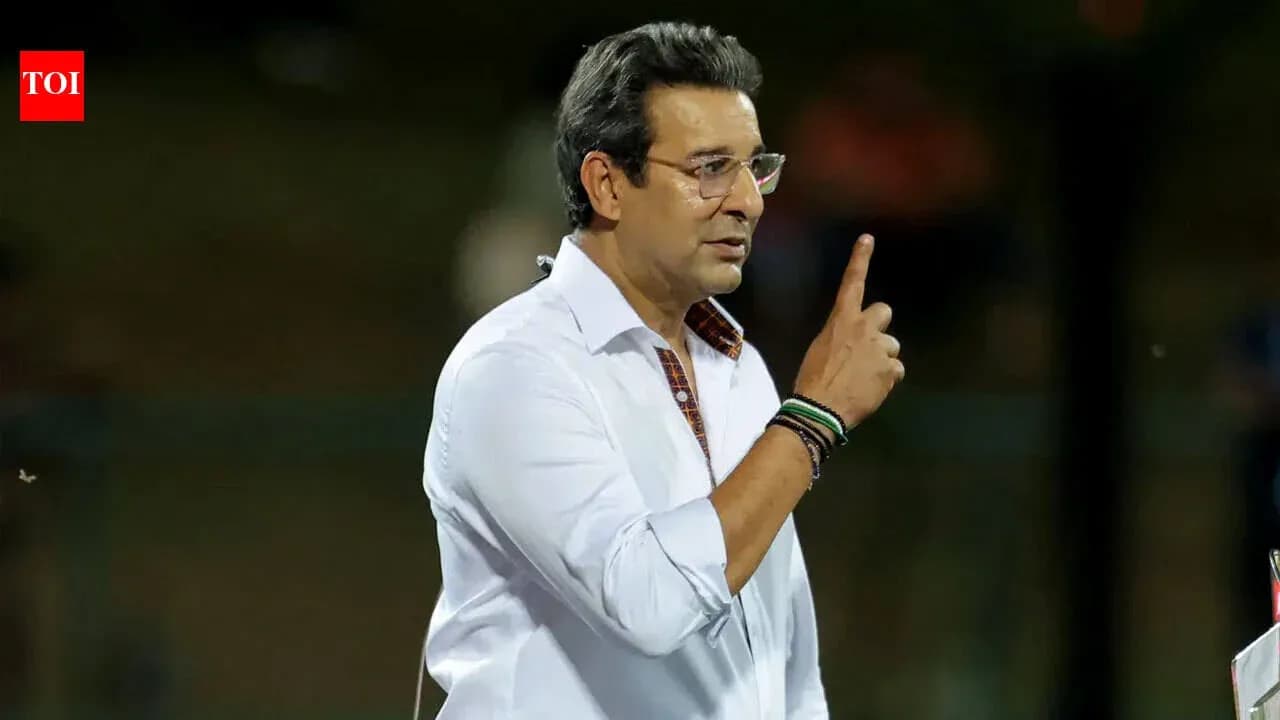
Wasim Akram has lived the India–Pakistan rivalry from the middle of the pitch, with a new ball in his hand and a stadium on edge. He has heard the boos, felt the noise, and walked through dressing rooms that carried the weight of two nations.
And now, he has had enough of the baggage.
Speaking on the 1 Mint podcast, the Pakistan great cut through the hysteria that surrounds every India–Pakistan clash and fired a simple, pointed reminder to fans on both sides: stop dragging history and politics into cricket.
“People have too much time. Why can’t they understand? It’s only a frikkin game,” Akram said, refusing to dress it up. “At the end of the day, it’s just a match. Somebody has to win, somebody has to lose. And move on to the next one.”
The line was delivered with the weariness of a man who has seen this cycle repeat for decades. A result, a meltdown, a flood of posts, and a rivalry that spills far beyond the boundary rope.
“Revenge and all is so 1970,” he added, dismissing the idea that a cricket match can settle old scores. For him, the endless outrage is nothing more than “the classic ‘an empty mind is a devil’s workshop’ thought process.”
A rivalry played on the field, fought on social media
Akram’s words land at a time when India–Pakistan encounters exist as much on timelines as on turf. Every game becomes a referendum on national pride, every dismissal a meme, every quote a trigger.
He has watched the rivalry evolve from packed stadiums and tense handshakes to trending hashtags and online pile-ons. The noise hasn’t just grown; it has mutated.
Akram’s frustration isn’t with the rivalry itself. He understands its pull better than most. He has bowled at Eden Gardens with 100,000 people roaring, walked into World Cup cauldrons where every ball felt like a verdict.
His problem is with what happens after.
What once ended with a handshake and a quiet flight home now drags on for days, sometimes weeks, fuelled by fans who refuse to “move on to the next one.” For Akram, the equation remains stubbornly simple: one side wins, one side loses, both should get on with it.
The Irfan Pathan connection
In the middle of this serious message, Akram did what he often does: he slipped in a story, a little humour, and a reminder that across the border there are not enemies, but colleagues and friends.
He went back to 2004, to Australia, where a young Irfan Pathan walked up to him in awe. Pathan had grown up watching Pakistan’s left-arm greats, and the resemblance in action between the two was impossible to miss.
“Irfan met me in 2004 on his first tour to Australia; I was commentating. He was a big fan. Grew up watching us. I gave him a few tips here and there, but he did well early on in his career,” Akram recalled.
Pathan’s action, Akram said, already looked right. There was no need to tear it apart. The help came in the form of ideas, not mechanics.
“His action was similar to mine from the very beginning. But when players ask you about something, what you tell them is mostly about the mindset,” Akram explained. “Action and all is fine, because at that stage, you have reached that level where you’re representing the country.”
So the conversation moved to the craft: wrist position, reading a batsman, the timing of variations, when to hold back and when to attack. The sort of detail that separates a good international bowler from a dangerous one.
“So yeah, it was good fun. Irfan is a good boy; he still keeps meeting me,” Akram said, a veteran’s fondness clear in his voice.
From fan to foe — on the field, at least
Pathan took those lessons and built a career that, inevitably, kept bringing him back to Pakistan. He became one of India’s most effective left-arm fast bowlers of the 2000s, swinging the new ball viciously and troubling top orders across formats.
Against Pakistan, he was relentless.
Across 36 internationals versus the neighbours, Pathan claimed 67 wickets: 27 in Tests, 34 in ODIs and six in T20Is. Those numbers are not just tidy; they tell the story of a bowler who relished the occasion.
Karachi 2006 remains the high point. In the first over of a Test innings, Pathan ripped through Salman Butt, Younis Khan and Mohammad Yousuf to complete a hat-trick, only the second ever by an Indian in Test cricket. Three big names, one searing spell, and a rivalry moment carved into memory.
That performance, and many others, made the comparisons with Akram impossible to escape. A left-armer, hooping the ball at pace, hurting Pakistan. The narrative wrote itself.
Banter, criticism and the thin line
Since retirement, Pathan has shifted from new-ball spells to sharp opinions. On television and on social media, he has become one of the more outspoken former Indian cricketers, especially around India–Pakistan games.
He has not shied away from criticising Pakistan or its players, particularly in the aftermath of big encounters. Those posts travel fast. They trigger replies, arguments, and the familiar storm.
Akram knows this. He sees it. And he chose to laugh about it.
“It’s a different thing that he keeps tweeting some or the other thing against Pakistan,” he said with a smile. Then came the sting: “But our fans are ready too. They don’t have the tendency to ignore either. They just have to reply.”
That, in a sentence, is the problem as he sees it. Not that a former player has an opinion. Not that fans care. But that nobody wants to let anything go.
Every jab becomes a wound. Every comment demands a counter. The rivalry, instead of living in the overs and the scorecards, festers in replies and quote-tweets.
Akram’s bottom line
Strip away the anecdotes, the humour, the nostalgia, and Akram’s stance is stark.
He doesn’t want India–Pakistan stripped of its edge. He wants it stripped of its venom.
For him, the boundary between sport and everything outside it must remain clear. Cricket is competition, not continuation. A match is not a referendum on history.
“Somebody has to win, somebody has to lose. And move on to the next one,” he repeated, as if hoping the simplicity might finally cut through the noise.
The question now is whether anyone is really listening.