WBO President Responds to Hamzah Sheeraz's Corruption Claims
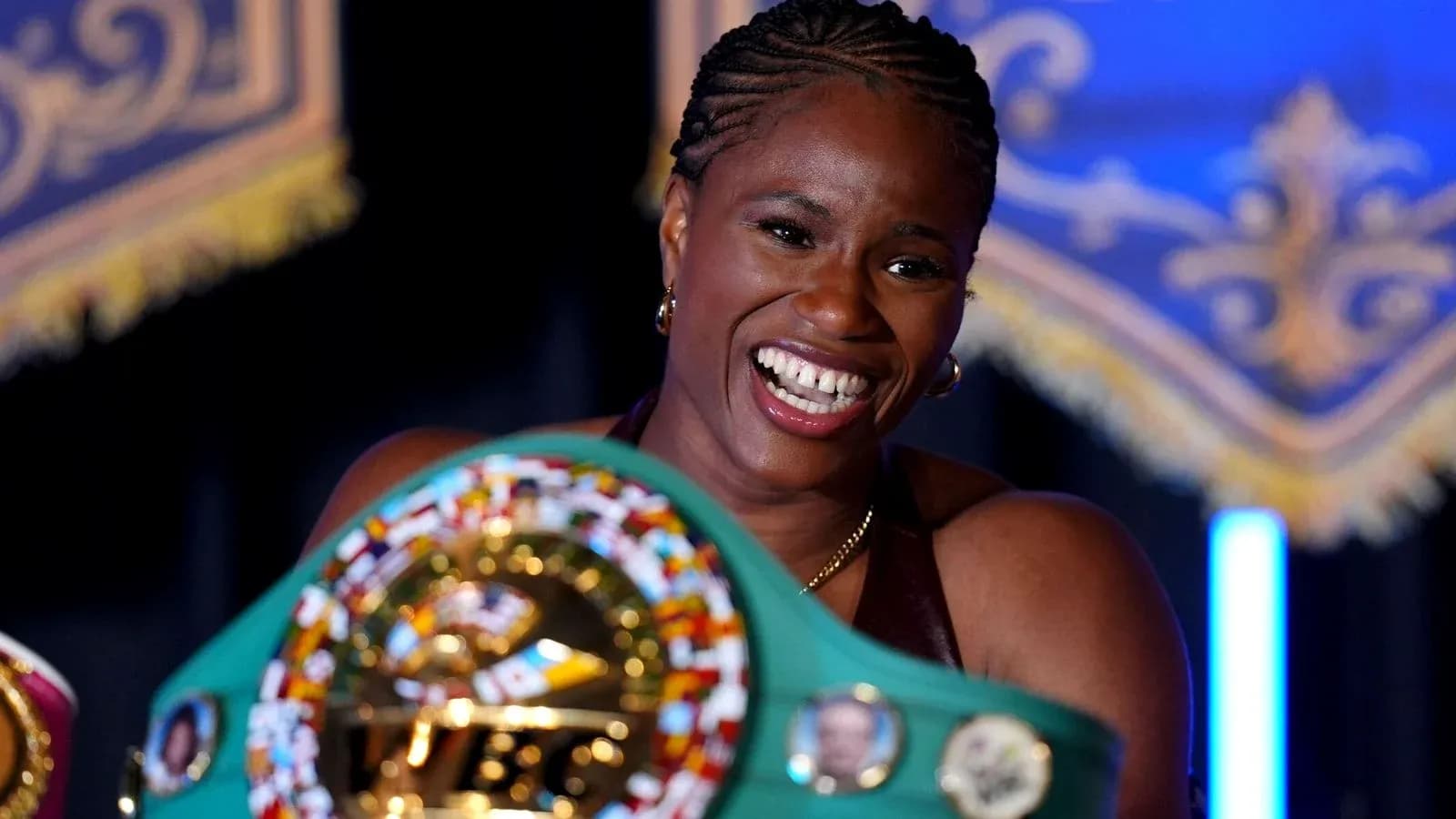
WBO president Gustavo Olivieri has hit back hard at Hamzah Sheeraz, flatly rejecting the Briton’s claim that corruption lies behind the decision to install Janibek Alimkhanuly as mandatory challenger for the WBO super middleweight title.
Sheeraz, the unbeaten champion at 168 pounds, publicly blasted the organization last month, calling the move “a joke” and “disgraceful to the sport of boxing” in an interview with Ariel Helwani on Uncrowned. He went further, branding the decision “corrupt” and rooted in “personal relationships.”
Olivieri has now answered — and he did not leave much room for interpretation.
“I respectfully but unequivocally disagree with his assertions, particularly any suggestion of ‘corruption,’ improper ‘motives,’ or decisions influenced by ‘personal relationships,’” he told Uncrowned, after being contacted for a response.
The Janibek Question
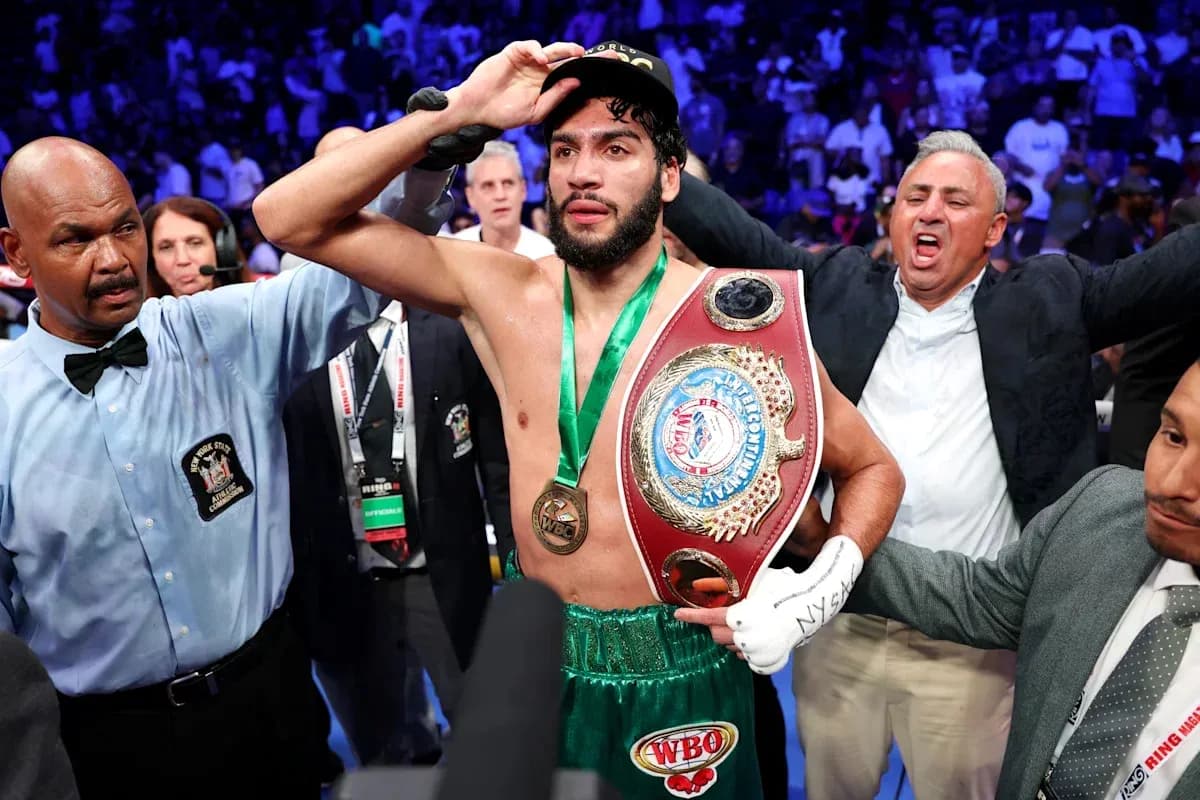
At the heart of the row is Alimkhanuly, the former unified WBO and IBF middleweight champion, who tested positive in a VADA anti-doping test just days before a scheduled three-belt unification with Erislandy Lara in December. The fight collapsed. The Kazakh never made that ring walk.
The WBO initially suspended him. Then it cut that suspension short and, in a move that stunned Sheeraz’s camp, elevated Janibek to mandatory challenger at super middleweight — a division in which he has yet to throw a punch as a professional.
To Sheeraz, that call looked like a reward for a fighter who had “tested positive.” To Olivieri, it was a decision grounded in process and precedent.
“First, Zhanibek never stepped inside the ring in connection with the anti-doping matter,” Olivieri said in a detailed follow-up sent Tuesday. “The bout did not proceed. That fact materially distinguishes his case from other circumstances, including Ryan Garcia vs. Devin Haney, where the contest actually occurred and the anti-doping findings arose in connection with a completed championship bout. These are fundamentally different factual circumstances and should not be treated as interchangeable cases.”
The WBO also leaned on Janibek’s status as a first-time offender. During the disciplinary process, Olivieri said, Alimkhanuly presented mitigating circumstances, including medical documentation, which the organization reviewed before handing down its own punishment.
The Kazakhstan Professional Boxing Federation (KPBF) suspended Alimkhanuly for six months. The WBO went further, imposing a 12‑month suspension and explicitly reserving the right to modify it after a full review. That review eventually led to the early termination of the ban, with the WBO citing Janibek’s “cooperation and compliance with the relevant conditions.”
From Olivieri’s standpoint, that closed the book on the doping case. Once the suspension ended, the slate — at least in regulatory terms — was wiped clean.
Precedent, Not Favouritism
If the doping controversy lit the fuse, the mandatory designation poured fuel on it.
The WBO has long operated a policy that gives recent WBO champions preferential consideration when they move weight classes. That can mean a fast track to the top of the rankings. It can also mean an immediate mandatory slot — sometimes even before a fighter has boxed in the new division.
Olivieri pointed to Keyshawn Davis as a prime example. Davis lost his WBO lightweight title in June 2025, then jumped to super lightweight, fighting twice in non-title bouts. After that, he moved again, up to welterweight. Without a single fight at 147 pounds, he was ranked No. 1 and later named mandatory challenger for Devin Haney.
That case, Olivieri argued, underlines how the WBO treats its recent champions, even when their recent history is turbulent. In other words, what is happening with Alimkhanuly is not new — and not unique.
Davis is “just one of many” such instances, the organization stressed. The message: this is a pattern, not a favour.
Why Janibek Over Bank?
Beyond policy and principle, there is the simple sporting argument. On paper, Alimkhanuly’s résumé dwarfs that of Jacob Bank, the undefeated contender who might otherwise have expected to be next in line.
Janibek stands at 17-0 with 12 knockouts and a run as unified WBO and IBF champion at 160 pounds. Bank, 20-0 with 11 stoppages, has yet to compile comparable wins at elite level. Olivieri made it clear the WBO views the Kazakh as the stronger, more proven challenger.
In the eyes of the organization, that matters. A former unified champion, freshly cleared from suspension, sliding straight into a mandatory slot at a higher weight fits the pattern the WBO has set over years of similar decisions.
For Sheeraz, that pattern looks like politics. For Olivieri, it is policy.
One thing is no longer in dispute: the WBO insists Janibek’s doping case is finished business, and that it carries no weight in deciding who gets the first crack at Hamzah Sheeraz’s title. The next argument won’t be in a boardroom or an interview chair — it will be when, and if, Sheeraz and Alimkhanuly finally meet under the lights.