Will Jacks leads England to gritty win over Sri Lanka
On a grey, holding day at Chester-le-Street, England did something they have too often forgotten how to do in white-ball cricket. They scrapped.
No sixes. Bowled out inside 50 overs. A pitch that died on the bat. And yet, by the time Will Jacks was wheeling away with the ball in his hand and Sri Lanka’s tail in pieces, England had an 89‑run win, a series lead and another small step in a quiet white-ball reset.
Brook builds, Root grafts, Jacks finishes
England’s 265 all out in 48.1 overs looked no more than a par score. On this surface, though, it was loaded with context.
Harry Brook, captaining and anchoring, resisted his attacking instincts for most of his 67 from 69 balls. He nudged, waited, and picked gaps rather than rows of seats. Only when he tried to expand, slicing a drive to deep cover, did Sri Lanka finally dislodge him – the only middle-order wicket to fall to outright aggression in a collapse of 4-29.
Around him, Joe Root played the craftsman. His 44 was not pretty in the way his best innings can be, but it was vital. He was undone by Sachindu Colombage, Sri Lanka’s debutant leg-spinner, who found just enough turn to kiss the off stump. Colombage then trapped Jos Buttler lbw for 31 and later beat Jamie Overton with a googly for eight, finishing with an eye-catching 3-44 and a performance that will linger in the selectors’ minds.
England’s innings wobbled at 211-7 in the 39th over. The old temptation would have been to swing hard and accept the crash. Jacks chose another route. He absorbed pressure, farmed the strike and dragged the innings deeper. His unbeaten 46 was built on judgement rather than brute force, the kind of lower-order maturity England have often lacked.
When the time finally came to push, he was ready. Eighteen runs came from the 47th over, a late surge that dragged England towards something defendable. Asitha Fernando, who had earlier shaved Tom Banton’s bail for 10 with a lovely piece of new-ball skill, returned with the old ball to find reverse swing and clean up Jofra Archer and Josh Tongue. Jacks, poised to explode at the death, was left stranded.
No sixes, dismissed again under Brendon McCullum’s watch – the 12th time since he took over the white-ball sides – and yet the innings carried a different feel. Less reckless, more aware of conditions, more prepared to win ugly.
Sri Lanka blink with the bat
If Sri Lanka had impressed in the field, they shrank with the bat.
Chasing 266, they never truly committed to it. England’s bowlers hit their lengths, kept the ball into the pitch and waited. The pressure built, then cracked the chase open.
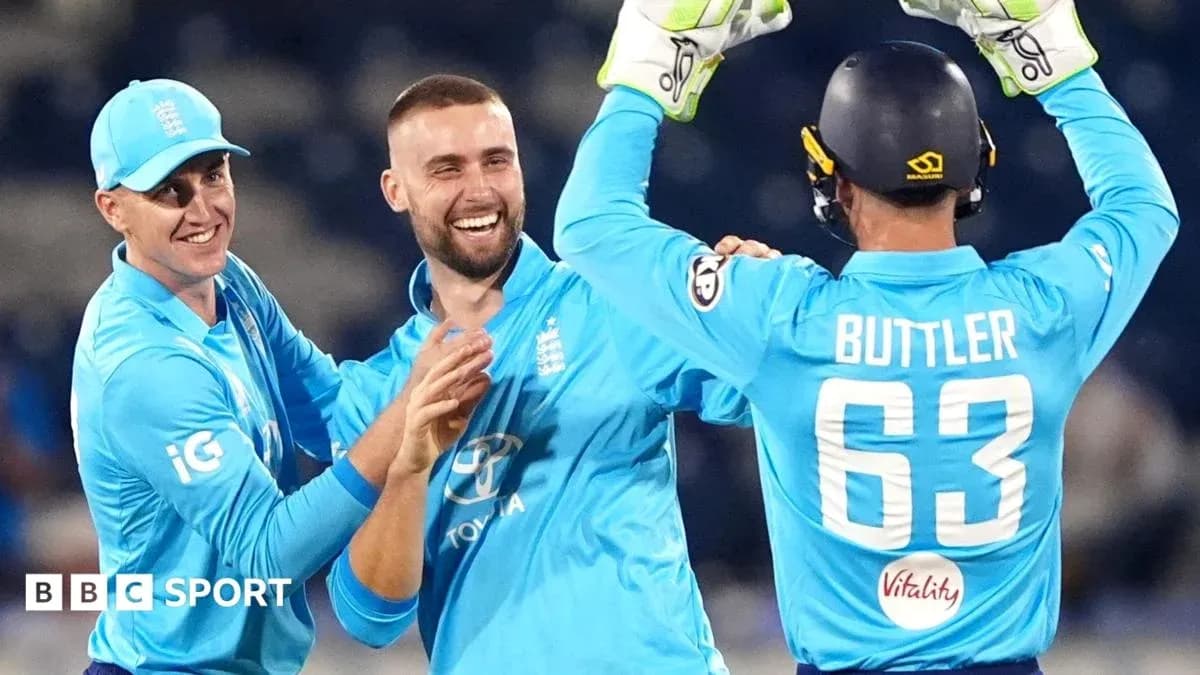
Jacks, already England’s insurance policy with the bat, became their spearhead with the ball. He removed Kusal Mendis, the key to Sri Lanka’s control in the middle overs, and then Charith Asalanka, the man most likely to counter-punch. Those were the heavy blows.
From there, Sri Lanka retreated. Dots piled up. Risk-averse strokes turned into soft dismissals. The pitch was slow and low, yes, but the response was timid. Jacks sensed it. He attacked, varied his pace, and kept asking questions. The tail folded, and he walked off with career-best figures of 5-22, the kind of all-round performance that changes a player’s status in a dressing room.
Dunith Wellalage tried to drag Sri Lanka towards respectability, striking 45 from 36 balls with more intent than most of the top order. It only delayed the inevitable. Sri Lanka were bowled out for 176 in 37 overs, well short, well beaten.
A different kind of England win
This was not the swaggering England of 2019. They did not blast their way to a total or bully the opposition with power hitting. For the first time since that World Cup year, they failed to clear the ropes when batting first.
Brook and McCullum will not lose sleep over that. For too long, England have looked like a side that can only win one way – by racking up huge scores and daring the opposition to keep up. Here, they adapted. They read the surface, stitched together a total and trusted their bowlers to squeeze.
Questions about the standard of opposition will follow them. Sri Lanka have been outplayed by England in white-ball cricket all year; this was a 10th consecutive defeat to them across formats in 2024. Yet England can only beat what is in front of them, and they are doing that with growing assurance.
More will be needed by the time the World Cup rolls around in a year’s time. Bigger scores. Sharper death bowling. A settled core. But the building blocks are starting to stack up: a series win over Sri Lanka at the start of the year, a statement victory over India in July, and now the chance to close out a third straight ODI series on Thursday at Headingley with a game to spare.
The final match at The Oval on Sunday will close one of the most unpredictable English summers in recent memory. On this evidence, England will head into two months of white-ball cricket overseas not with noise and bravado, but with something more useful: a growing belief they can win when the game is messy, the pitch is awkward, and the margin for error is thin.