Australia's Thrilling One-Wicket Victory in Harare
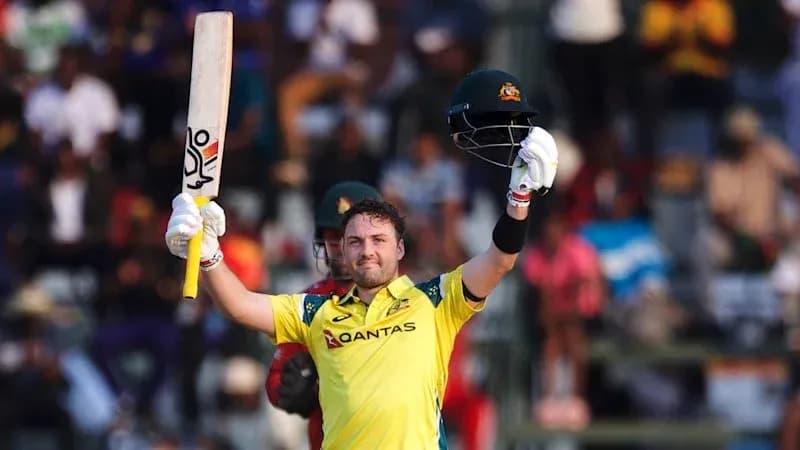
Josh Inglis walked off in Harare with his bat raised and his heart still racing. Australia had won by one wicket with a ball to spare, a dead-rubber ODI suddenly turned into a dress rehearsal for World Cup pressure.
It was scruffy. It was tense. And for a side plotting a title defence in South Africa next year, it was exactly the kind of chaos they needed.
Inglis holds his nerve as tail drags Australia home
Chasing 272, Australia never quite settled. The run rate never got away from them, but the innings kept fraying at the edges.
Travis Head went for 6. Mitchell Marsh followed for 8. Two senior players gone early, and the tone was set: no easy cruise, no polite handshake of a chase. Wickets kept tumbling, momentum kept stalling.
Inglis refused to blink.
The wicketkeeper-batter stitched the innings together with a superb 103 from 102 balls, lacing 11 fours and batting as if he were playing a different game to everyone around him. While partners came and went, he kept Australia in touch with the rate and in touch with the contest.
When he fell, the nerves really kicked in.
Zimbabwe could smell it. Australia’s dressing room knew they were one mistake away from embarrassment. But Nathan Ellis, picked as a seamer, suddenly had to become a middle-order firefighter. He crafted a priceless 36 from 44 balls, farming the strike, taking the chase deep, then trusting number 11 Spencer Johnson to stand firm at the end.
Johnson did just enough. Seven runs from 13 balls does not leap off a scorecard, but in a one-wicket finish, every single one felt heavy.
The decisive moment came in the penultimate over. Wessly Madhevere put down a chance to remove Ellis, a drop that will haunt Zimbabwe. From there, the game flipped. Ellis launched a six off the first ball of the final over from Madhevere, shredding the equation and with it the home side’s composure. Australia slipped over the line with one ball left, sealing a 3-0 series sweep that felt far more hard-earned than the clean scoreline suggests.
“We’re going to get in those situations again,” Inglis said afterwards. “For those guys to have done that today ... with the World Cup 12 months away, it’ll leave a good feeling with them.”
For a player still solidifying his place in Australia’s one-day plans, this was a statement. For the lower order, it was a reminder that World Cups are often won in the margins, not just by the headline acts.
Raza leads spirited Zimbabwe as chance slips away
Zimbabwe had set this game up beautifully.
Asked to bat, they produced the kind of measured, mature innings that has become a hallmark under captain Sikandar Raza. He anchored the effort with an unbeaten 81 from 72 balls, the heartbeat of a total that always felt competitive in Harare conditions.
Craig Ervine chipped in with 59 from 79 balls, Innocent Kaia with 55 from 66. The platform was there, the tempo right. On a surface where 280-290 looked par, 272 kept Australia honest and kept the crowd engaged right to the death.
With the ball, Brad Evans led the way, taking 4-47 from his 10 overs and repeatedly dragging Australia back whenever they looked like breaking free. Zimbabwe squeezed, hustled, and stayed in the contest long after more fragile sides would have folded.
“I thought 280-290 was par with the bat so to make a game out of 272 was a great effort,” Raza said. “As a captain I’m really proud. Plenty to learn. I’d rather have a game like that than for the Aussies to just chase it down in 40 overs.”
The drop from Madhevere and the failure to defend nine off the last over will sting. But this was not a meek 3-0 defeat. It was a reminder that Zimbabwe, especially at home, can drag heavyweight sides into a fight.
Marsh looks to the future as South Africa looms
Mitchell Marsh did not sugarcoat it. Australia “got lucky” on the day, he admitted, but he saw enough to feel encouraged about the broader picture.
“We’re aware we need to keep improving as a team,” the captain said. “I thought the way we played over the three matches, albeit today we got lucky, but there’s lots of positive signs with our group. We’ve got some young talent, which is exciting for the future.”
That future now runs straight through South Africa.
The ODI squad, missing several regulars in Zimbabwe, will be reinforced by the arrival of Pat Cummins and Mitchell Starc for the next leg. Three one-dayers starting in Durban on Thursday will double as a scouting mission for conditions and a selection audition ahead of the 2027 World Cup, with matches to be staged across South Africa, Zimbabwe and Namibia.
For Inglis, the Harare finish is more than just a line on a CV. It is evidence he can manage the chaos of a tight chase on foreign pitches, something Australia will value heavily over the next 12 months.
“Obviously we’ve had this series going on and we’ve given it our full focus,” he said of the Zimbabwe tour. “It’s clearly really important that the World Cup’s only 12 months away in those conditions. It will be a nice little trial run. We’ll see the different conditions and ... maybe work on some new combinations.”
Then come the Tests: three tantalising matches in Durban, Gqeberha and Cape Town. Australia have not toured South Africa in the longest format since the 2018 ball-tampering scandal, a return that will carry its own edge even if the current squad insists it is not dwelling on how they might be received.
For now, the ledger shows 3-0 to Australia, a clean sweep built on depth, resilience and one cool head in Harare. The real examination, though, is only just beginning on the other side of the Limpopo.