BCCI's New Fitness Policy for Player Selection
The Board of Control for Cricket in India has quietly redrawn one of the most sensitive lines in Indian cricket: when an injured player is truly “available” for selection.
After a string of embarrassing late withdrawals and mid-tour exits, the BCCI, its selection committee and the Centre of Excellence (CoE) headed by VVS Laxman have moved to a far more hard-nosed, almost ruthless, fitness clearance policy. The message is simple: no more gambles.
Harshit Rana, and the tipping point
The turning point came in June. Harshit Rana, back in the frame after a five-month layoff, was picked for the Ireland and England tours in what was supposed to be a fresh chapter. It lasted less than a fortnight.
He broke down again, could not complete the England leg and had to be flown home. Prince Yadav was summoned as his replacement. A long-awaited comeback had turned into a brief, frustrating detour.
Inside the BCCI, that episode hit a nerve. It was not just about one player; it exposed a pattern.
Rana’s case “is not an isolated one,” as officials readily admit. Jasprit Bumrah and Sai Sudharsan were named for the Sri Lanka Tests, only to be replaced by Auqib Nabi and Sarfaraz Khan. Suryansh Shedge was drafted in at the last minute for Nitish Kumar Reddy for the Ireland and England tour. Varun Chakaravarthy was pulled from the Zimbabwe tour and Ravi Bishnoi went instead, again at the eleventh hour.
Too many asterisks. Too many emergency calls.
From 100 per cent to “200 per cent” sure
Those repeated disruptions have forced a reset. The CoE and selectors now want to be, in the words of a source familiar with the policy, “not just 100 per cent, but 200 per cent confident” before clearing a player.
That shift is already visible in squad announcements. Conditional selections have become a formal, front-facing part of the process. Players are picked, but with a clear caveat: they will only be released to the national side if they clear specific fitness tests.
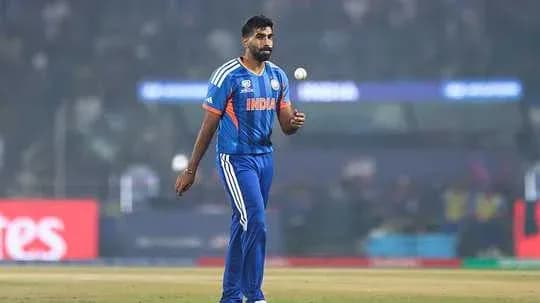
The media release on Tuesday for the T20I series against Afghanistan underlined the new reality. Bumrah, Washington Sundar, Nitish Reddy and Rana all appeared with an asterisk. All four are in the squad, but not yet fully through the gate.
For Laxman, this is not cloak-and-dagger. He calls it transparency.
“They (players) understand that they're not yet ready to participate in the national series,” the CoE head said recently. “It's always player-centric and team-centric. So that communication is happening seamlessly. I think what the BCCI has done is there's transparency in all the fitness reports and also in the selection.
“At the end of the selection, whether it's a release to the press, it's clearly mentioned that these players are picked subject to fitness. Means if they don't clear the fitness test, the selectors will know who are the other players who will go in their place if they don't clear the fitness test. I mean, it's basic common sense.”
The bluntness of that last line reflects the mood. India do not want to walk into another series with half-fit players and a contingency plan scribbled on the back of a napkin.
Inside the selection room
BCCI secretary Devajit Saikia lifted the lid on how this actually works. Selection meetings, he explained, are held three to four weeks before a team travels. That gap is where the risk lies—and where the new system is meant to protect the team.
Players under rehabilitation are not discarded out of hand. They are tagged.
“So if he gets picked within that period of 21 or 28 days, he will be taken into the team,” Saikia said. “So that is precisely why we do not outrightly reject him because on the date of selection, we are rejecting him because on that day he is not fit. But, by the time it will be effectively required for the travel or to play the match, by that time he may be totally fit.”
The asterisk, then, is not a sign of doubt as much as a deadline. It buys time for the player, but it also forces clarity. The selectors know exactly who will step in if that deadline is missed.
Bumrah, Reddy and the Afghanistan test
All of this comes into sharp focus with Afghanistan arriving for a three-match T20I series, starting September 13 in New Delhi.
On paper, Bumrah is a conditional pick. In reality, those in the loop are confident he will be ready. Despite the asterisk next to his name, it is “reliably learnt” that the spearhead should be available for all three games.
Nitish Reddy sits in a similar bracket, but from a different starting point. The all-rounder has been sidelined with a quadriceps injury, yet his workload has climbed steadily at the CoE. He is now bowling six to seven overs a day at full tilt, and those tracking his progress expect him to be fit for the Delhi fixtures.
Rana and Washington Sundar, though, remain in the grey zone. Their timelines are less clear, their cases watched with greater caution.
“The CoE will not take chances,” the source said. That line, more than any policy document, captures the new doctrine.
India’s talent pool is vast, the calendar unforgiving, and the margins in international cricket razor thin. For a board that has often been accused of overloading its players, this is a rare, deliberate pause.
The next time an India squad is announced and asterisks appear, they will not just mark injuries. They will mark a system that has finally decided it would rather be sure late than sorry early.