David Warner Signs with Kathmandu Gorkhas for Nepal Premier League
David Warner’s international curtain has barely come down. His next act will play out in the shadow of the Himalayas.
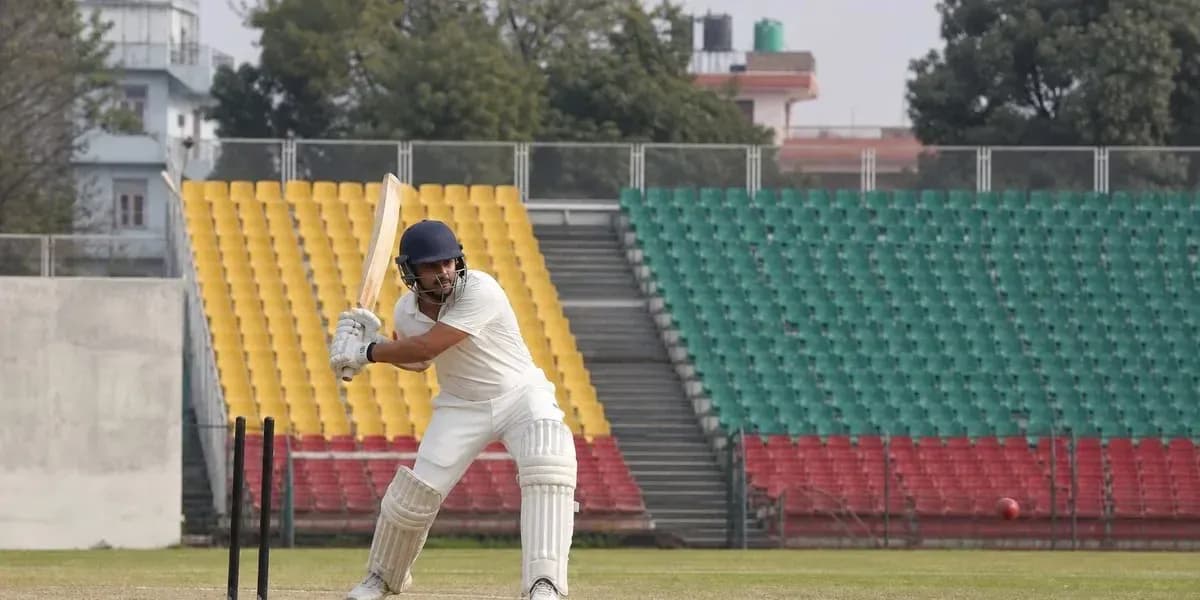
The 39-year-old Australian opener has signed for Kathmandu Gorkhas for the third season of the Nepal Premier League, a move confirmed after days of teasing from the franchise and reported by the Kathmandu Post. The tournament begins on 26 October, with all matches scheduled at the TU International Cricket Ground in Kathmandu.
For a league still carving out its place on the global calendar, this is a statement signing.
Gorkhas land their headline act
Kathmandu Gorkhas unveiled Warner as their third foreign player, ending a four-day social media campaign that had stirred speculation among fans. The club has yet to confirm how many matches Warner will actually play, but his mere presence changes the conversation around the competition.
Negotiations took months, according to executive director Anubhav Swar Sirohiya, who detailed the long pursuit to the Kathmandu Post. The payoff is obvious: a global star, fresh from the international stage, anchoring a franchise in one of cricket’s fastest-growing markets.
Former Nepal captain Paras Khadka, the standard-bearer of the country’s modern cricket rise, publicly welcomed Warner in a post shared alongside the club’s announcement, underscoring what the move means for the local game.
Warner’s message to Nepal
In a video released by Kathmandu Gorkhas, Warner spoke with clear enthusiasm about the switch. He said he was happy to join the team and voiced his hope that the Nepal Premier League could offer something bigger than just runs and results — joy, and a reason for people to come together after a difficult period for the country.
He also touched on the one thing that has made Nepal a cult destination in cricket circles: the crowd. Warner said he had heard about the passion of Nepalese fans and wanted to feel the atmosphere of matches “in the Himalayas” for himself.
For a fan base that regularly packs grounds and turns domestic fixtures into festivals, that promise alone will be enough to circle the Gorkhas’ games on the calendar.
A giant of the modern game
Warner arrives in Nepal with a career that needs no embellishment.
He bowed out of international cricket after Australia’s exit to India in the Super 8 stage of the 2024 T20 World Cup, finishing as his country’s leading run-scorer in T20Is: 3,277 runs in 110 games. Few have defined the format for Australia the way he has.
His Test record is just as imposing. Across 112 matches, Warner piled up 8,786 runs, setting the tone at the top of the order in an era when fast starts became non-negotiable. In ODIs, he added another 6,932 runs in 161 matches, a central figure in Australia’s white-ball dominance.
The honours list is long. ODI World Cups in 2015 and 2023. The 2021 T20 World Cup. The 2021–2023 World Test Championship. Warner has lived at the heart of almost every major Australian triumph of the past decade.
Franchise cricket tells the same story. In the Indian Premier League he became a legend, starring for Sunrisers Hyderabad and Delhi Capitals. He captained Sunrisers to the title in 2016 and, across 184 IPL matches, scored 6,565 runs and claimed the Orange Cap three times as the league’s leading run-scorer.
Those numbers now drop into a very different setting: a single-venue league, high-altitude air, and a fan culture that treats every boundary like a national event.
A league on the rise, and a star with something left to give
For the Nepal Premier League, Warner’s arrival is about credibility and visibility. A competition still in its early seasons has persuaded one of the modern game’s biggest names to sign on. That will draw cameras, sponsors, and, crucially, more players.
For Warner, it offers something else. A chance to keep batting, to tap into a new cricketing culture, to feel the roar of a crowd that has watched him for years on television and will finally see him in person.
The TU International Cricket Ground will soon find out what it sounds like when David Warner walks out to bat in Kathmandu.