England vs Sri Lanka: Banton and Duckett Navigate Challenging Pitch
At Chester-le-Street, the pitch looks like a riddle in two colours. From a distance, it’s streaked in green and brown, like camouflage laid out under a hard northern sun. Up close, it’s even trickier: one ball skids through, another grips, and then one keeps so low that an under edge crashes straight into the slip fielder’s knee.
It’s Kamindu Mendis who cops it. He goes down, grimacing, clutching at the pain. Early overs, early bruises.
England are 17-1, and the surface is already shaping the story.
Banton’s battle with rhythm
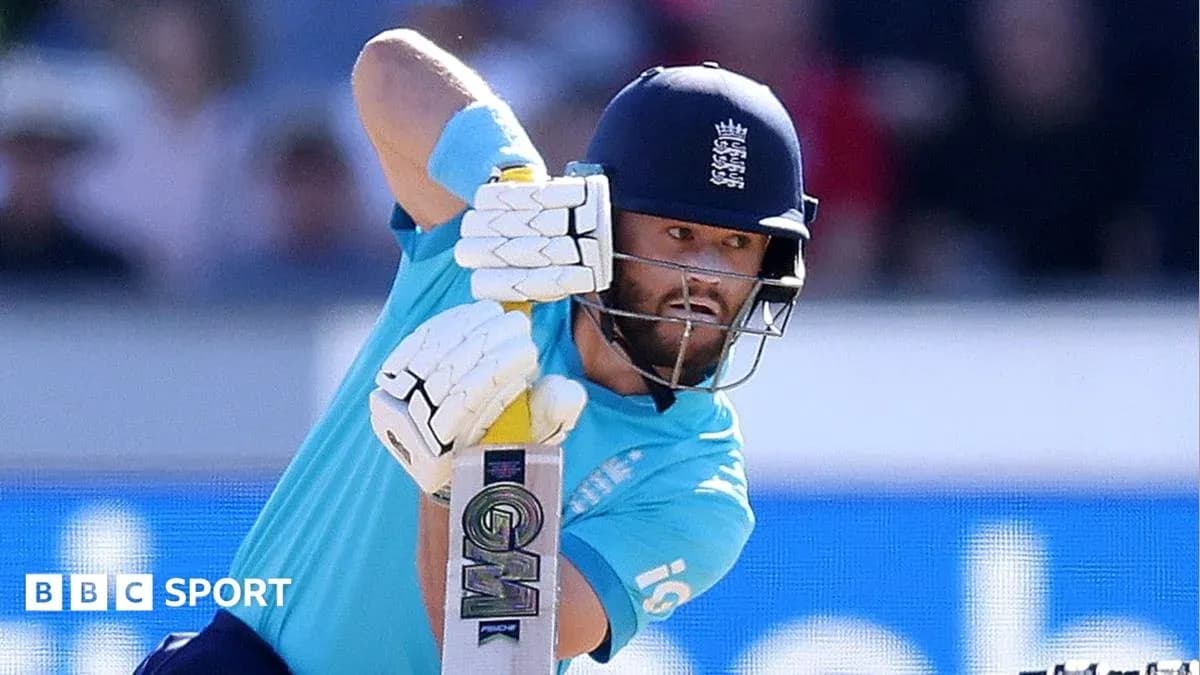
Tom Banton is back in a format that has almost forgotten him. At 27, this is only his 26th List A appearance – 18 for Somerset, eight for England. By the time Joe Root turned 28, he had already banked 186 List A games. Different eras, different workloads, but the contrast is stark.
Banton has played just one List A match since 2020. Today, he is thrust to the top of the order, opening in place of the injured Jacob Bethell, and tasked with rediscovering the lost art of 50-over rhythm. No gentle easing in, either. Asitha Fernando bends one in at him, the ball straightening late, and Banton is pinned, straightened up, feet heavy.
“That was a tremendous delivery,” says Russel Arnold on BBC Test Match Special. The ex-Sri Lanka all-rounder doesn’t miss the technical detail either: Banton isn’t using his feet enough. Bowlers live for that. Coaches live off the mantra: hit the top of off, and let the pitch do the rest. This one does.
England had begun at 1-0, Banton and Ben Duckett trying to feel their way into an innings that demands patience as much as power. Dawid Malan, watching on for BBC Radio 5 Sports Extra, notes how Harry Brook likes to think of ODI batting as a “longer T20 game”. It’s a neat line, but the reality is harsher: if you live almost entirely in T20, finding that 50-over tempo can take time. And time is exactly what new-ball spells try to deny you.
Duckett’s search for runs
Duckett has become a familiar face at the top of England’s recent ODI sides, but a settled partner has not. Jamie Smith, Zak Crawley, Phil Salt, Jacob Bethell, even Rehan Ahmed – the revolving door has barely slowed. Today it’s Banton, taller, looming over the left-hander as they chat between deliveries, a faint echo of that Crawley-Duckett “little and large” pairing in the Test side.
England move to 5-0, Duckett easing away a full toss to get going. He needs runs, not so much to secure a spot as to quiet the internal noise. A lean patch nags at any batter. A simple boundary helps.
Chester-le-Street has usually been kinder to batters than its reputation suggests. The numbers back it up: in each of the last six 50-over matches here, across domestic and international cricket, the side batting first has gone past 300. Today, though, the early signs hint at something more nuanced. This is not a flat-track free-for-all. It’s a surface with mood swings.
Sri Lanka’s new-look one-day ambition
Sri Lanka arrive with fresh faces in the 50-over format and a captain in Kusal Mendis who talks with quiet conviction. They sit above England in the rankings and, while Harry Brook’s side took the series 2-1 in Sri Lanka earlier this year, the recent T20s in England were brutally one-sided: 3-0 to the hosts, and barely a contest.
That imbalance sits in the background, but this is a different contest and a different Sri Lanka. “In one-day cricket we have a well-balanced side,” Mendis says at the toss. “Everybody in the batting line-up is really good. Last tournament, we did really well. I have confidence in my team. Five bowlers and six batters we’re playing today.”
He wanted to bat first. He doesn’t get his wish. Sri Lanka are sent in with the ball, and the responsibility to make this surface talk.
The conditions might help. The sun is out, hard and bright, burning off any early moisture that might have lingered. Arnold suggests that very weather may have forced a late rethink from the tourists, knowing the pitch would dry quickly under that heat. If Sri Lanka start well, they can impose themselves. If they don’t, the day could stretch long.
Madushanka’s early misfires
The new-ball script, though, does not run cleanly for Dilshan Madushanka. His first over is wayward, lines and lengths scattered, and England take advantage. Duckett and Banton, still finding their range, gratefully accept the looseners.
“Madushanka is getting it wrong,” Arnold observes. “That form is the weight what Sri Lanka carry.” It’s a telling line. This is a side that has shown promise in patches but too often drags its own inconsistency around like baggage. Against an England team that has already dominated them in T20s, starting poorly is the last thing they can afford.
The plan is clear: Sri Lanka want to get ahead early, to feel they are dictating terms, to believe they can knock this England side over. That belief has to be built with the new ball, especially on a pitch that offers just enough – the odd ball keeping low, the occasional delivery leaping or gripping.
Instead, Madushanka’s radar deserts him. The pressure that should be building on England drifts away, if only slightly. The pitch still lurks as a threat, but the scoreboard ticks, and that’s all an opening pair ever really needs in the first few overs: a foothold.
A day that could tilt either way
So the contest settles into its early arm-wrestle. England 17-1, a bruised fielder, a searching surface, a batter in Banton trying to remember the rhythms of a format that once promised him so much, and another in Duckett quietly chasing confidence.
Sri Lanka, with Kusal Mendis at the helm and a belief in their one-day structure, have the bowlers and the conditions to make this count. But belief only goes so far if the new ball doesn’t land where it should.
On a pitch dressed like camouflage and behaving like a trapdoor, the next hour will decide whether this becomes another long, chastening day for Sri Lanka, or the moment their one-day revival grows teeth.