George Chuvalo: A Legend of Courage and Resilience
George Chuvalo never learned how to back away.
“The best thing I have going for myself is my attitude,” he once said. “I have a hard time quitting on something. I have a hard time walking away from something. I’ll be the last guy to quit on somebody.”
He lived that line until the end. Chuvalo died on September 12, his 89th birthday, a Canadian original whose name never appeared on a world title belt but whose legend was carved into the sport’s hardest granite. The World Boxing Council confirmed his death and saluted his “unrelenting courage and legendary iron chin” — a phrase that could double as his epitaph.
By the time he walked away from the ring in 1978, Chuvalo had fought 93 times as a professional. His record: 73 wins, 18 defeats, two draws. Sixty-four opponents failed to hear the final bell. He took particular satisfaction in flattening Manuel Ramos, Mexico’s heavyweight champion, in five rounds in 1968.
“I think he was ranked No 4 in the world,” Chuvalo told Maclean’s years later. “I knocked out all the No 4s.”
The trouble, he liked to add with a shrug, came “with the ones, twos and threes.”
Those ones, twos and threes defined his era. None loomed larger than Muhammad Ali.
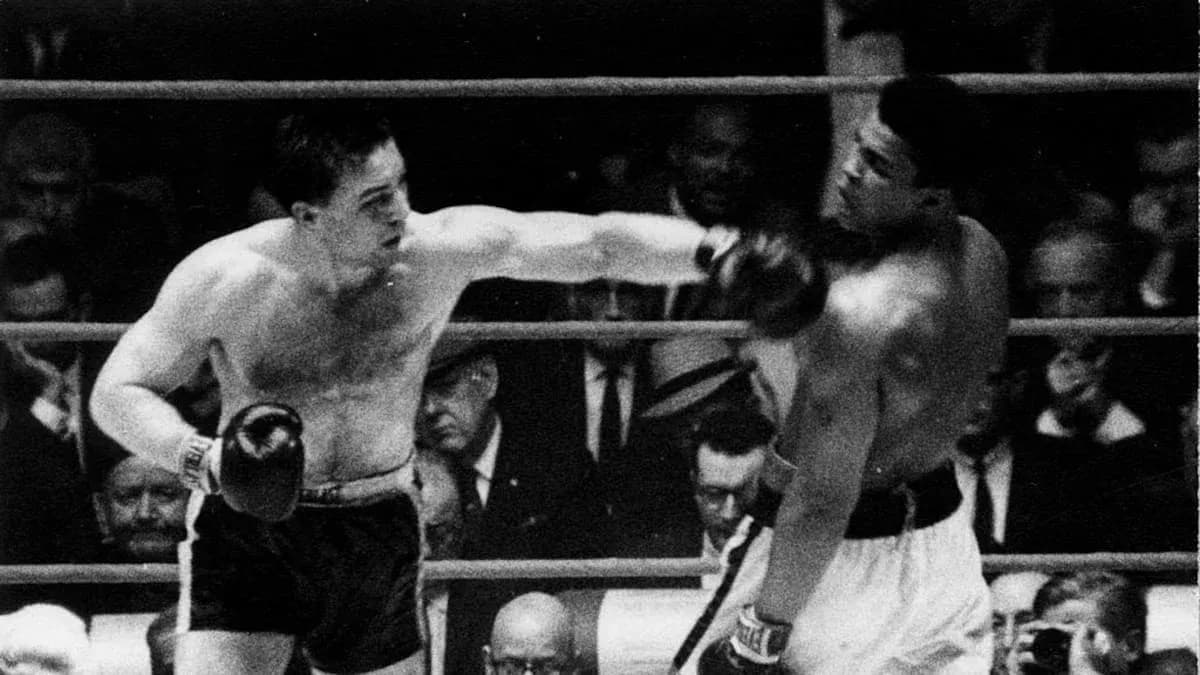
Ali’s scheduled bout with Ernie Terrell in Chicago collapsed amid the storm over Ali’s refusal to serve in the Vietnam War. The champion headed north instead, to Canada, where a 6ft brawler from Toronto with a cast-iron jaw agreed to step in on 17 days’ notice. The bookmakers barely blinked: Chuvalo went in as a 7-to-1 underdog.
The New York Times captured the mood with brutal clarity. To gamblers, Chuvalo was “A Big Bum With a Lot of Heart”.
Ali won that first fight by unanimous decision, as expected. What nobody quite expected was the way Chuvalo stayed there, round after round, refusing to fall, refusing even to take a count. He finished the night on his feet, his face a swollen, battered mask that Toronto Star columnist Milt Dunnell likened to “a bucket of balls at a golf driving range”. The rematch in Vancouver in 1972 brought another defeat on the cards, but by then the story was set: Ali could outbox him, never break him.
Chuvalo fought like he was built out of dockyard steel. He described himself as “rough and tough,” a pressure fighter who marched forward, happy to trade, almost eager to be hit if it meant he could get his own work done on the inside. He trained his body not just to deliver punishment but to absorb it.
Rocky Marciano, the undefeated former heavyweight champion, once summed up the paradox of Chuvalo’s career with a single line: “If all fights were a hundred rounds, George Chuvalo would be unbeaten in any era.”
Chuvalo, never shy about his own durability, credited part of that famous chin to “being born with a short neck”. He added his own eccentric training methods: chewing bubble gum to strengthen his jaw muscles. The rest, he insisted, came from something more basic and far less glamorous — “real poverty,” the kind that, in his mind, forged the hunger required to survive in a profession that rewards desperation as much as talent.
After boxing, he drifted into real estate and occasional film work, including an unlikely appearance in “The Fly,” where his character loses an arm-wrestling contest to Jeff Goldblum and has a bone snapped for his trouble. It was a rare moment on screen where Chuvalo played the man who breaks, not the man who refuses to.
Away from the cameras and the ring, his life took a far darker turn.
In 1984, his youngest son, Jesse, tore off his kneecap in a dirt-bike accident. At a party, someone handed him heroin and suggested it might dull the pain. The experiment became a habit. Jesse started shooting up. Two of his brothers, George Jr — known as Georgie Lee — and Steven, followed him into addiction.
Less than a year later, in 1985, Jesse died by suicide at 20. The surviving brothers sank deeper into heroin. In 1987, both were jailed for robbing a drugstore.
Grief kept coming. Shortly after his release, Georgie Lee died of a heroin overdose in 1993. Two days after her son’s funeral, Chuvalo’s wife, Lynne Sheppard, died by suicide.
“It never stops,” Chuvalo said. “I must have been a bad guy in a previous life. I don’t know.”
He found a fragile lifeline in Joanne O’Hara, a nurse who had worked with Lynne and who helped pull him back from his own thoughts of ending it all. They eloped in 1994. But even as he tried to rebuild, the spiral continued. Steven, still locked in his battle with heroin, went back to prison for another drugstore robbery.
In 1996, less than two weeks after his release, Steven died of an overdose at 35.
Chuvalo called it his “personal holocaust” and, like many parents in similar storms, turned the blame inward. When his sons were downstairs in the basement with the needle, he said, he had often been “walking around like I was deaf, dumb and blind.” Yet he also raged against a system that, in his view, had given them little chance.
He spoke of the absence of social services and the lack of grief counselling for inmates like George Jr. “They have psychiatrists for sex offenders, but not for what he needed,” Chuvalo told the New York Times. “It was like if I sparred with lightweights before I fought George Foreman. It just wasn’t the proper preparation.”
Out of that wreckage, he built a second act. He began speaking publicly, especially to young people, about drugs, about loss, about the choices that had destroyed his family. Many in those audiences knew little or nothing about his nights with Ali or his reputation as the man nobody could knock out. They knew only the older man in front of them, still thick-set, still intense, talking about love and responsibility instead of left hooks and uppercuts.
The nights remained the hardest. Alone with his thoughts, he wrestled with questions that never really left him.
“It’s the only time I feel sorry for myself,” he told Maclean’s in 1999. “I think, ‘How can you even live after that, how the hell did all that happen?
“You don’t want to be me after midnight.”
The story had begun in very different surroundings. George Louis Chuvalo was born in Toronto on September 12, 1937, the son of Croatian immigrants from what is now Bosnia. His father skinned cattle on the floor of a slaughterhouse. His mother stood in a poultry plant, plucking chickens for two and a half cents a bird.
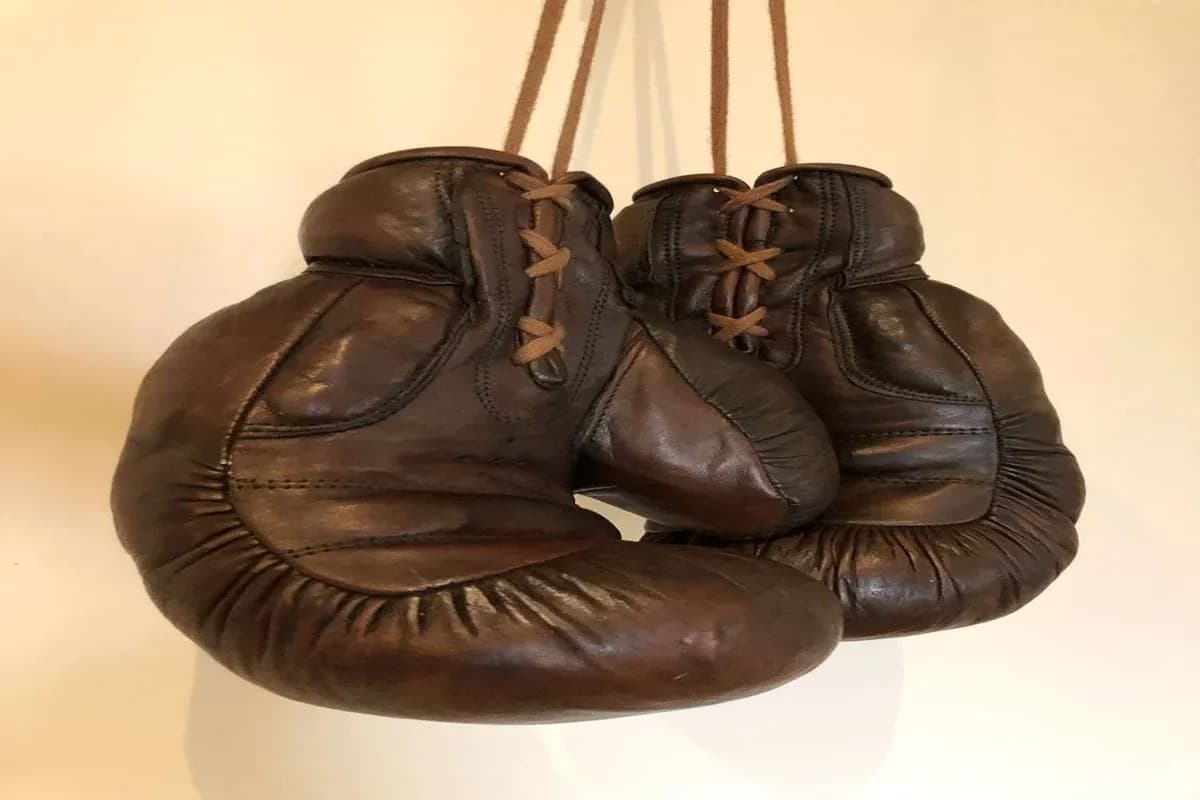
He was about nine when she finally gave in to his pleading and bought him his first pair of boxing gloves. For two years he had stared at photos of muscled fighters in a cigar store window near their home, imagining himself in their place.
“The power of knocking a guy out, of standing over him, of raising your arms in the air, that was what appealed to me about boxing,” he told the National Post in 2013. “A cave man can understand boxing. He might not understand cricket, but he can understand boxing.”
His earliest bouts took place in a rough parking lot called Macaroni Field, near a pasta factory. By 18, he was a professional. In 1958, he captured the Canadian heavyweight title. Nearly four decades later, he was still bench-pressing 400 pounds and haunting the gym, long after most of his contemporaries had surrendered to age.
Late in life, as dementia began to erode the sharpness that had carried him through so many rounds, Chuvalo became the subject of a bitter family dispute. His second wife and his surviving children, Mitchell and Vanessa, battled in court over a divorce case launched in his name, each side insisting it was honouring his wishes. The Toronto Star reported in 2018 that as the legal fight dragged on and his condition worsened, friends and relatives rallied to make sure he was properly cared for.
Years earlier, when he still commanded a room with his presence and his stories, Chuvalo had boiled his message to young people down to a single theme.
“When I talk to young people about drugs or staying off drugs, I always talk about love in your life,” he said. “And sometimes people say, ‘Oh, yeah, love, you’re not going to bore me with that stuff are you?’
“But what else is there in life? What else are we here for if we can’t love people?”