Indian Cricket's High-Stakes Review Meeting in Mumbai
Indian cricket’s power brokers will gather in Mumbai on Thursday for a rare, high-stakes review that goes well beyond a routine debrief of recent tours.
There is no formal agenda on paper. There doesn’t need to be. The backdrop is clear enough: a T20 World Cup-winning side that has just endured a bruising white-ball stretch in Ireland and England, and a series of uncomfortable questions about leadership, selection and succession that can no longer be pushed down the road.
Big names, big questions
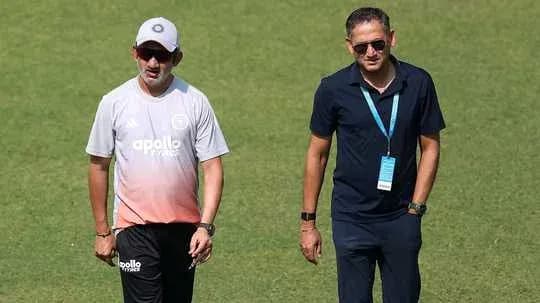
Head coach Gautam Gambhir, chief selector Ajit Agarkar and Centre of Excellence head VVS Laxman will all be around the same table, with BCCI secretary Devajit Saikia convening and presiding over the meeting. All are expected to attend in person, underlining the gravity of what lies ahead.
Late on Tuesday evening, one more key name was added to that list. Shubman Gill, India’s Test and ODI captain, has been invited and will be in the room. Those close to the setup indicate he is approaching the discussions with intent, keen not only to offer feedback on the recent tours but to help shape the roadmap for the team’s upcoming assignments.
Shreyas Iyer, the T20I captain, will also be part of the discussions. It is not yet clear whether he will be physically present in Mumbai or join virtually, but his role in India’s shortest-format future ensures his voice will be heard.
A champion side under the scanner
At the heart of the review lies a jarring contrast. India are the reigning T20 World Cup champions, yet failed to win a single one of the six completed T20Is on the tours of Ireland and England, suffering comprehensive defeats to the hosts. The BCCI had publicly promised a review of those performances; this is where that promise lands.
Back in July, as the white-ball series in England unfolded, Saikia attempted to cool the temperature around the team’s slump.
“The BCCI is currently observing the performance of the Indian T20 team which has not been up to the mark in the ongoing series against England. However this is not something abnormal and can happen in international cricket. We consider it as a purely bad phase,” he said then.
The numbers and the manner of defeat since have only sharpened the need for answers. Selection calls, role clarity, workload management and tactical direction are all likely to come under the microscope as the key stakeholders trade views.
Rohit Sharma’s future on the table
Hovering over the meeting is the unresolved issue of Rohit Sharma’s international future, particularly in ODIs.
Reports recently suggested that the selectors did not see Rohit as part of the plans for the 2027 ODI World Cup and that the Lord’s ODI would be his last in the format. The BCCI moved quickly to deny that version, signalling a disconnect between board and selection chatter that has not gone unnoticed.
Thursday’s discussions are expected to provide at least some clarity on where Rohit stands in the long-term picture and how his role, if any, is envisaged as India build towards the next World Cup cycle.
Planning for New Zealand and the WTC
The meeting is not only about what went wrong. It is also about what comes next, and how India position themselves for a demanding stretch of cricket.
On the immediate horizon is a full-fledged away series in New Zealand: five T20Is, five ODIs and two Tests. Conditions will be challenging, the schedule unforgiving, and the need for a coherent plan across formats pressing.
The group will also assess India’s current standing in the ongoing World Test Championship cycle. With every series carrying weight in the race to the final, administrative and structural measures to boost Test performances are expected to be part of the conversation, from squad planning to player pathways through the CoE.
Agarkar, Laxman and the bigger picture
There is another, more delicate layer to this summit. In recent weeks, speculation has grown around the future of Ajit Agarkar and the possibility of VVS Laxman stepping into a larger role with the senior team.
None of the principals — not the BCCI, not Agarkar, not Laxman — has gone on record about any potential reshuffle. The rumours have stayed in the background, but they have persisted long enough to demand internal clarity.
By the time the doors close on this Mumbai meeting, India’s cricket establishment will hope to have more than just a diagnosis of a “bad phase.” They will be looking for a unified vision — on leadership, selection and direction — before a crucial New Zealand tour and a 2027 World Cup cycle that will define legacies across the table.