India’s Golden Surge: Mandhana’s Masterclass and Sen’s Grit
Smriti Mandhana set the tone. Lakshya Sen lit the fire. By the end of a breathless day at the Asian Games, India had lived through almost every shade of sporting emotion.
This was not one story. It was several, colliding at once.
Mandhana and Shafali light up the gold-medal final
On a big day, India’s top order played like it knew exactly what was at stake.
Smriti Mandhana walked out in the women’s cricket gold-medal match with the calm of someone who has seen pressure and beaten it before. She didn’t slog. She sculpted. Her 79 off 45 balls was all timing and authority, the kind of innings that drains belief from a bowling attack long before the final over.
At the other end, Shafali Verma did what Shafali Verma does. She crashed 48, giving India the kind of start that lets a middle order breathe. By the time Sri Lanka finally dragged Mandhana back for 79, India were already 163/3 in 17 overs and threatening to run away with the final.
They did more than threaten.
Richa Ghosh arrived at the death and turned a strong platform into a towering total. Her 49 off just 22 balls was ruthless – a late-overs assault that ripped through Sri Lanka’s plans and pushed India to a mammoth 216/3 in 20 overs.
It was a statement. In a gold-medal match, India had put 217 on the board and handed Sri Lanka a chase that demanded history.
Athapaththu falls, India smell gold
The chase began with a sliver of hope for Sri Lanka. Chamari Athapaththu, their captain and talisman, is the kind of batter who can make even a target like 217 look smaller if she stays long enough.
India knew that. Deepti Sharma knew that.
So when Deepti sent Athapaththu back for 29, it felt like the air changed. The Sri Lanka captain’s reaction said everything – she understood what that dismissal meant. With her went the biggest pillar of this chase.
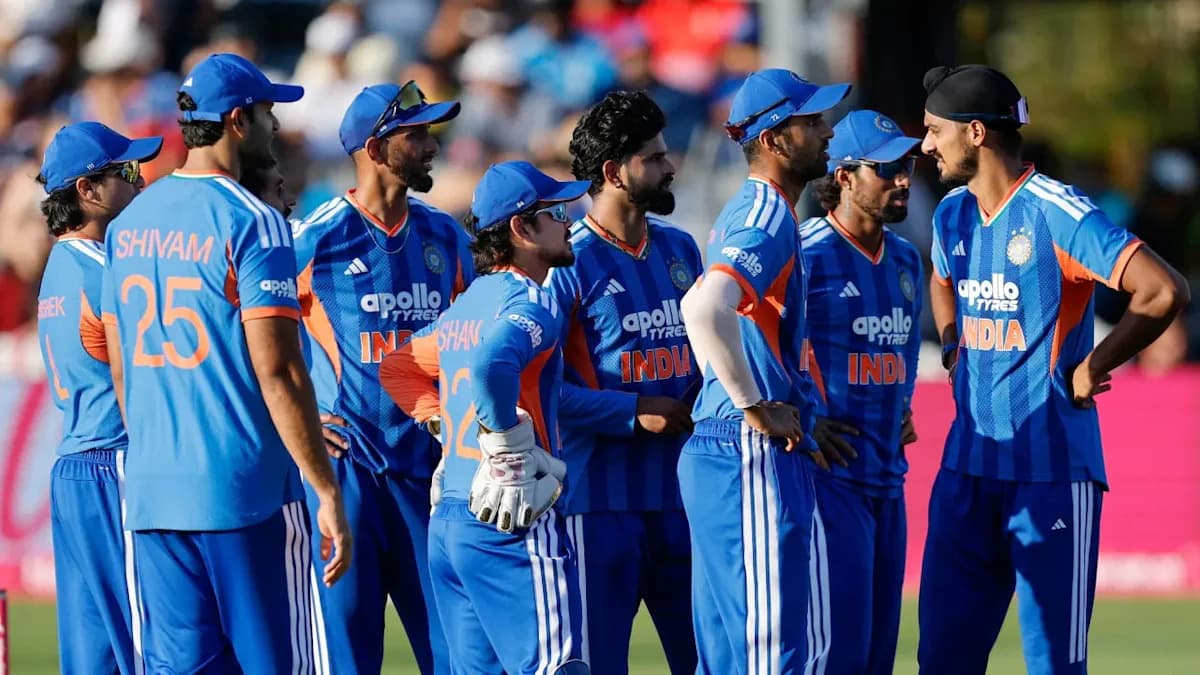
The wickets kept tightening the noose. Shafali Verma, already a menace with the bat, turned the ball into another weapon. She removed Hasini Perera for her second wicket of the innings, piling more pressure on a Sri Lankan side already creaking under the weight of the scoreboard.
At 43/3 after seven overs, chasing 217, Sri Lanka were staring at a mountain that only grew steeper with every dot ball. India’s fielders were on their feet, the dugout buzzing. This was the kind of dominance that lets a team, quietly, start to picture gold around their necks.
Lakshya Sen’s rollercoaster: from outplayed to outrageous
On another court, in another arena, an Indian athlete was fighting a very different battle.
Lakshya Sen started his men’s singles quarter-final against World No.7 Kodai Naraoka in a blur – and not the good kind. Naraoka bossed the opening game 21-11, dragging Sen front and back at will, dictating pace, angles, everything. Sen’s rhythm deserted him. The first game was gone in just 18 minutes, ending with a long toss that summed up his frustration.
Then the match flipped.
Switching to the better side of the court, Sen found the drift, found his length, and then found Naraoka’s breaking point. He tightened his defence, forced longer rallies, and suddenly the Japanese star was the one scrambling.
The second game was a rout: 21-5 to Sen.
Naraoka lost his timing, his radar, and finally his composure. Shuttles sailed wide, drops and smashes crashed into the net. The drift, which had looked like a nuisance, became Sen’s ally. He read it, trusted it, and Naraoka could not keep up.
That set up a decider heavy with tension.
Sen started from the bad side again, trailing 5-7 and then 13-17, but he had already cracked the code. Defend. Absorb. Wait for anything flat. Then hit. He dragged Naraoka into long, punishing exchanges, then pounced with deceptive half-smashes and precise attacks on the backhand.
The pressure told.
From 14-19 down in the third game, Sen mounted the kind of comeback that lives long in memory. Point by point, he reeled Naraoka in. The Japanese shuttler unravelled in the final moments, unable to pierce Sen’s defence, unable to stop the momentum that had turned completely against him.
Sen took the decider 21-19, sealing a 11-21, 21-5, 21-19 victory after a gruelling 1 hour 6 minutes on court. It was not just a win over the World No.7. It was a masterclass in adaptation, patience, and belief.
From outplayed to unstoppable.
Table tennis and fencing: fine margins, harsh exits
Not every Indian story on the day ended in celebration.
In men’s team table tennis, the 2018 bronze medallists ran into a clinical Korean unit in the pre-quarterfinals and never quite got going. Harmeet Desai went down 1-3 to Jang Woojin, Manush Shah fell 2-3 to Oh Junsung, and Manav Thakkar lost 1-3 to An Jaehyun. A 0-3 defeat, and India were out.
Questions will linger. Did the team miss the experience of G Sathiyan, who was not fielded in this crunch tie? The result will only sharpen that debate.
On the fencing piste, Mitva Jesangbhai Chaudhari lived the agony of narrow defeat. Leading 5-4 in the first period of her women’s individual Epee Table of 32 bout against China’s Jingwen Yang, she pushed the contest all the way to the wire before losing 14-15. One touch. One moment. The kind of margin that can haunt an athlete for a long time.
India’s hopes in the event now rest with Taniksha Khatri, who moves on to the women’s individual Epee Table of 16.
On a day when Mandhana’s bat, Shafali’s all-round spark, and Lakshya Sen’s stubborn genius grabbed the spotlight, India also felt the sting of near-misses and abrupt exits.
The medals will tell one story. The way they were won – and lost – tells another.