India's Women Win Asia Cup but Reject Trophy from Pakistani Official
The Asia Cup trophy sat waiting under the Dubai lights. India’s women never came for it.
On a night when they underlined their dominance of Asian cricket with an eighth title, beating Sri Lanka by 72 runs, the postscript told a very different story — one of politics, protest and a pointed refusal.
Champions on the field, defiant off it
India had done the hard work long before the presentation unraveled.
After winning the toss, they piled up 5-183, a commanding total in a final of this magnitude. The bowlers then strangled Sri Lanka’s chase, rolling them for 111 inside 20 overs. It was as routine as finals come: control with the bat, discipline with the ball, a gulf in class on the scoreboard.
Normally, the rest is ceremony. Laughter, medals, the trophy lifted into the night.
Not this time.
The presentation was delayed by almost an hour. While Asian Cricket Council (ACC) chairman Mohsin Naqvi — also Pakistan Cricket Board chairman and Pakistan’s interior minister — waited on the dais with other ACC officials, India staged a ceremony of their own.
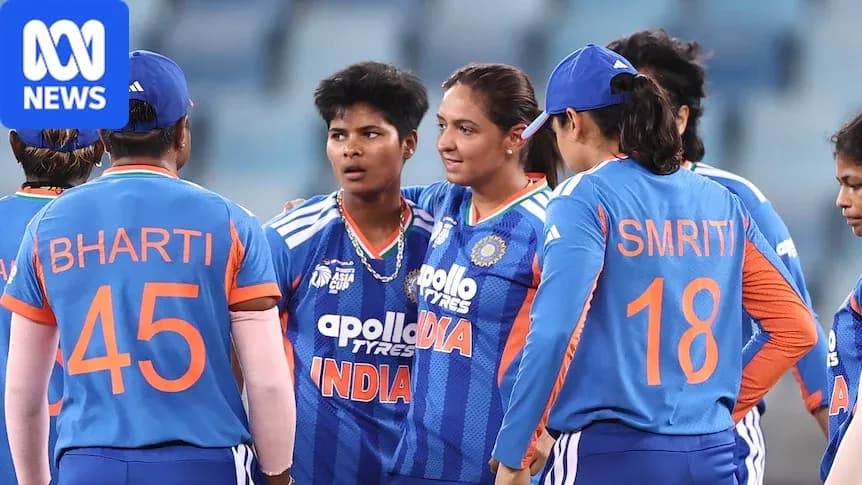
On the field, away from the official podium, BCCI secretary Devajit Saikia handed the best fielder medal to Nandani Sharma. The team gathered, celebrated, and then, as footage circulating on social media showed, walked off.
The ACC stage remained dressed for a party that never started.
A trophy left on the table
Naqvi stood in position, medals ready, trophy in place. The Indian players never arrived to collect them. No handshake line. No captain’s photo with the dignitary. No shared frame.
Instead, the ceremony limped to an abrupt close.
Medals went to Sri Lanka’s players and the match officials. Naqvi handed the runners-up cheque to Sri Lanka captain Chamari Athapaththu. The victors, officially crowned champions of Asia, were nowhere near the rostrum that confirmed it.
The message could not have been clearer.
“This is BCCI's stand [to not take trophy from Naqvi]. We can't say anything on this,” India coach Amol Muzumdar said afterward.
He did not dress it up.
“India are officially the champions. Trophy or no trophy doesn't matter to us.
“For us, this tournament is over, we are the champions. That's good enough. It was on the big board that India are the champions of Asia Cup 2026.”
For India, the scoreboard and the stadium screen were validation enough. The silverware, at least in that moment and from those hands, was not.
Cricket caught in the crossfire
The tension between India and Pakistan has long seeped into cricket. Over the past year, cross-border hostilities dragged the two countries close to open conflict. The chill has been just as obvious whenever bat and ball bring them together.
Indian players have repeatedly avoided handshakes with Pakistan counterparts. They have refused trophies and medals from Pakistani officials at several events. What once felt like an occasional flashpoint has hardened into a sustained stance.
The men’s Asia Cup followed the same script. India beat Pakistan three times, including in the final, yet Suryakumar Yadav’s side declined to take the trophy from Naqvi and skipped post-match handshakes in all three encounters.
The women mirrored that approach earlier in this tournament, walking past Pakistan without the customary gesture at the end of their match. Muzumdar was clear then too: “That stand has been taken by BCCI and we stand by it.”
In Dubai, that stand escalated from the boundary rope to the presentation stage.
A new normal for Asian cricket?
India’s women now sit atop the continent again, their cricket emphatic, their political line unbending. They have the title, the wins, the numbers. What they refused was the symbolism of accepting the crown from a Pakistani official.
For the ACC and for Naqvi, the image of a deserted podium will linger. So will the question that hung in the humid Dubai air as the lights dimmed and the trophy stayed largely untouched.
In a region where cricket has so often tried to rise above politics, is this what the new era of Asian finals looks like?