Mark Wood Retires: A Fast Bowler's Explosive Career
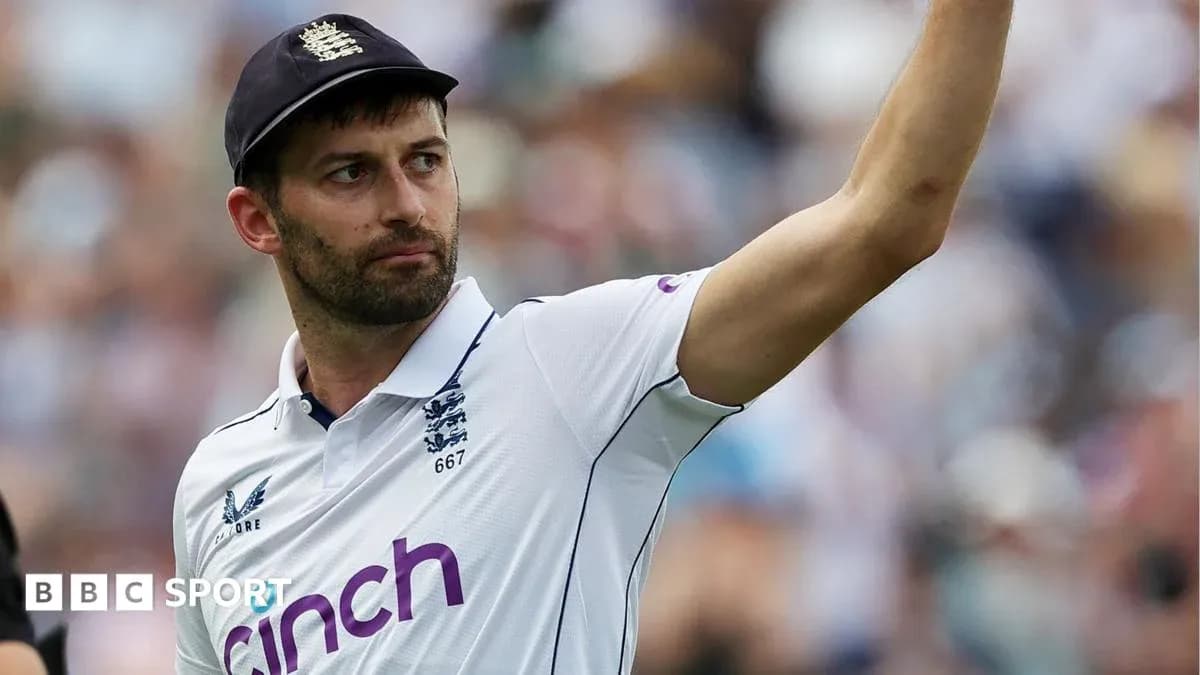
Mark Wood, the tearaway fast bowler who thrilled crowds and terrified batters, has called time on his England career with immediate effect at 36, bringing down the curtain on one of the most explosive – and fragile – pace careers the country has seen.
The Durham quick, among the fastest to ever pull on an England shirt, has spent as much time fighting his own body as he has opposition line-ups. In the end, the injuries won.
A body that wouldn’t relent
Wood’s final act in international cricket came in Perth, in the first Ashes Test last November. It was supposed to be a comeback, a statement that the old pace was still there after 15 months out with an elbow injury and knee surgery.
He lasted 11 overs.
Swelling in his left knee ended the experiment almost as soon as it began. He flew home, sought treatment, and never played for England again.
“Although this may not come as a surprise given the past year, it just feels like a natural time at the end of my contract,” he said in a statement on social media. “I’ve always tried to be resilient and come back from injury to prove people wrong and show everyone what I can do. Unfortunately, this time I lost the battle.”
On medical advice, he said, Test and 50-over cricket are no longer possible. The England dream, as he put it, has been “slowly ground out” of him over the past year. The emotion was unmistakable: “Playing for England has been the greatest honour I could have ever wished for and a dream come true.”
He still hopes to play some cricket elsewhere. But his days in an England shirt are over.
Numbers that only tell half the story
On paper, Wood’s record is impressive, if not bloated by volume. He took 119 wickets in 38 Tests after debuting in 2015, the summer he helped England win back the Ashes on home soil. In white-ball cricket, he claimed 80 wickets in 70 one-day internationals and 54 in 38 T20 internationals, finishing as England’s sixth-highest wicket-taker in men’s T20s.
Those numbers, though, barely touch the essence of Mark Wood.
He was a bowler who quite literally hurled himself at the crease, often ending up on the turf after delivery, body contorted, cap flying. The ball would whistle, the speed gun would flash, and for a few overs the game felt like it was tilting on its axis.
Anyone who has ever tried to bowl fast knows the fantasy: batters hopping, stumps cartwheeling, the crowd gasping. Wood lived that fantasy for real – and let everyone in on it. He joked, he smiled, he engaged with fans. He never looked like he’d forgotten that cricket, even at the sharpest edge, is supposed to be fun.
Reinvention and redemption
The cost of that pace was brutal. Ankle, knee, elbow – the list of injuries reads like a medical chart rather than a sporting CV. The human body is not designed to bowl at 90mph-plus, and Wood’s paid a particularly heavy price.
So he reinvented himself.
In 2018, in a bid to ease the strain, Wood lengthened his run-up. It was a gamble. Many quicks who tinker with their action lose the very thing that makes them special.
He didn’t.
The new run-up preserved his speed and unlocked some of his finest work. St Lucia in 2019 was the clearest example – a demolition of West Indies that felt like a glimpse of what the second half of his career might look like if his body finally played along.
It never fully did. But when the stars aligned, the impact was devastating.
World champion, twice over
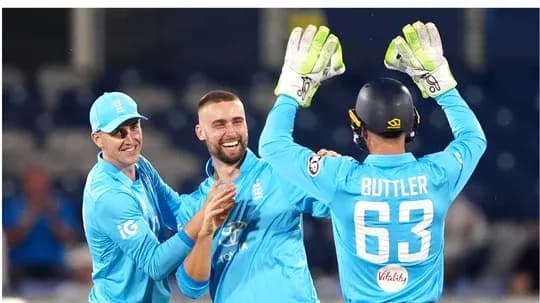
Wood’s career arc intersects with England’s greatest white-ball era. He was part of the side that lifted the 2019 World Cup at Lord’s, playing through injury and even coming out to bat alongside Ben Stokes on that extraordinary day.
He also featured in the squad that won the T20 World Cup in 2022, though a calf problem ruled him out of the closing stages.
He leaves as one of a select group of England players to have won both global white-ball titles and the Ashes. He was in the last England team to regain the urn in 2015. With his retirement, only Joe Root remains in the current Test set-up with experience of winning an Ashes series.
Ashes fire and Headingley thunder
If there is a single spell that captures Wood’s Test career, it came at Headingley in 2023.
England were 2-0 down in the Ashes. Wood had been held back until the third Test, the gamble kept in reserve. When he finally took the ball, he detonated the series.
He bowled at what felt like the speed of light. Usman Khawaja, so solid for so long, was blasted out by a 95mph thunderbolt – one of those deliveries that seems to bend time as much as air. It was one of the great Ashes spells, raw pace married to precision and fury.
The drama didn’t end with the ball. In a tense run chase, Wood was there at the finish, at the crease with his close friend Chris Woakes, steering England over the line. Both men had been recalled for that Test. Without their contributions, the 2023 Ashes would have been a rout rather than a revival.
Wood’s performances helped England claw their way back from 2-0 down to level the series. It was a reminder that when he was fit, he didn’t just add something. He changed everything.
A career without a final act
The end, when it came, was quiet. No farewell tour, no last spell in Australia, no scripted final roar with the new ball.
His long rehabilitation from elbow and knee problems was supposed to fuel one more Ashes tilt down under. Instead, Perth exposed the truth: the pace England craved was no longer sustainable. Wood later admitted he felt “ashamed” by what unfolded.
That word cuts. It shouldn’t. His career has been shaped as much by courage as by speed – the courage to keep coming back, to keep charging in, knowing that every spell might be the one that breaks him again.
The end of an era
Rob Key, managing director of England men’s cricket, captured the scale of Wood’s contribution.
“It’s been a privilege to watch the latter part of a great career,” he said. “To have been a point of difference in Ashes series wins, two World Cup wins, and to have thrilled crowds every time he got the ball in his hand is something very few players achieve. He can look back with enormous pride on a career very well spent.”
He departs as a symbol of a broader shift in English pace bowling. Stuart Broad has gone. James Anderson has stepped away. Chris Woakes has retired. Now Wood joins them. Factor in the all-round heft of Ben Stokes stepping back from bowling, and England have lost 1,871 Test wickets in under three years.
An era of fast-bowling craft and character has slipped into history.
What remains, indelibly, is the image: Mark Wood, flat out on the turf after another 95mph rocket, grinning, the crowd roaring, the game briefly bent to his will. The question now is not what his body will allow him to do next, but how England find anyone who can make the ball – and the heart rate – spike quite like that again.