Mark Wood Retires: A Fast Bowler's Unforgettable Journey
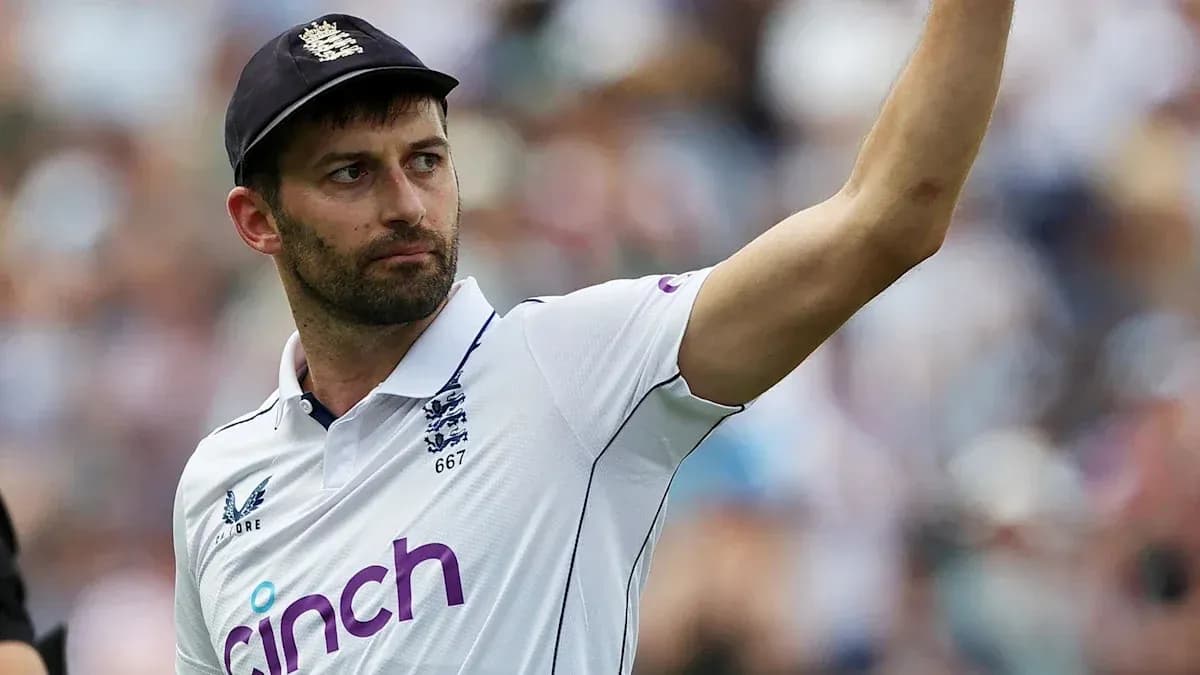
Mark Wood, one of the fastest bowlers ever to pull on an England shirt, has called time on his international career – and with him goes one of the game’s great visceral thrills.
The 36-year-old Durham quick, who spent much of his career fighting his own body as fiercely as he fought opposing batters, announced his retirement from all international formats with immediate effect, saying the “England dream has slowly been ground out of me over the last year”.
A career lived in the fast lane – and on the edge
Wood’s numbers tell one story. His impact tells another.
Since his Test debut in 2015, he claimed 119 wickets in 38 matches, part of the side that wrestled back the Ashes that same summer. In white-ball cricket, he leaves with 80 wickets in 70 ODIs and 54 in 38 T20 internationals, making him England’s sixth-highest wicket-taker in men’s T20s.
But no statistic quite captures the sight that made crowds lean forward: Wood charging in, heels pounding, body snapping through the crease, often bowling himself clean off his feet. It was raw. It was reckless. It was unforgettable.
The cost was brutal. Ankle problems. Elbow operations. Knee trouble. Repeat, repeat, repeat.
He had just returned from 15 months out – elbow surgery followed by knee surgery – to play the first Ashes Test in Perth in November. Eleven overs later, the same left knee swelled up again. The tour was over. He flew home and never played for England again.
“On medical advice, Test cricket and 50-over cricket are not possible,” he admitted in his retirement statement. This time, the comeback never came.
Reinvented run-up, same lightning pace
Wood tried everything to keep the dream alive. In 2018 he lengthened his run-up, a calculated gamble to ease the strain on his body. It worked, at least for a while.
The pace never dipped. If anything, the rhythm made him more dangerous.
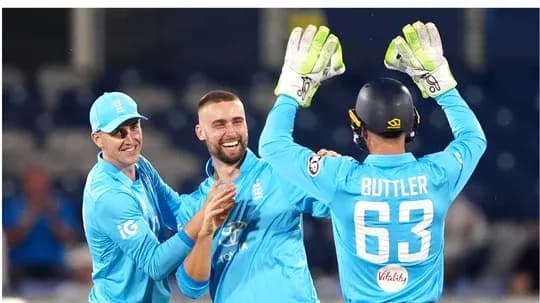
In St Lucia in 2019, he tore through West Indies with that remodelled approach, a spell that felt like a glimpse of what the second half of his career might be. The ball fizzed. Batters groped. England had a genuine 90mph-plus spearhead who could blow sides away.
He carried that threat into the 2019 World Cup, taking 18 wickets as England lifted the trophy on that extraordinary day at Lord’s. Even then he was hurt, coming out to bat with Ben Stokes despite carrying an injury, another body-on-the-line act in a career full of them.
Three years later he was in the squad that won the T20 World Cup in 2022, though a calf problem cruelly ruled him out of the closing stages.
Ashes firestarter
If there is a single series that will always be tied to Wood’s name, it is the 2023 Ashes.
England were 2-0 down. The series was slipping away. Wood had been held back, his fitness carefully managed, the question hanging in the air: was he worth the risk?
At Headingley, the answer came hurtling down at 95mph.
He tore in with a kind of controlled fury, delivering one of the great Ashes spells. Usman Khawaja, so serene for much of the series, was blasted out by a thunderbolt. The crowd roared every time Wood turned at the top of his mark. Australia, for the first time that summer, looked rattled by sheer speed.
He didn’t just change the mood with the ball. In a tense run chase, he was there at the end with Chris Woakes, another bowler recalled for that third Test. Together they dragged England over the line. Without that pair, England’s fightback from 2-0 down never really starts.
Rob Key, England’s managing director of men’s cricket, called it “a privilege to watch the latter part of a great career”, and pointed to Wood’s “point of difference” in Ashes wins and World Cup triumphs. Few bowlers have altered the feel of a contest quite so quickly, quite so violently.
Joy, personality and what might have been
Fast bowling at that pace is an unnatural act. The human body is not built for it. Wood’s broke often, and badly.
So the question lingers: what might he have done with a more forgiving frame? More Tests, more series-defining spells, more days like St Lucia and Headingley?
Yet to focus only on the absences is to miss what made him so loved. Wood didn’t just bowl fast. He played fast. He joked with fans. He took the game seriously but never himself. Even when his body betrayed him, he somehow made the grind look like a game worth playing.
He leaves as one of a select group of England players to have won both the 50-over and T20 World Cups and the Ashes. With his retirement, the last man in England’s current Test set-up to have experienced Ashes glory in 2015 is Joe Root alone.
End of an era
There was no final flourish in Australia. No last hostile spell at the Gabba or MCG. His long rehabilitation from elbow and knee injuries did not bring back the pace England craved down under. He played only the first Test in Perth and later admitted he felt “ashamed” at how it unfolded.
Now comes the full stop.
First Stuart Broad, then James Anderson, then Woakes and Wood. Factor in Ben Stokes’ all-round load being scaled back, and England have seen 1,871 Test wickets disappear from their attack in under three years. A whole era of English pace, with all its contrasts – Broad’s theatre, Anderson’s precision, Woakes’ polish, Wood’s raw velocity – has slipped into history.
Wood says he hopes to keep playing cricket in some capacity. County spells. Franchise leagues. One more charge in a different shirt.
Internationally, though, the sprint is over. The mark he left, from Lord’s to Headingley to St Lucia, came in short, blistering bursts – exactly like his run-up.
England will find new quicks. They always do. But will they find another who bowls that fast, with that joy, and risks that much every time he lets the ball go?