Mark Wood Retires from International Cricket: A Career of Pace and Pain
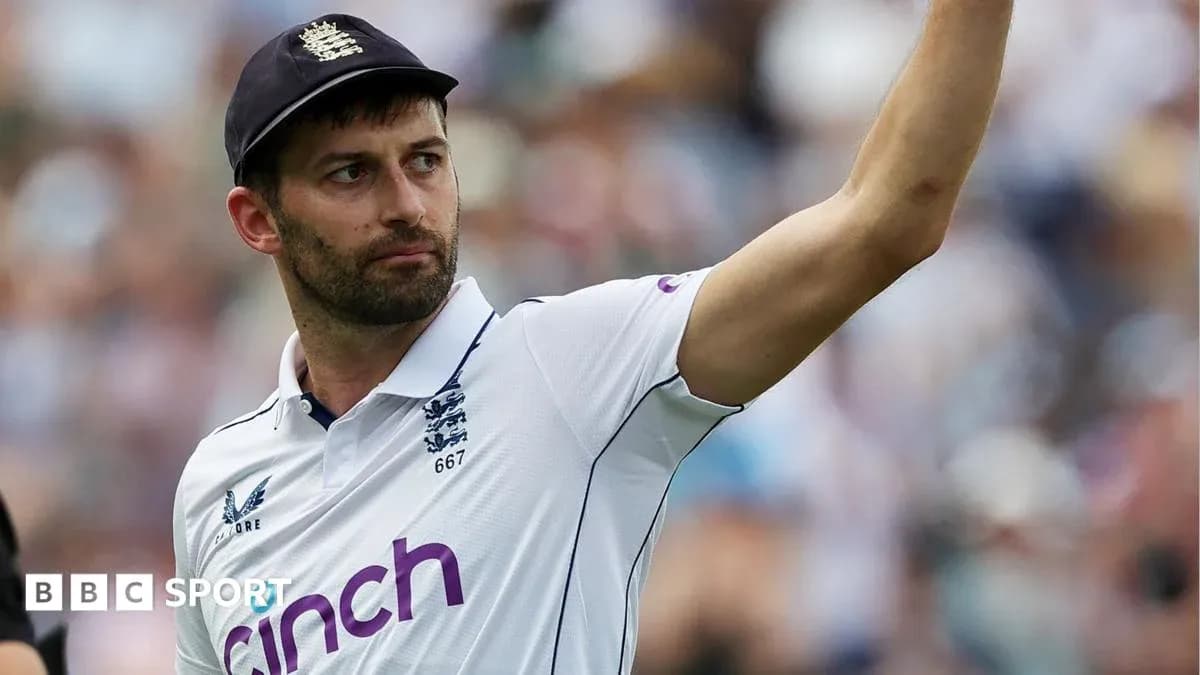
Mark Wood, the tearaway quick who spent a decade hurling himself at the game and his own body, has called time on his international career with immediate effect.
The 36-year-old Durham fast bowler, one of the quickest England has produced, walks away with 119 Test wickets from 38 matches, a World Cup winner’s medal in both formats, and a medical file that tells the other half of the story.
A body that wouldn’t let go
Wood’s career has always been a race against his own frame. He returned to the England side for the first Ashes Test in Perth last November after 15 months out, having endured an elbow injury and then knee surgery. The comeback barely had time to breathe.
He bowled just 11 overs before his left knee swelled again. The same knee. The same story. He flew home for treatment and never pulled on an England shirt again.
This week, the conclusion he had tried to fend off finally arrived.
“Although this may not come as a surprise given the past year, it just feels like a natural time at the end of my contract,” Wood said in a statement on social media. “I’ve always tried to be resilient and come back from injury to prove people wrong and show everyone what I can do. Unfortunately, this time I lost the battle.
“On medical advice, Test cricket and 50-over cricket are not possible, so the England dream has slowly been ground out of me over the last year.
“Playing for England has been the greatest honour I could have ever wished for and a dream come true.”
He still hopes to keep playing cricket in some capacity, but the international chapter is closed.
Pace, pain and pivotal moments
Wood’s raw numbers only hint at his impact. He debuted in 2015 and, that same summer, helped England wrench back the Ashes on home soil. When fit, he offered something few England seamers could: genuine, sustained high pace.
The cost was brutal. Ankle, knee, elbow – the list of injuries reads like a medical checklist for fast-bowling attrition. To buy himself a few more years, he lengthened his run-up in 2018 to ease the strain on his body. The speed gun barely noticed the change. Batters certainly did.
That adjustment allowed him to be central to some of England’s biggest modern triumphs. He was a key part of the 2019 50-over World Cup-winning side, taking 18 wickets in the tournament as England lifted the trophy at Lord’s. Three years later he was in the squad that won the T20 World Cup in 2022, only for a calf problem to cut short his involvement before the final stages.
The pattern repeated: decisive spells, then another breakdown.
White-ball menace, Ashes fire
Across formats, Wood leaves a serious white-ball legacy. He retires as England’s sixth-highest wicket-taker in men’s T20 internationals, with 54 wickets from 38 matches, and 80 wickets from 70 one-day internationals. Those figures came in short, violent bursts – the kind of spells that can flip a game inside a few overs.
His Test career found a late surge too. In the 2023 Ashes, with England 2-0 down and clinging to the series, Wood’s return injected electricity. His blistering pace and hostile spells helped drag England back into the contest and ultimately level the series 2-2. When he got the ball in hand, grounds rose in anticipation. That was his currency.
Rob Key, managing director of England men’s cricket, captured the sense of what Wood brought.
“It’s been a privilege to watch the latter part of a great career,” Key said. “To have been a point of difference in Ashes series wins, two World Cup wins, and to have thrilled crowds every time he got the ball in his hand is something very few players achieve. He can look back with enormous pride on a career very well spent.”
A career spent at full tilt
Wood’s story is not one of unbroken dominance. It is one of relentless effort, of a fast bowler refusing to compromise on speed even as his body demanded it. Every comeback felt like a minor miracle; every setback, a reminder of the toll.
Now the medical advice is clear: no more Tests, no more 50-over internationals. The dream that drove him from Durham to World Cups and Ashes battles has, as he put it, been “ground out” over the past year.
What remains is a legacy defined not just by medals and numbers, but by the visceral thrill of watching him charge in, one more time, as if nothing hurt at all.