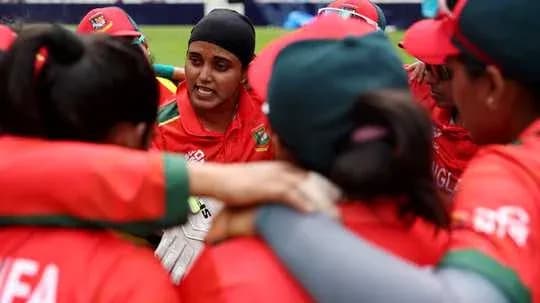
Nigar Sultana Steps Down as Bangladesh T20I Captain After Asian Games
Nigar Sultana, the face of Bangladesh’s recent surge in women’s cricket, is set to walk away from the T20I captaincy after the Asian Games, choosing bat and gloves over the burden of the armband in the shortest format.
She will continue to lead the ODI side. That part is non-negotiable. But in T20Is, she has decided her future lies in sharpening her primary skills rather than juggling every moving piece on the field.
The decision is not a sudden impulse. Cricbuzz understands Nigar had already informed the Bangladesh Cricket Board of her intention to relinquish the T20I role, making it clear she wanted to focus on her batting and wicketkeeping while still steering the 50-over team. BCB president Tamim Iqbal has accepted her call, with Nigar formally communicating it in a letter sent from Japan on Tuesday, September 15.
A Tenure Marked by Highs, Lows and a World Cup Breakthrough
Nigar took over as T20I captain in 2022, inheriting a side searching for identity and consistency. Her reign has never been dull.
The standout chapter came at the 2024 T20 World Cup. Under her leadership, Bangladesh beat Scotland to secure their first World Cup win in ten years, a result that echoed far beyond the scoreline. It was not just a victory; it was a release. A decade of frustration finally snapped.
Nigar stood at the centre of that revival. Across the tournament she scored 104 runs in four innings, anchoring tricky chases and adding substance to a line-up that has often leaned too heavily on her. Behind the stumps, she was just as sharp, racking up seven dismissals and setting the tone with her energy and precision.
For a while, it felt like a turning point.
The pressure, though, never really eased.
Earlier in 2026, Bangladesh stormed through the World Cup qualifiers as unbeaten champions, a run that suggested the side had found both rhythm and resolve under her watch. That campaign showcased the best of Nigar’s leadership: clear plans, disciplined fields, and a group that bought into her methods.
Then came the stumbles.
A 2-1 home series defeat to Sri Lanka cut into that momentum and raised awkward questions. The Scotland–Netherlands tri-series produced only mixed returns, the kind of stop-start form that keeps a captain under the microscope. At the World Cup itself, two wins from five matches were not enough to silence the scrutiny. The team showed fight but lacked the ruthless edge required to consistently close out games.
As results fluctuated, so did the noise around her captaincy.
A Calculated Step, Not an Exit
This move is not Nigar stepping away from responsibility. It is a recalibration.
By giving up the T20I captaincy, she frees herself to dig deeper into the two roles that first put her on the map: run-scorer and wicketkeeper. For Bangladesh, that might be exactly what they need in a format where every run and every half-chance can swing a match.
The board now faces a pivotal call. A new T20I captain must be appointed, someone capable of building on the foundation Nigar leaves behind while injecting fresh ideas into a side that has shown promise without yet breaking through consistently.
Nigar, meanwhile, will still walk out in national colours, still call the shots in ODIs, still stand at the heart of Bangladesh women’s cricket. The badge remains. Only the format of her leadership changes.
The question now is simple: can Bangladesh turn this shift into the spark that finally transforms flashes of potential into a sustained T20I force?