Pakistan's Dramatic Overhaul After England Defeats
Pakistan have ripped up their tour of England after two bruising defeats, executing one of the most dramatic mid-series overhauls Test cricket has seen.
Seven players have been sent home, five uncapped men drafted in, and the head coach removed – all before the third and final Test at Edgbaston on 9 September.
This is not a reset. It is a reckoning.
Seven out, seven in
The cull is brutal. Muhammad Rizwan, Imam-ul-Haq, Salman Ali Agha, Ali Usman and Khurram Shahzad – all involved in the series – have been dropped. Aamir Jamal and Muhammad Awais Jafar, who did not feature in either of the first two Tests, are also on the next flight out.
In their place comes a wave of change.
Batters Saim Ayub and Abdullah Fazal, who have previous Test experience, return to bolster a batting unit that has been repeatedly exposed. Around them gathers a cluster of fresh faces: spin-bowling all-rounder Arafat Minhas, left-arm seamer Mohammed Imran Jr, wicketkeeper Said Baig, and all-rounders Mohammad Imran and Razaullah.
Five of those are uncapped. Five men stepping into a series already lost, with reputations and futures on the line.
Coaching shake-up
The upheaval does not stop at the dressing-room door.
Head coach Sarfaraz Ahmed and his assistant Umar Gul have been released from their duties mid-tour. In come Pakistan white-ball coach Mike Hesson and former Australia seamer Ashley Noffke to take charge for the final Test.
A Test side changing its head coach during a live series is almost unheard of. A touring team doing it in England, after just two matches, is staggering.
Yet Pakistan’s performances have left little room for sentiment.
Abject start forces drastic response
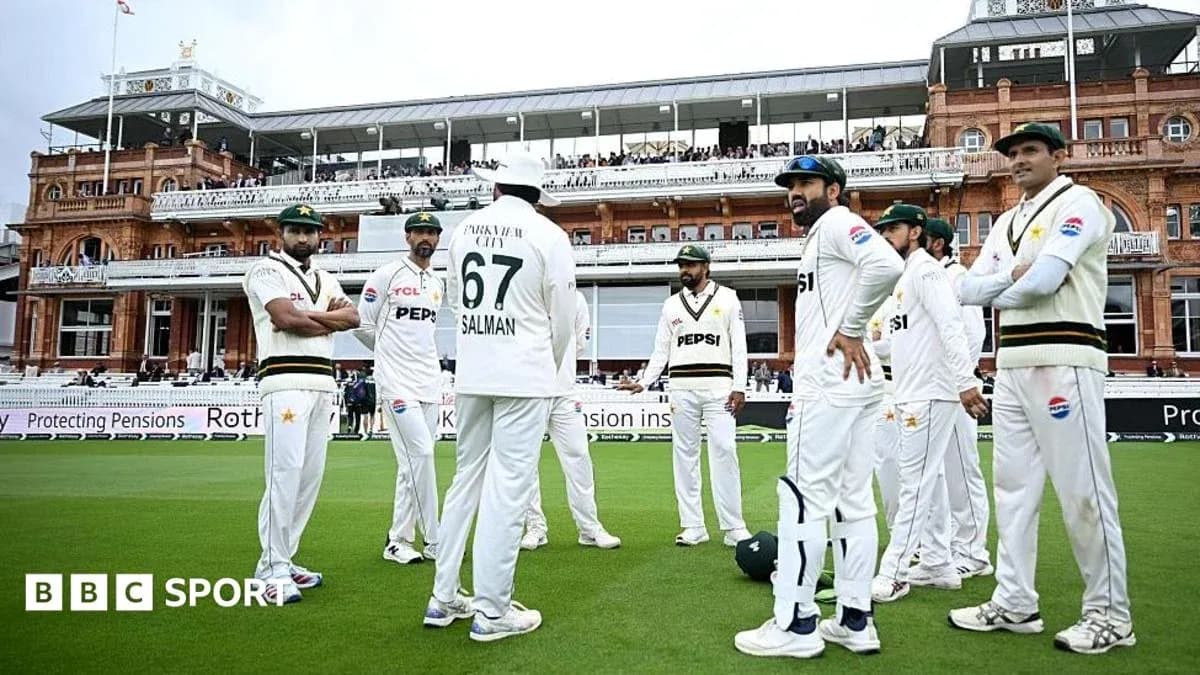
The numbers are damning. At Headingley in the first Test, Pakistan lost by an innings. At Lord’s in the second, they went down by 194 runs. Across four innings, they have failed to reach 200 even once.
This has not been a slow unravel. It has been a collapse.
Top-order frailty, soft dismissals, and a bowling attack unable to sustain pressure have combined to leave Pakistan outclassed and out of the series with a match still to play. The response from the hierarchy is as ruthless as the results have been ruthless against them.
Seven players gone. The coach gone. A new group handed the task of salvaging pride, if not the trophy.
A familiar streak of volatility
For Pakistan cricket, radical reaction is nothing new.
On England’s last tour of Pakistan in 2024, the hosts responded to a chastening defeat in the first Test – when England piled up a total in excess of 800 – with a decision that bordered on defiance. They chose to play the second Test on the same Multan pitch.
Groundstaff deployed garden heaters and fans to dry the surface, trying to bake it to suit their spinners. The gamble worked. Pakistan adjusted quicker, their slow bowlers came into the game, and the home side turned the series around, winning the next two Tests to take it 2-1.
That episode underlined a national trait: when backed into a corner, Pakistan do not always retreat. Sometimes, they double down on chaos and trust their talent to ride the storm.
Edgbaston as a test of character
This latest shake-up fits that pattern, but on an even grander scale. Edgbaston now becomes less a dead rubber and more an examination of nerve.
The series is gone. The scrutiny is not.
For the newcomers, it is an abrupt entry into the harshest spotlight – an England side in form, a crowd that senses vulnerability, and a dressing room still absorbing the shock of mass change.
For Pakistan cricket, it is another swing at reinvention, another attempt to turn crisis into catalyst. The question is no longer whether they can win the series.
It is whether this radical gamble can stop a bad tour from becoming a defining scar.