Pakistan's Mid-Series Overhaul: Seven Players and Coaches Axed in England
Pakistan have not just pressed the panic button in England. They’ve ripped the whole console out of the wall.
With the team 0-2 down in the Test series and sinking fast, the Pakistan Cricket Board has executed a sweeping mid-tour overhaul, releasing seven players from the squad and clearing out the Test coaching staff in a move that underlines the depth of the current crisis.
Seven players cut, senior names dumped
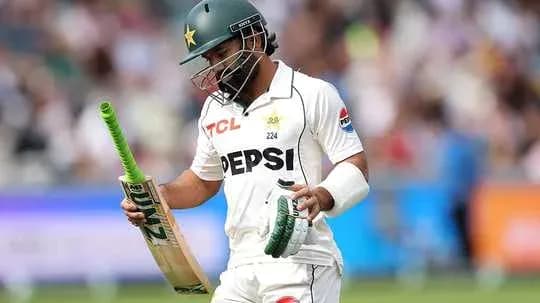
The headline shock is the exit of former white-ball captain Salman Agha from the touring Test party. He is not alone. Mohammad Rizwan, Imam-ul-Haq, Ali Usman, Aamir Jamal, Muhammad Awais Zafar and Khurram Shahzad have all been told to pack their bags and leave the Test setup in England.
No injury smokescreen. No gentle rotation. This is a cull.
Pakistan have lost five of their last six Tests, the solitary win coming against West Indies earlier this month, and they are already out of the running for a place in the World Test Championship final. The numbers behind the decisions are brutal.
Rizwan, once the heartbeat of Pakistan’s middle order, has managed 283 runs in 11 innings at 25.72 in recent Tests, with only two fifties to his name. Agha has fared no better, with 221 runs at 24.55. Imam’s returns are even leaner: 178 runs at 22.25 from eight innings. For a side desperate for stability at the top and in the middle, their senior men have gone missing.
Since January 2025, Pakistan own the worst batting average of any WTC team: 23.92. That isn’t a blip; it’s a pattern. It explains why they sit at the bottom of the WTC table and why patience has finally snapped.
New faces for Birmingham
The response from the team management has been ruthless and rapid. Seven players have been summoned for the third Test at Birmingham, starting September 9.
Three of them are familiar to the international stage: Saim Ayub, Abdullah Fazal and Arafat Minhas have already represented Pakistan and now find themselves thrust into the heart of a crisis.
Alongside them come four uncapped players: Mohammad Imran Jnr, Saad Baig, Mohammad Imran (Imran Randhawa) and Razaullah. They arrive with promise, not guarantees. They will walk into a dressing room carrying the weight of a proud Test nation that has forgotten how to win away from home.
This is not a gentle blooding of youngsters in a dead rubber. It is a gamble that the unknown might serve Pakistan better than the underperforming known.
Hesson handed the red-ball reins
The shake-up does not stop with the playing group. The PCB has also redrawn the coaching map mid-tour.
Mike Hesson, who has been in charge of Pakistan’s white-ball side, has been asked to take over the Test team alongside Ashley Noffke. The New Zealander is already in England and is expected to link up with the squad shortly.
Hesson will now lead Pakistan’s red-ball campaign for the remainder of this WTC cycle: two Tests in Sri Lanka in November and another two in New Zealand early next year. In the same breath, current Test coach Sarfaraz Ahmed and bowling coach Umar Gul have been released from their roles.
It is a seismic change in direction, delivered while the series is still alive.
A rare mid-series upheaval
Mid-tour overhauls in England are not unheard of, but they usually follow the completion of a phase, not cut across it.
India’s 2014 tour remains a reference point. After a 1-3 defeat in the Test series, the BCCI brought in Ravi Shastri with Bharat Arun, R Sridhar and Sanjay Bangar, effectively pushing Duncan Fletcher’s support staff to the margins ahead of the white-ball leg. That move came after the Test damage was done.
Pakistan have gone a step further. They have pulled the trigger during the Test series itself, with one match still to play. It underlines how quickly their Test fortunes have nosedived — and how urgently the board believes it must act.
A historic slide
The backdrop to this upheaval is grim and historic.
Sunday’s defeat at Lord’s was Pakistan’s 10th loss in their last 11 away Tests. It also dragged their all-time Test win-loss ratio below 1 for the first time since 1987. Across 473 matches, they now stand on 153 wins and 154 defeats, a win-loss ratio of 0.993.
Their record in SENA countries (South Africa, England, New Zealand, Australia) is even more damning. Pakistan have gone winless in their last 18 Tests in those nations since 2018, losing 16 and drawing two. The last time they tasted victory in those conditions was at Lord’s in May 2018.
From that high at the Home of Cricket to this latest low at the same venue, the arc tells its own story.
What now?
Birmingham will not just be a third Test. It will be a stress test of Pakistan’s entire red-ball reset.
New faces, new coach, old scars. The PCB has made its move. The question now is whether this radical surgery can revive a fading force, or whether this is only the beginning of a longer, harsher reckoning with Pakistan’s place in the Test game.