Protect College Sports Act Advances in Senate
The fight over the future of college sports moved to the Senate floor on Tuesday, and this time the NCAA got what it wanted.
By a lopsided 74-24 margin, senators voted to advance the Protect College Sports Act, a sweeping, NCAA-backed bill that would drag the fractured world of college athletics under a single federal umbrella. It needed 60 votes. It cleared that mark with room to spare.
What comes next is murkier. The timing for a final Senate vote is still unsettled, and even if it passes there, the bill faces another test in the House. But for now, the NCAA has momentum in Washington it has struggled to find in courtrooms across the country.
Congress steps into the chaos
The Protect College Sports Act is Congress’ latest attempt to impose order on a sport that has been reshaped, almost overnight, by judges and state lawmakers.
For decades, NCAA rules on eligibility, transfers and amateurism barely budged. Then came a wave of lawsuits and state laws that shredded the old playbook. Athletes won the right to move freely from school to school. They gained new avenues to be paid — including directly by their universities in some cases. Temporary injunctions and conflicting state standards left the NCAA trying to enforce national rules on a map that no longer matched.
This bill is designed as the reset button.
It would establish a single national standard on some of the most contentious issues in college sports: how many years an athlete can compete, how often players can transfer, what forms of compensation are allowed, and where the lines are drawn.
Just as important, it would give the NCAA something it has long craved and critics have long feared: an antitrust exemption.
Antitrust shield at the heart of the fight
Under the proposal, the NCAA would be shielded from future antitrust challenges over its core rules. That’s a dramatic shift in a landscape where recent legal defeats have chipped away at its power and opened the door for athlete compensation.
Professional leagues like the NFL and NBA already enjoy antitrust protections, but there’s a crucial difference. Their athletes are represented by unions and collectively bargain over working conditions, salaries and rules.
College athletes do not have that kind of formal bargaining power.
Opponents argue that giving the NCAA an antitrust shield without a corresponding player voice locks in a system where universities, conferences and executives keep control of the money and the rules — and where athletes, once again, are expected to live with the consequences.
Cruz, Cantwell lead the charge
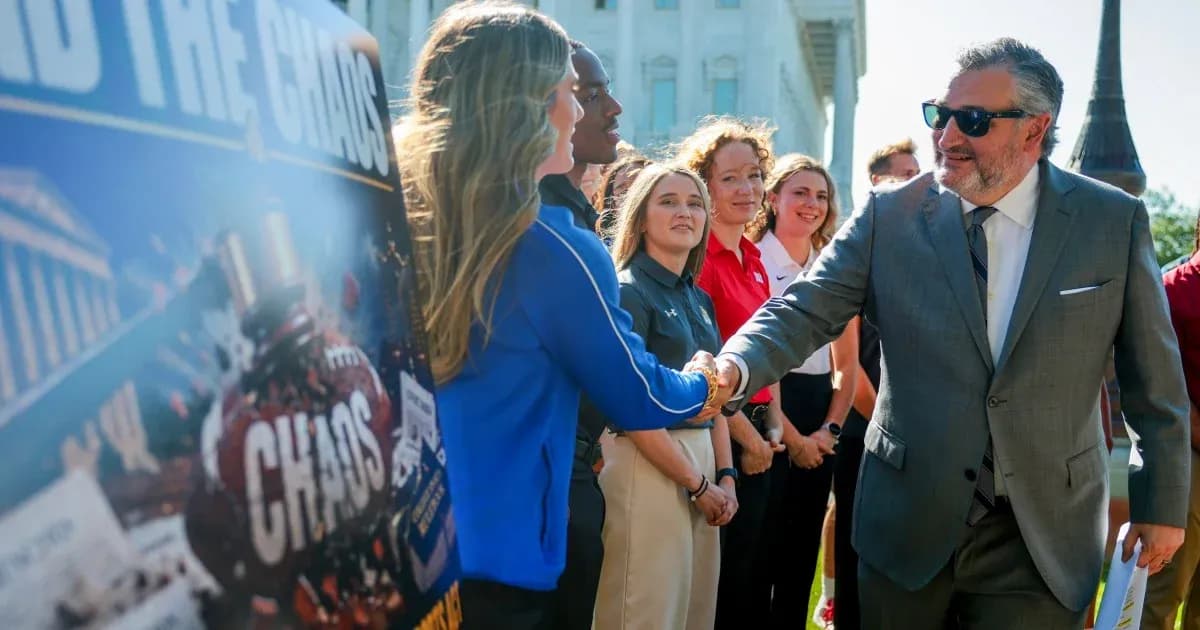
The bill carries bipartisan heft. Sen. Ted Cruz, R-Texas, and Sen. Maria Cantwell, D-Wash., introduced it earlier this year, and both have framed it as a necessary answer to the chaos engulfing college sports.
They have the NCAA firmly in their corner. The association has spent years pressing Congress for a federal solution as state rulings and new laws have undercut its authority, especially in the money-rich arenas of football and men’s and women’s basketball.
Coaches have joined the push. Gonzaga men’s basketball coach Mark Few, standing alongside Cruz and Cantwell on Monday, didn’t pretend the legislation was flawless, but he made clear where he stands.
“This bill might not be perfect, but it’s far, far away the best thing we got out there right now,” Few said, offering the kind of public backing the NCAA has been desperate to showcase.
A loud and organized opposition
The backlash is just as organized.
The Congressional Black Caucus and the NAACP have lined up against the bill, warning that it would lock in a system that already leans heavily on Black athletes in revenue sports while limiting their ability to share in the money they help generate.
One of the most vocal critics inside the Senate has been Sen. Chris Murphy, D-Conn., who has carved out a prominent role in the athlete-rights movement.
“This bill protects the billions of dollars that coaches and sports industry executives are making over the suppression of compensation for some of the most highly valued athletes in the world,” Murphy told reporters Monday. “What we’re being asked to do is to basically allow colleges and conferences and the NCAA to illegally collude.”
His argument cuts to the core of the debate: Is this a bill to save college sports, or a bill to save the NCAA’s control over it?
Taking the fight to the airwaves
Neither side is keeping this confined to hearing rooms and press releases. They’re battling for public opinion where college sports actually live — on screens.
Cruz recently took his case to ESPN’s “College GameDay,” the high-energy pregame show that sets the tone for Saturdays in the fall. It was a calculated move: speak directly to fans, alumni and boosters who fear that the familiar rhythms of college football are slipping away.
Murphy answered on different turf, joining Stephen A. Smith’s “Straight Shooter” podcast to fire back and frame the bill as a protection racket for the sport’s power brokers.
The split is clear. One side is selling stability. The other is warning about a clampdown on athlete power just as players begin to realize how much leverage they actually have.
The Senate has taken the first big step. The real question now is whether Congress will lock in a new order for college sports — or whether this becomes just another chapter in a battle that’s nowhere near its final whistle.