Shubman Gill Faces Test of Patience in Colombo
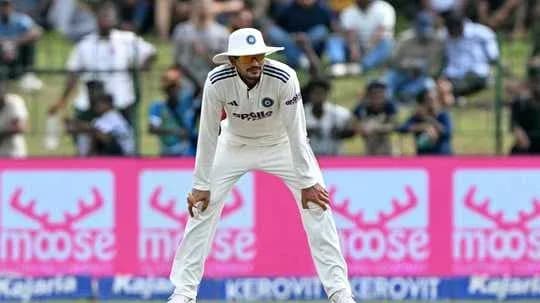
Shubman Gill stood alone at the pitch, an hour into Day 5 in Colombo, staring at the cracks as if they might finally blink first.
The first drinks break had arrived, but he barely touched the bottle. India didn’t need fluids. India needed a wicket. Just one to crack open a stubborn seventh-wicket stand that refused to yield and was quietly dragging the Test away from them.
This was Galle all over again. Same script, different venue. In Galle, Dhananjaya de Silva and Sonal Dinusha had stonewalled India for 90 long minutes before the door finally opened. In Colombo, the resistance returned with a twist. Here, it wasn’t just wickets and a finish line. It was wickets, then a chase, with rain lurking in the background and the clock ticking louder with every over.
Attack, and you risk the target swelling. Defend, and you bleed time. Somewhere between those two traps, Gill had to find a way out.
Sri Lanka had effectively resumed on 16 for 6, their hopes hanging by a thread and a mindset: bat in hours, not runs; survive phases, not spells; drag this contest as deep as humanly possible. At the heart of that defiance was Dinusha, batting as if the series depended on every forward press and every sweep.
Gill threw himself into the morning with the restless energy of a new Test captain still learning how cruel this format can be. Spinners were kept on short, sharp bursts, fingers protected, revs preserved. The quicks were told to go short and hostile, with a short leg and leg gully prowling under the helmet, waiting for the miscue that never quite came.
He never stopped moving. Between balls he walked, talked, gestured, shifted men a few yards this way, a few yards that way. It was the portrait of a captain trying to will a result out of a surface that had slowed down and a batter who simply refused to blink.
As the overs slipped by, his body language told its own story. The shoulders dropped a fraction. The walk slowed. The more Sri Lanka batted, the more the game seemed to slip from India’s grip, and Gill’s expression began to mirror that reality.
But Test cricket rarely lets you declare it over before it is. It just waits, then throws up a moment.
The moment came right after Lunch. First over, Manav Suthar drew an edge from Nuwantha, and Dhruv Jurel at second slip did the rest. A crack, at last.
What followed was two hours of pure, old-fashioned Test-match chess. India versus Dinusha. Patience versus patience.
India had seen enough of the young No. 6 to know the cleanest route to a result didn’t run through him. It ran through the man at the other end. So they turned the screws on Prabath Jayasuriya. Fields were yanked around from ball to ball to trap the No. 8 on strike. On the rare occasions Dinusha faced the sixth delivery of the over, the quicks went wide of leg stump, almost conceding the ball just to make sure Jayasuriya would be exposed next time around.
It became a game of strike control, and Dinusha, more often than not, won it.
India refused to back off. Suthar went experimental, almost theatrical. He came over the wicket, but from a diagonal angle, sprinting in between the umpire and the stumps, delivering from an awkward, skewed line that looked like something out of a backyard experiment. It looked odd. It looked inventive. It didn’t work.
Soon the match slid into that familiar late-session territory where logic gives way to little rituals and superstition. Mohammed Siraj walked up to the stumps and did the now-famous bail switch, hoping the tiniest change might trigger the breakthrough the bowlers were straining for.
Sri Lanka, though, rode their luck and clung to it with both hands.
The ball was turning sharply, but somehow Jayasuriya and Lahiru Kumara managed to keep the outside edge just out of danger. Jayasuriya survived 28 balls, each one a minor victory. Kumara dug in for 90 deliveries, a tailender’s vigil that gnawed at India’s resolve and stretched the afternoon into something far more uncomfortable than the visitors had bargained for.
The surface helped them. The turn was big but slow, giving Dinusha the confidence to premeditate his sweeps and reverse sweeps, knowing he had that extra heartbeat to adjust. The tail, too, could commit forward without feeling as if every prod might be their last.
On the balcony and in the middle, frustration grew. Inside Gill’s head, the questions grew louder.
"It gets very frustrating," he admitted later, speaking about the day and what it does to a Test captain. "Then you start questioning, was follow-on the best decision? Was it not? But then you kind of have to go back in the moment and see, what can I do? Did I take the best decision in that moment? Yes, I did. Then you can't do anything about it, you have to keep trying your best and I think we did that. We tried all that we could."
This wasn’t just about one call or one spell. It wasn’t only the pitch, either. The truth sat somewhere in the messy middle. For every Oval or Galle, where the script runs to perfection and the fifth day bends to your will, there will be a Colombo.
A day when the ball grows softer, the turn slows, and one batter reads the conditions better than anyone else in the ground. A day when plans fray, patience thins, and a lower-order partnership starts to feel like a slow, inevitable verdict.
Those are the days that test captains more than any dramatic collapse or emphatic win. They’re the days when you swallow pride, accept that someone else mastered the conditions better, and tip your cap.
Gill did exactly that.
And as he walked off in Colombo, he walked off knowing this is the kind of scar that shapes a Test captain’s future – the sort of day he will remember the next time the sky is grey, the pitch is tired, and the game refuses to move.