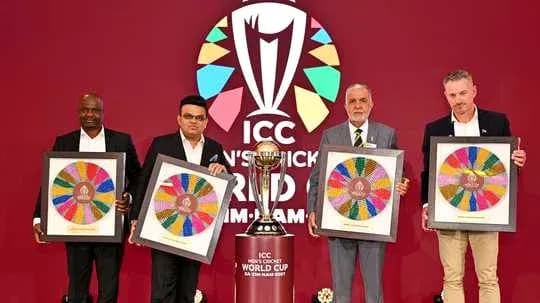
Tavengwa Mukuhlani Elected Deputy Chair of ICC
Tavengwa Mukuhlani has been elected Deputy Chair of the ICC, stepping into one of world cricket’s most powerful offices at a moment that could redefine the sport’s footprint in Africa.
He replaces long-serving administrator Imran Khwaja, whose near two-decade stint as an Associate director on the ICC Board ended in July after he lost a Board election and then relinquished his role as deputy chairperson later that week. Khwaja’s departure closes a long chapter of continuity in the corridors of Dubai. Mukuhlani’s arrival opens a very different one.
An African voice at the top table
Mukuhlani is no stranger to ICC politics. The Zimbabwe Cricket boss already sits on the ICC Finance and Commercial Affairs Committee and the Nominations Committee, and he chairs the HR and Remuneration Committee – a portfolio that has given him a close view of how the game is funded, governed and staffed at the highest level.
Now he steps up just as Zimbabwe prepares for its biggest cricketing assignment in a generation: co-hosting the 2027 Men’s ODI World Cup.
The ICC, in announcing his appointment, underlined exactly that timing. With the tournament set to return to Africa for the first time in 24 years, the governing body stressed that Mukuhlani’s “leadership experience at Zimbabwe Cricket and his understanding of the region” would offer “valuable insight” as the ICC and its Members work to deliver a “landmark World Cup” and “further strengthen the growth and development of cricket across the continent.”
This is not just a ceremonial promotion. It places an African administrator at the heart of decision-making as the sport attempts to deepen its roots beyond its traditional power bases.
Mukuhlani’s message: growth, reach, opportunity
Mukuhlani did not hide what the role means to him.
“I am deeply honoured by the confidence placed in me by my fellow ICC Board Directors and grateful for the opportunity to serve as Deputy Chair of the ICC,” he said, acknowledging the weight of trust from the Board.
His focus, though, quickly turned to the future and to his working relationship with ICC Chair Jay Shah.
“I look forward to working closely with our Chairman, Mr. Jay Shah, whose leadership, energy and ambition have brought a clear sense of purpose to the ICC, with a strong focus on growing cricket, creating opportunities for our Members and reaching new audiences and markets.”
That triad – growth, opportunity, reach – will define his tenure. The sport is stretching into new territories, new formats and new platforms, and the Deputy Chair will sit in the middle of those conversations.
“Cricket is entering an exciting period, particularly with its return to the Olympic Games and continued global expansion,” Mukuhlani added. “I look forward to supporting our Chairman, Mr. Jay Shah and fellow board directors in advancing our shared priorities and serving the best interests of cricket globally.”
The Olympic angle is no small detail. With cricket set to rejoin the Games, the ICC sees a chance to crack open markets where the sport barely registers today. Mukuhlani’s experience in a developing cricket nation, grappling with financial constraints and structural challenges, offers a different lens on how that expansion might actually work on the ground.
Jay Shah’s backing and a Zimbabwean milestone
Jay Shah, who has rapidly become one of the most influential figures in the global game, gave his new deputy a strong public endorsement.
“His experience in cricket administration, understanding of the global game and commitment to its development will be invaluable to the ICC Board,” Shah said. “Tavengwa has earned the confidence of his fellow Directors, and I look forward to working closely with him to strengthen cricket across our Members and create greater opportunities for the game to grow worldwide.”
Then came the line that will resonate far beyond Harare.
“His election is also a significant milestone for Zimbabwe, as he becomes the first Zimbabwean to serve as Deputy Chair.”
For a country that has lurched between promise and crisis in cricketing terms – from World Cup upsets to administrative turmoil and financial strain – this is a symbolic breakthrough. Zimbabwe Cricket now has one of its own at the very top of the game’s global structure, just as the nation prepares to share hosting duties for a World Cup that could reshape its cricketing future.
The politics of the ICC are rarely simple, and power rarely shifts without calculation. Yet this appointment sends a clear signal: as cricket heads back to Africa for a World Cup and onto the Olympic stage, the voices from emerging and rebuilding nations will not just be heard from the floor. One of them will be seated at the top table, with a vote, a brief, and a continent watching.