Labuschagne's Future in Question as Australia Prepares for South Africa
Marnus Labuschagne is still in the fight.
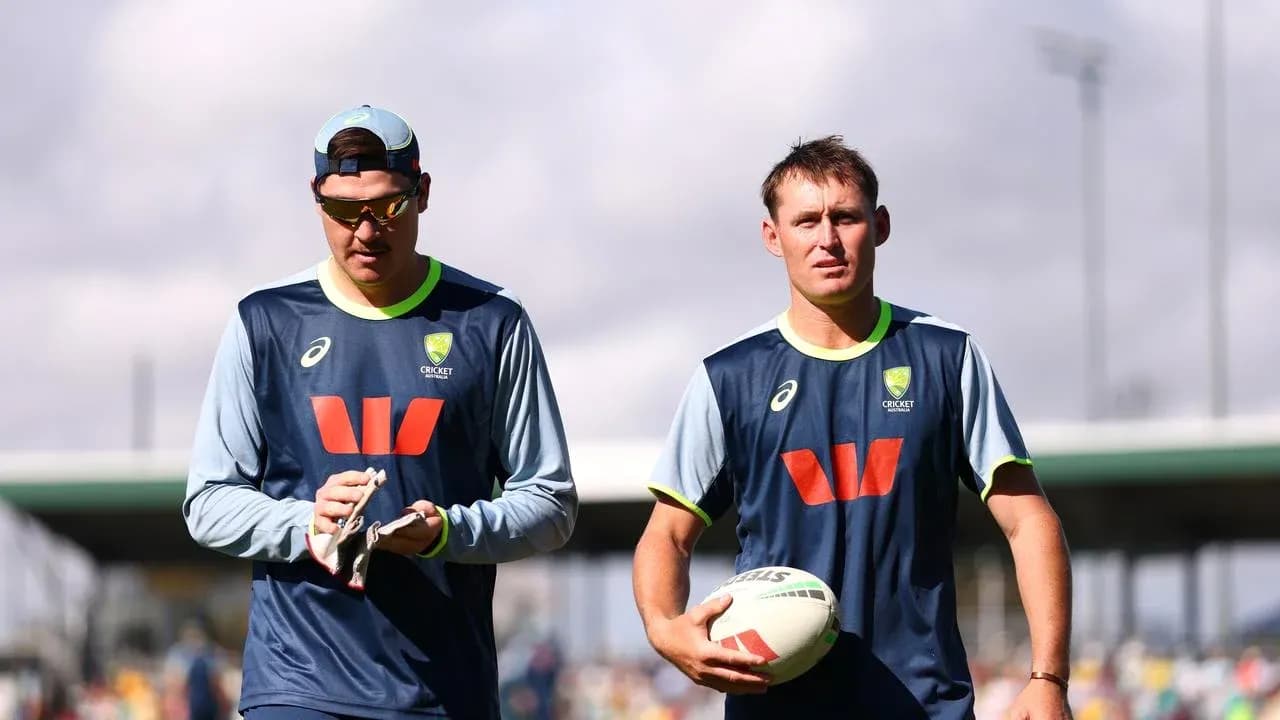
Australia’s selectors have given the under-pressure No.3 a significant vote of faith, naming him in a 16-man squad for next month’s three-Test tour of South Africa – but not guaranteeing him the spot that once felt untouchable.
After a lean Ashes and a flat tour of the Top End against Bangladesh, Labuschagne’s place had drifted from certainty to open debate. Two years without consistent dominance, one century since the 2023 Ashes in England, and a growing queue behind him. The axe felt close.
It hasn’t fallen. Not yet.
“We’re not shying away from the fact that we’d like some more runs from Marn. That’s clear,” chair of selectors George Bailey said on Monday. “But we’re also confident that he can still make a positive contribution to that squad.”
The reprieve comes with a warning label. Bailey refused to lock Labuschagne in at No.3 for the series opener in Durban on October 9, instead leaving the door ajar for a reshaped top order.
“We’ll get a much clearer picture of what that XI looks like once we get over there,” he said. The message was obvious: the seat is his, but it’s no longer reserved.
Connolly’s rise turns up the heat
If Labuschagne needed a reminder that the game moves quickly, it’s arriving in the form of Cooper Connolly.
The 23-year-old West Australian, recalled after a debut in Sri Lanka last February, headlines three additions from the squad that drew 1-1 with Bangladesh in Darwin and Mackay. He comes armed with the best first-class average (42.10) among Australia’s emerging batters, despite never having reached three figures in the longer format.
The numbers only tell part of the story. Connolly’s stock has surged in white-ball cricket in 2026: a breakout IPL campaign with Punjab Kings and a maiden ODI century in Bangladesh in June have turned him from prospect into genuine contender.
He offers more than runs. His left-arm spin gives Australia another all-round option, a skill set that saw him bat at No.8 on Test debut in Sri Lanka. This time, though, Bailey made it clear he’s been picked as a batter – and not just as a lower-order wildcard.
“I think he will be able to,” Bailey said when asked if Connolly could handle a top-order role. “Whether that’s now, whether that’s in the future. He’s still so young in his career, but I think his ability to bat in a range of positions will continue to grow as he gets more and more experience.”
That flexibility, combined with Josh Inglis’ claims, throws genuine pressure on Labuschagne. If he slips, Connolly and Inglis are close enough to pounce, even if both are more naturally suited to the middle order.
Top-order puzzle: Smith, Head and the Marnus question
The real intrigue sits in how Australia choose to arrange a batting core that has carried them for years.
Bailey did nothing to cool talk of a reshuffle. Travis Head could slide back into the middle order. Steve Smith could be asked to revisit No.3, a position where he’s piled up runs across his career.
“I guess they’re all questions that’ll be on the table,” Bailey said. “Any time you do make a move, it’s what are you taking away from where they are performing, and that’s always going to be a question, particularly around Travis, I think, the success that he had at five, but also the success he has had at the top, and what he and what he provides to the structure of the team there.
“Steve has batted at three for a large part of his career. Hasn’t done it for a little while, and has had success there. So absolutely, that’ll be a conversation at some point.”
If Smith moves up and Head slides, the squeeze tightens. Labuschagne’s safety net disappears. His reprieve may prove temporary if the runs don’t come quickly.
Fast-bowling cavalry and spin cover
Behind the batting intrigue, the bowling group carries a familiar, hardened look.
Pat Cummins leads a pace unit stacked with experience: Mitchell Starc, Josh Hazlewood and Scott Boland are all there. Michael Neser, the Ashes cult hero and ever-reliable workhorse, returns to deepen the fast-bowling stocks.
Bailey flagged that both Boland and Neser are live chances to feature in South Africa, with rotation almost inevitable in a tight schedule: three Tests, each separated by only four days, on the back of six ODIs.
“This is a reasonably condensed three-game series, on the back of six one-day internationals, with only short breaks between each game,” Bailey said in a statement. “The squad provides balance and options for each Test and the variety of conditions we may face.”
With the ball turning, Nathan Lyon again leads the spin department. Matthew Kuhnemann has been named as his back-up and could play his first Test outside the subcontinent, a significant step for the left-armer after his earlier Asian assignments.
Renshaw, Webster survive as South Africa looms
At the top, Matthew Renshaw keeps his place after stepping in for Jake Weatherald in Mackay. He remains in the frame as an opening option, a role he has long been groomed for.
Beau Webster also holds his spot despite a poor series with the bat against Bangladesh. His all-round package – height, seam, and batting depth – clearly still appeals to selectors planning for varied South African conditions.
Bailey again hinted that nothing in the batting order is set in stone. Head’s role, Smith’s position, Labuschagne’s future at No.3 – all remain live discussions as Australia prepare for their first Test tour of South Africa since the scars of Sandpapergate.
The itinerary is unforgiving: Durban from October 9, then Gqeberha, and finally Cape Town to close out late October.
By then, Australia will know whether their faith in Labuschagne has been rewarded – or whether the next generation, led by a left-handed all-rounder from Western Australia, has forced the beginning of a new era.