Leah Poulton Appointed Managing Director of England Women's Cricket
An Australian will soon be pulling the strings behind England women’s cricket. Not from the middle, but from the corridors of power.
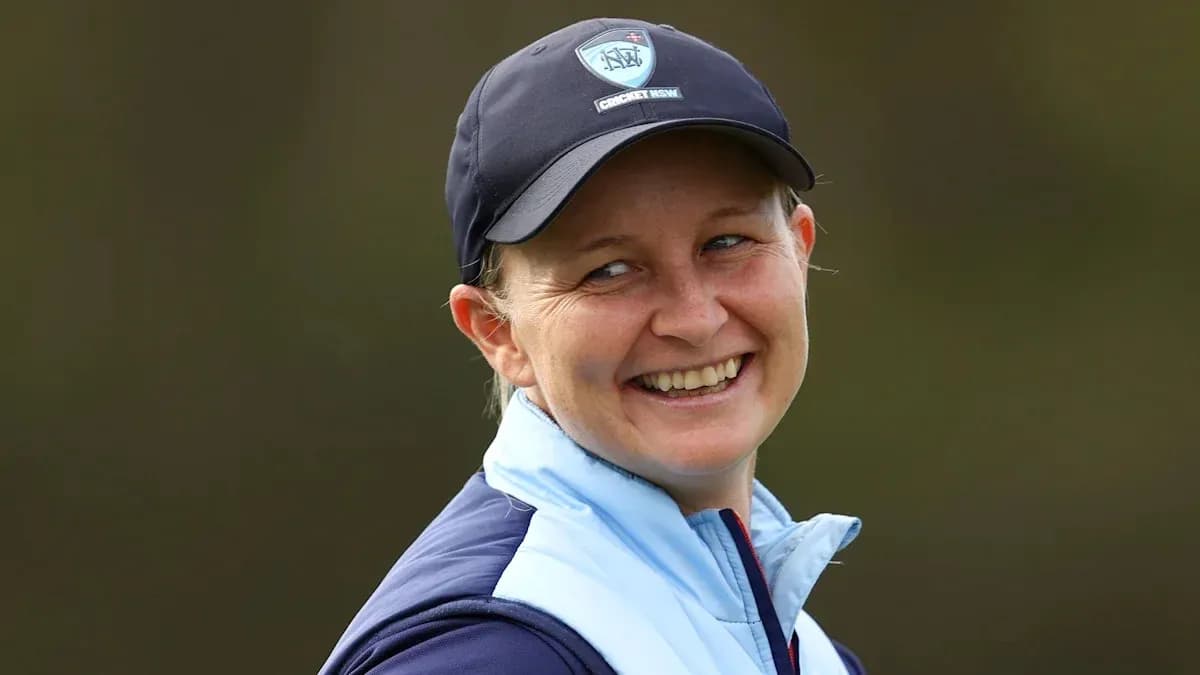
The England and Wales Cricket Board has appointed former Australia batter Leah Poulton as managing director of England women, handing the 42-year-old a pivotal role at a moment when the women’s game is accelerating on every front.
She steps into the job in November, succeeding Clare Connor, and will walk straight into the build-up to a home women’s Ashes next summer. An ex-opener who played 90 times for her country, Poulton knows exactly what that rivalry feels like from the other side of the fence. Now she’ll be tasked with sharpening the team trying to beat her old colours.
A Builder of Pathways, Not Just a Former Player
Poulton’s appointment is not a nostalgic nod to a familiar name. It is the culmination of a decade spent shaping high-performance systems in one of the most competitive cricket environments in the world.
After hanging up her bat, she moved quickly into coaching and development roles. She served as assistant coach at Sydney Thunder and Sydney Sixers in the Women’s Big Bash League, two clubs at the heart of Australia’s domestic boom. At Cricket New South Wales she worked as pathway manager and assistant coach for the NSW Breakers, helping to steer the state’s conveyor belt of talent.
Her reputation grew further with a spell as a high performance coach at Cricket Australia. Then came the role that defined her recent career: head of elite female cricket at Cricket NSW, a position she has held for the past six years. There, she oversaw structures designed to identify, nurture and harden the next wave of Australian internationals.
England now wants that expertise pointed at its own system.
A Wide Remit and High Expectations
The ECB has made the scope of Poulton’s brief crystal clear. She will be accountable for the performances of England women, England women A, England women U19s and the overall effectiveness and reputation of the women’s high-performance system.
This is not just about picking squads or rubber-stamping plans. It is about setting the direction of the entire elite women’s pathway in England, from teenagers in academy programmes to stars under the lights at World Cups.
Crucially, Poulton will work in lockstep with England women’s head coach Charlotte Edwards and captain Nat Sciver-Brunt. The ECB has charged that trio with delivering a “clear, unified vision” to ensure England can “consistently succeed on the world stage”.
Edwards, an England great now in the dugout, and Sciver-Brunt, one of the finest all-rounders in the game, already form a powerful axis. Poulton’s arrival adds a third voice with deep structural experience and a fresh, external perspective.
“Invest in Our People”: Poulton’s Mission
Poulton did not hide her enthusiasm for the challenge.
“I’m incredibly excited and honoured to be joining England and to have the opportunity to help shape our programmes and, most importantly, invest in our people,” she said, outlining a philosophy that stretches beyond short-term results.
She spoke of building on “strong foundations already in place” and “taking the programme forward”, signalling respect for Connor’s tenure while making it clear she intends to push standards higher.
Central to her outlook is the pathway beneath the national side. “I know how vital strong pathways and a healthy domestic game are to sustained success,” she said, underlining that England’s ambitions at World Cups and Ashes series will ultimately rest on the quality of its domestic engine room.
Poulton wants to “connect with people across the game” and “give the next generation of English players every opportunity to thrive”. For a country that has invested heavily in regional professional contracts and the domestic structure, her track record in Australia’s system looks deliberately targeted.
“It’s a huge privilege to be part of England women and I can’t wait to get started,” she added. The timing means that start will come just as the calendar tightens and scrutiny intensifies.
A New Era Before a New Ashes
Connor will leave her ECB role after the Women’s T20 World Cup, drawing a line under a period in which England women’s cricket turned professional, expanded its domestic base and watched the global game race forward.
Poulton inherits that legacy with one of the sport’s fiercest contests looming. Next summer, England will host Australia in a women’s Ashes that could serve as an early verdict on her influence, even if much of her work will be judged over years, not months.
An Australian architecting England’s bid to topple Australia. For a rivalry built on fine margins and deep history, it is a fascinating twist.
The question now is simple: can Leah Poulton turn England’s potential into a machine relentless enough to reclaim the summit of the women’s game?