NBA Punishes LA Clippers: Ballmer Banned and Five Draft Picks Stripped
The NBA dropped a hammer on the LA Clippers on Wednesday, delivering the harshest punishment in league history after a year-long investigation into illegal salary-cap circumvention tied to Kawhi Leonard.
Five first-round picks gone. A $30 million fine. And owner Steve Ballmer banned from team activities for a year.
This wasn’t a routine slap on the wrist. It was a message.
Ballmer Banned, Picks Stripped
The league’s findings were blunt: the Clippers, under Ballmer’s watch, helped funnel millions of dollars in off-court income to Leonard through a web of sponsorship and business deals that violated the NBA’s rules on circumvention.
The cost is staggering. The Clippers will forfeit first-round draft picks in 2029, 2030, 2031, 2032 and 2033. On top of that, the NBA fined the franchise $30 million.
Ballmer’s one-year suspension stems from what the league called his role in “knowingly seeking to help Mr. Leonard obtain off-court income opportunities.” Investigators concluded that Ballmer approved a Clippers deal with Aspiration specifically because he knew the company viewed a separate sponsorship with Leonard as a precondition.
The Clippers, according to the NBA’s report, tried to justify their actions with what the league described as a “novel theory”: that it was permissible to introduce business partners to players if the player or his representative requested it. The league rejected that argument outright.
Leonard Hit Financially, Uncle Banned
Leonard himself is not escaping untouched. The NBA ordered him to repay $700,000 for his role in the scheme. His uncle, Dennis Robertson, sits at the center of the pressure campaign described by investigators.
The report said Leonard, through Robertson, pushed the Clippers “to assist him in obtaining off-court income opportunities, successfully obtaining those opportunities, and failing to reimburse payments by the Clippers for personal expenses.” Robertson has now been banned from engaging with NBA teams for five years.
Leonard’s playing future, at least, has some clarity. With the investigation resolved, the path is clear for his previously agreed trade to the Toronto Raptors to finally go through. The Clippers had agreed to send him to Toronto earlier in the summer, but the deal stalled while the league dug into the cap-circumvention allegations.
In a statement, Leonard accepted “full responsibility for lapses in judgment by people within my inner circle” and said he entered into his Clippers contract and related agreements “in good faith” and without knowledge of any intent to break salary-cap rules. He closed with a pointed line about what comes next: “As I return to Toronto, I am focused on what I can control, closing this chapter, and moving forward with a clean slate.”
Front Office Fallout
The damage inside the Clippers’ hierarchy runs deep.
Team president Lawrence Frank has been suspended for six months. Clippers president of business operations Gillian Zucker received a one-year suspension. The NBA’s report drew a clear distinction between the two: Frank, investigators said, was open and honest in his recollections; Zucker, they concluded, was evasive and “inconsistent” in her interviews.
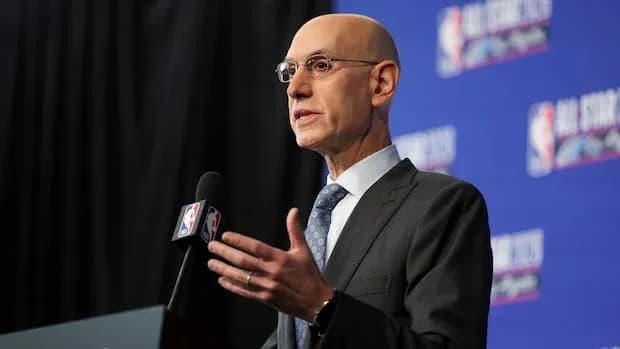
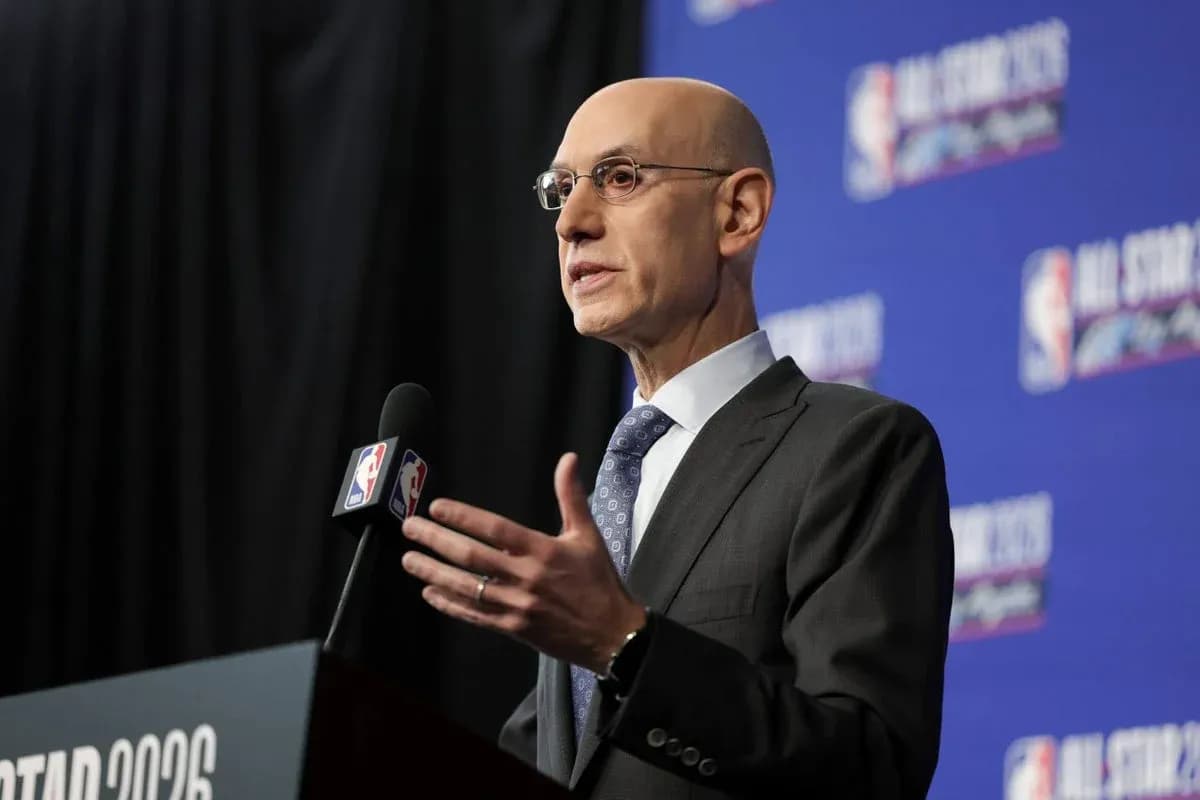
Commissioner Adam Silver did not soften his words.
“The NBA’s collectively bargained system for determining player compensation is a fundamental component of the basketball competition that the league oversees for the benefit of the teams and players and ultimately the fans,” Silver said. “I am deeply disappointed by the flagrant violations of our rules and by the Clippers’ institutional and leadership failures that led to this misconduct. The severity of the penalties reflects the seriousness of the violations.”
The Web Around Leonard: Aspiration and Beyond
To untangle the case, the NBA hired Wachtell Lipton, the powerhouse law firm that also led the 2014 investigation into former Clippers owner Donald Sterling. Their work this time painted a broad picture of how far the franchise went to build and protect its relationship with Leonard.
Investigators found that the Clippers initiated deals with four companies on Leonard’s behalf: Aspiration, Boingo Wireless, Daktronics, and Lockton Insurance. The team not only struck agreements with those firms, it also facilitated endorsement deals for Leonard with each of them.
Aspiration sat at the heart of the scandal. What began as a question about one endorsement contract ballooned into a full-scale probe of the team’s financial ecosystem.
The NBA’s report also noted that the story might not be finished. “More information will likely surface over time,” it said, adding that investigators are still receiving relevant material “including as recently as this week.”
How a Podcast Sparked a Firestorm
The investigation traces back to a single report. On Sept. 3, 2025, the “Pablo Torre Finds Out” podcast revealed that Leonard had accepted a $28 million “no-show” contract with Aspiration, a California environmental company that served as the Clippers’ jersey-patch partner through the 2022-23 season.
The deal raised a glaring red flag: was this contract an illegal way for the Clippers to pay Leonard far beyond what the collective bargaining agreement allowed?
Aspiration’s own collapse added another layer. The company filed for bankruptcy in March 2025, listing Leonard as a major creditor alongside the Clippers. Court documents showed Leonard, through his LLC KL2 Aspire, LLC, was owed $7 million.
Days after the podcast aired, the NBA hired Wachtell to dig in. Silver publicly promised the league would “get to the bottom” of the matter, saying last September that investigators would start with a presumption of innocence and “follow the facts.”
Those facts led well beyond Aspiration’s balance sheet.
Deep Financial Ties and Risky Bets
The Clippers’ relationship with Aspiration ran far deeper than a patch on a jersey.
Leonard received $20 million in equity from Aspiration co-founder Joe Sanberg, who pleaded guilty to federal fraud charges last fall. Ballmer himself poured $50 million into the company in 2021 as it prepared to go public. That same year, the Clippers signed Aspiration to a jersey patch deal worth more than $300 million, making it a founding sponsor of the Intuit Dome.
The team also agreed to pay Aspiration more than $50 million in carbon-offsetting payments in an effort to become carbon neutral, according to multiple sources briefed on the deal.
Aspiration never reached the public markets. It began to falter the next year. Still, Ballmer doubled down. He joined a $66 million fundraising round in spring 2023, investing another $9,999,997.92 as the company bled cash and laid off staff. Most of the new money came from Sanberg, fellow board member Ibrahim AlHusseini — who later pleaded guilty to federal fraud — and Ballmer. Only one outside investor joined them: Dennis Wong, Ballmer’s longtime friend and the Clippers’ vice chairman.
Inside Aspiration, Leonard’s contract became a flashpoint. Sanberg pushed hard to sign the star forward and give him equity despite internal doubts.
“I am personally contributing stock to Kawhi to make this partnership possible,” Sanberg wrote to leadership in May 2022, in an email obtained by The Athletic. He added that Aspiration’s CEO believed the deal “to be not worth doing” and stressed that any benefit from the Leonard partnership was being “subsidized” by his own equity.
Some executives questioned the basic logic. Leonard is famously private and rarely speaks, yet the company committed to a marketing deal that allowed him significant freedom to skip campaigns. Marketing staff brainstormed concepts and visuals for commercials, but Leonard never publicly promoted the brand.
The size of his package only sharpened those questions. According to a former executive, Leonard’s contract dwarfed other celebrity arrangements at Aspiration. Leonardo DiCaprio and Robert Downey Jr. each received less than $2 million in equity. Drake invested $4 million in exchange for carbon offsets. Leonard’s deal, by comparison, sat in another stratosphere.
Daktronics, the Intuit Dome, and Expanding Scrutiny
As the investigation rolled on, the financial web widened again.
“Pablo Torre Finds Out” later reported that Leonard held a multi-million dollar sponsorship contract with Daktronics, the company that manufactured the massive video board at the Clippers’ new home, the Intuit Dome. Both the Securities and Exchange Commission and the NBA have questioned Daktronics about its relationship with Leonard.
The pattern became hard to ignore: a franchise deeply invested in certain companies, those companies in turn striking unusually rich deals with the team’s star player, and a trail of equity, sponsorships, and side arrangements that stretched far beyond a standard endorsement portfolio.
The Clippers and Ballmer have consistently insisted they did nothing wrong. Ballmer has said he merely connected Leonard with a former key sponsor and that the arrangement fell within league rules. Frank, who signed a multi-year extension last season, repeatedly denied any effort to circumvent the salary cap.
The NBA now stands firmly on the other side of that argument.
The franchise keeps its arena, its brand, and — for now — its core roster. But it moves forward without its owner for a year, without key executives for months, and without five future first-round picks that could have shaped the next decade.
The punishment is on the books. The investigation, by the league’s own admission, may not be entirely over. The question now is whether the Clippers can build a contender on the court while living with the most expensive off-court mistake in league history.