NBA Punishes Los Angeles Clippers with Major Penalties
The NBA lowered the boom on the Los Angeles Clippers on Wednesday, delivering one of the harshest punishments for salary-cap circumvention in league history and throwing the franchise into chaos on the eve of a new era.
Owner Steve Ballmer has been suspended for one year. The organisation has been fined $US30 million ($41.5 million). Five draft picks are gone. And the shock waves don’t stop there.
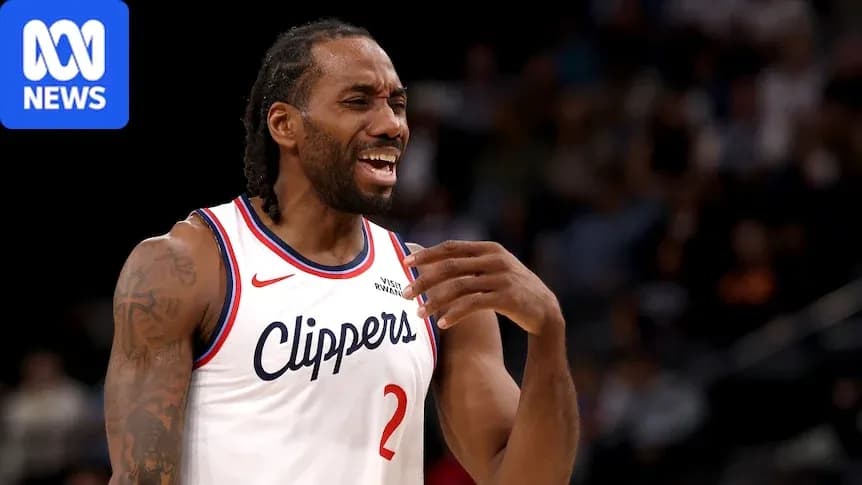
Two-time Finals MVP Kawhi Leonard has been hit with a $US700,000 ($977,000) penalty. President of basketball operations Lawrence Frank is banned for six months. Team president of business operations Gillian Zucker is suspended for a year.
This is not a slap on the wrist. It’s a public reckoning.
A year-long investigation, a brutal verdict
The punishment follows a nearly year-long investigation led by an outside law firm into whether the Clippers violated salary cap circumvention rules through an endorsement arrangement tied to Leonard.
The probe centred on a $28 million endorsement contract between Leonard and Aspiration Fund Adviser LLC, a company that has since filed for bankruptcy. The deal first came under scrutiny after a report by journalist Pablo Torre in September 2025. From there, the league dug in.
What it found, in the NBA’s words, amounted to “flagrant violations” and “institutional and leadership failures.”
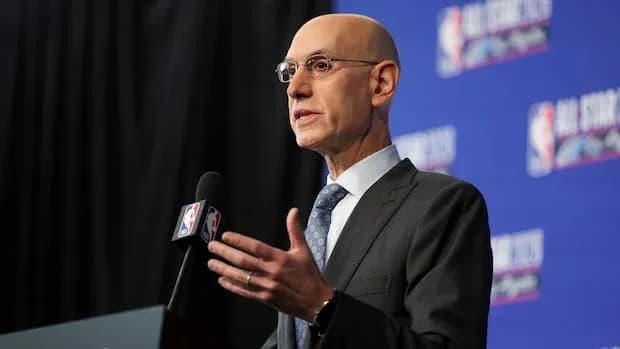
Commissioner Adam Silver did not hold back.
“I am deeply disappointed by the flagrant violations of our rules and by the Clippers' institutional and leadership failures that led to this misconduct,” Silver said in a statement. “The severity of the penalties reflects the seriousness of the violations.”
The league says Ballmer knowingly sought to help Leonard obtain off-court income opportunities, approved a business deal he knew was a precondition for Aspiration to enter into an endorsement contract with Leonard, and failed to ensure his organisation operated within league rules.
Leonard, according to the NBA, violated circumvention rules “by pressuring the Clippers to assist him in obtaining off-court income opportunities, successfully obtaining those opportunities, and failing to reimburse payments by the Clippers for personal expenses.”
The league has also placed the Clippers under a five-year compliance and monitoring program, and banned Leonard’s uncle and former business manager, Dennis Robertson, from doing business with NBA teams for five years.
For the NBA, the case is closed. The league and the players’ union have agreed the penalties are final and binding, with the NBA adding that it “will consider further action as appropriate” if new information surfaces.
Clippers go on the offensive
Inside the Clippers’ camp, the reaction was immediate and furious.
“We vehemently reject the NBA's findings, which are the result of a heavily biased investigation seeking to justify a predetermined narrative rather than facts and evidence,” the team said in a statement.
They claimed a disconnect between what the league told them behind closed doors and what it announced publicly.
“What the league told us privately differs from what it announced today publicly, and they have not held themselves close to the standard Commissioner [Adam] Silver set at the start of this investigation to ensure its fairness and accuracy.”
The franchise vowed to fight.
“We intend to vigorously challenge these findings and penalties through every avenue available to us and look forward to an ethical and impartial arbitration process.”
Ballmer’s attorney, David Kelley, went even further in a letter to Silver, calling the investigation “a witch hunt” and the penalties a “gross injustice.”
Kelley argued that league counsel had already acknowledged it did not believe there was an agreement between the Clippers and Aspiration to funnel money to Leonard, and that federal authorities viewed Ballmer as a victim of Aspiration co-founder Joseph Sanberg’s fraud, not a participant.
Sanberg, who helped broker the Aspiration deal, was sentenced earlier this year to 14 years in federal prison after pleading guilty to defrauding investors and lenders of at least $248 million.
“Mr Ballmer's reputation has been irreparably damaged as he now finds himself embroiled not only in this heavily biased investigation, but in civil litigation, the Aspiration bankruptcy proceeding, and more,” Kelley wrote.
He also argued that no league rule bars team personnel from making introductions to sponsors or vendors at a player’s request.
“Retroactively punishing the Clippers for violating a rule that never existed is hardly consistent with due process,” Kelley wrote.
Leonard caught in the middle
For Leonard, the ruling lands at a pivotal moment in his career.
The NBA says he benefited from impermissible off-court income arrangements and from team-covered personal expenses. Leonard, through a statement issued by his new agent Harrison Gaines, struck a different tone: contrite, but insistent on his intent.
“I accept full responsibility for lapses in judgement by people within my inner circle and regret the distraction this situation has caused the fans and my family,” Leonard said.
“I entered into my contract with the Clippers as well as the agreements in question in good faith, fully committed to fulfilling my obligations and with no knowledge of any intent on anyone's part to circumvent the salary cap.”
His future has been frozen for months. Leonard’s trade to the Toronto Raptors has been on hold pending the outcome of the investigation. With the ruling now in, the path is clear for him to return to the franchise where he delivered a title and a Finals MVP in 2019.
“As I return to Toronto, I am focused on what I can control, closing this chapter, and moving forward with a clean slate,” Leonard said.
The Raptors have maintained throughout that they still want him. Now, at last, they know the cost is reputational, not structural.
Power structure shaken
Inside the Clippers’ front office, the fallout is severe.
Frank has been penalised for his role in the “impermissible endorsement arrangements” and for approving improper expenses tied to Leonard and his family. Zucker, according to the league, was “primarily and directly culpable” for the illegal endorsement deals and lied to investigators. Both lose their salaries during their bans.
Robertson’s five-year ban from doing business with NBA teams removes a central figure in Leonard’s inner circle from the league’s ecosystem.
All of it drops on a franchise that has already tested the NBA’s patience under Ballmer.
In 2015, just a year after Ballmer bought the team for $2 billion, the Clippers were fined $250,000 for violating rules against offering unauthorised business or investment opportunities to players. During their pursuit of free agent DeAndre Jordan, the team’s presentation improperly included a $200,000-per-year deal with Lexus.
This time, the league went far beyond a fine.
A billionaire owner on the sideline
Ballmer, 70, the former Microsoft CEO who bought the Clippers with a promise to build a model franchise and a new identity after the Donald Sterling scandal, now finds himself barred from team activities for a full year.
The league says he “knowingly” sought to help Leonard secure off-court income opportunities and failed to create an environment where league rules were followed. To Silver and the NBA’s governors, that crossed a line.
The Clippers insist the line keeps moving.
They argue the league is punishing them for conduct that wasn’t clearly prohibited, and that Ballmer, rather than gaming the system, was duped by a fraudster now serving a lengthy federal sentence.
Somewhere between those positions lies the reality that will shape how owners, players and agents operate around the cap for years.
The NBA has made its statement. The Clippers have promised a fight. Leonard is heading back to Toronto with a fine, a stain on his record, and a chance to reset his career.
What lingers is the question every front office is now asking itself: where, exactly, does aggressive recruiting end and a “flagrant violation” begin?