NBA Punishment of Clippers: ESPN's Coverage Under Fire
The NBA’s landmark punishment of the Los Angeles Clippers has done more than scorch a franchise and its superstar. It has dragged ESPN into an uncomfortable spotlight, raising pointed questions about how the most powerful name in sports media covers the leagues it depends on.
A Ruling That Rewrote the Narrative
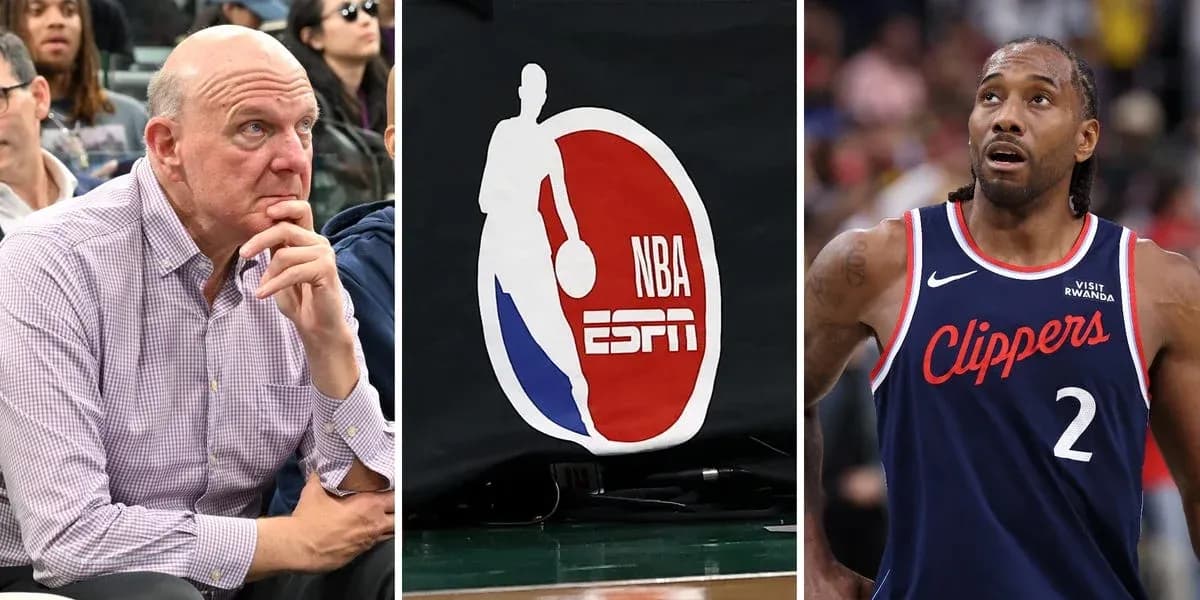
After a nearly yearlong investigation, the NBA on Wednesday dropped the hammer: the Clippers and owner Steve Ballmer had violated league rules by facilitating sponsorship deals for Kawhi Leonard that amounted to salary cap circumvention.
The numbers were historic. A $30 million fine for the team. A $700,000 hit for Leonard. A one-year suspension from league activities for Ballmer, the former Microsoft CEO and one of the NBA’s most influential owners.
The Clippers blasted the ruling, saying in a statement they “vehemently reject the NBA's findings,” calling the probe “the result of a heavily biased investigation.” Leonard, in his own statement, said he accepts “full responsibility for lapses in judgment by people within my inner circle.”
On paper, that’s a classic league-versus-team showdown. In practice, it became something else: a public test of ESPN’s reporting against that of Pablo Torre, the investigative journalist whose work on Leonard’s ties to Clippers sponsors just earned him a Pulitzer Prize.
“ESPN vs Pablo”
The battle lines were drawn back on August 17.
That day, ESPN published a story citing three unnamed sources who said the NBA had “no evidence” that Ballmer funneled money through team sponsors to pay Leonard. The piece quoted one anonymous voice dismissing the idea that sponsorship introductions could be seen as cap circumvention as “dead on arrival.”
The framing was clear: the league had nothing, the Clippers were unlikely to face a major penalty, and the more explosive allegations circling around sponsorships and side deals were overblown.
At the same time, Torre — a former ESPN employee now working with The Athletic — had built a detailed investigative case pointing in the opposite direction. His reporting laid out Leonard’s connections to Clippers sponsors and suggested those relationships sat at the heart of the league’s concerns.
Online, the storyline hardened quickly: “ESPN vs Pablo.” Two versions of reality. One of them would eventually be proven right.
When Adam Silver’s ruling arrived, it landed squarely on Torre’s side of the ledger. The NBA explicitly found that the Clippers and Ballmer had broken rules by facilitating sponsorship deals with Leonard. Torre’s framing was validated. ESPN’s, at best, looked badly out of step with where the league was headed.
A Costly Miss on Framing
ESPN has not issued corrections to its August story. On the narrow question of whether the words printed were technically wrong, media and PR professionals have been more nuanced. The criticism has focused less on literal inaccuracies and more on how the story steered readers.
“While it might be accurate in the wording, the substance of the story was very misleading,” said Brian McWilliams, VP at LA-based public relations firm Spelling Communications.
That’s the sting for ESPN. The network prides itself on being both the sport’s main stage and its most trusted narrator. It has bet heavily on its direct-to-consumer streaming future and on a relationship with fans built across TV and social media. When the league’s final ruling ends up “starkly in contrast with ESPN’s reporting,” as McWilliams put it, trust becomes the real casualty.
“The audience just needs an explanation,” said New York-based brand and communications consultant Sam Gauchier.
So far, they haven’t received one. An ESPN spokesperson said the company stands by its mid-August Clippers story and declined to comment further.
The NBA Pushes Back
The tension didn’t start with the ruling. It began almost immediately after ESPN’s August piece went live.
The story noted that ESPN had not received a response from the NBA before publishing. Not long after, NBA spokesman Mike Bass went public, saying on social media that the story contained “numerous and significant inaccuracies” that would “be made clear once the investigation is concluded.”
The message was unmistakable: the league believed ESPN had gotten key elements wrong and was willing to say so in real time.
When the investigation wrapped and the NBA’s findings backed up the central thrust of Torre’s work, the contrast sharpened. ESPN’s story had been framed in a way that seemed to undercut Torre’s reporting, even as it quietly acknowledged pieces of it. It included snippets of his findings but no statement from him.
Torre later said he had provided ESPN with a statement for that story, affirming that he stood by his reporting and looked forward to the league’s findings. He said ESPN chose not to publish it.
That editorial choice now looks weightier. What once might have been brushed off as routine newsroom decision-making has become part of a larger perception problem: is ESPN too cautious, or too conflicted, when powerful partners and owners are involved?
Access, Accuracy, and a Fine Line
The fallout hasn’t been limited to one story.
On Thursday, Shams Charania — one of the most prominent NBA newsbreakers and a regular on ESPN’s airwaves — said on TV that Leonard “did not have any knowledge” of the salary cap circumvention. In the same breath, he noted that Leonard “pocketed tens of millions of dollars” from Clippers sponsors.
That juxtaposition raised eyebrows. Torre responded on X with a screenshot of Leonard’s signature on a purported contract with former Clippers sponsor Aspiration Partners, underscoring his view that Leonard’s involvement was anything but distant.
McWilliams pointed to the pressure facing insiders like Charania, who live on scoops and speed.
They walk “a very fine line between wanting to be first, wanting to be accurate, and also wanting to maintain access, which can be revoked,” he said.
That line is at the heart of the current storm. ESPN’s NBA coverage is built on deep relationships with teams, agents, executives, and the league office. Those relationships fuel the news machine. They also create constant tension between access and independence.
ESPN’s Brand on the Line
For ESPN, this is no minor dust-up. It goes to the core of what its audience believes it is getting when it clicks a story or tunes into a show.
After the investigation and Torre’s public commentary, the network’s PR team now has to do more than defend a single article. It has to reassure fans that ESPN’s reporting reflects “not only the technical accuracies, but the overall expectation of truth that their readers have,” said Bradley Akubuiro, a partner at PR firm Bully Pulpit International.
That “overall expectation of truth” is where the damage lies. Fans saw a pre-ruling story that strongly implied the Clippers would avoid a major penalty. Then they saw the league hand out the biggest punishment of its kind. They saw a Pulitzer-winning reporter vindicated. They saw the NBA itself publicly challenge ESPN’s account.
They’re left to wonder: when the next major scandal hits a league or a powerful owner, whose version will ESPN tell — and how close will it be to the one the league eventually confirms?