Pakistan's Batting Struggles in England: A Tough Learning Curve
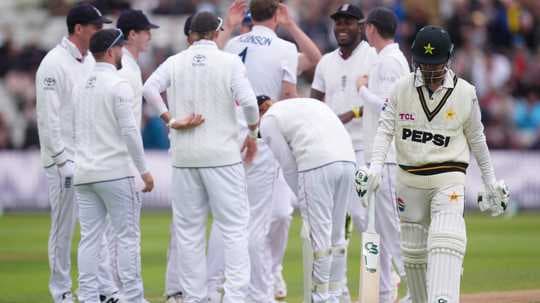
At Edgbaston, with clouds hanging low and a series slipping away, Michael Smith wore the look of a man staring at a scoreboard that refuses to move. Pakistan, 52 for 2 and still 268 runs short of making England bat again, have not reached 200 once in five attempts on this tour. The numbers are brutal. The message from the batting coach was anything but.
Inside a camp rocked by defeats and off-field turbulence, Smith insisted the mood remained “good” and the belief intact, especially in a group he sees as raw but rich in potential.
Runs missing, noise growing
The cricket alone would be hard enough to swallow. Pakistan’s top order has crumbled repeatedly, unable to occupy the crease or blunt an English attack perfectly tuned to home conditions. In this Test, as in the rest of the series, the innings has frayed quickly once the new ball has found movement.
Around them, the noise has only grown louder. The PCB has already recalled seven players and head coach Sarfaraz Ahmed after the Lord’s defeat, and launched an inquiry into the conduct of some squad members. It is the kind of backdrop that can suffocate a touring side.
Smith refused to be drawn into that storm.
“I know nothing about that [the inquiry] so I can't really comment on anything like that,” he said after the second day’s play. “It's the first time I've heard of those things so I'm not too sure.”
He steered the conversation firmly back to the middle.
“For me there's a lot of quality in Pakistan. We've seen it for many years and lots of countries go through slight changes. This is one where we've got some younger players with some experienced players but it's the learning and how quickly we can get them to learn and get comfortable in the Test environment to really help them from a long-term point of view.”
A batting order learning on the job
That learning curve is steep. Of the top seven in this Test, only Babar Azam and Shan Masood have previously toured England. The rest are discovering the grind of a long English summer in real time, with the Dukes ball and the scoreboard as unforgiving tutors.
Smith called it what it is: a transition.
“We've shown some real good signs but just not for long enough and I think that's probably the biggest lesson,” he said. “We need some of our guys to be playing for hours at times and in certain game plans.”
The names are familiar to Pakistan fans desperate for a new core to emerge. Saud Shakeel. Azan Awais. Shan Masood. Each has flickered, none has burned long enough.
“I think Saud has shown us at times, Azan has shown us and Shan [too], but we need that for hours and not just for half a session or so,” Smith said.
In England, pretty 40s don’t change matches. Occupation does. This is where Pakistan have repeatedly fallen short.
“Some of the players, it's their first tour of England and they haven't got a lot of Test experience so they are learning some challenging lessons along the way and they have to learn on the Test circuit which is a challenging one,” Smith added. “We’ve got to keep making sure that we're showing small really good signs at times but we need to now put a big play in to really get that confidence going again.”
Tough cricket, tough crowd
No one inside the camp is pretending this has been anything but a bruising experience. Yet Smith pushed back against the idea that the batting alone is to blame, or that the group has mentally checked out.
“It’s been tough, it’s been challenging but let’s not take away [the fact that] we've come up against a really good bowling unit in home conditions who've been excellent,” he said.
England’s attack has hunted as a pack, exploiting overhead conditions, fuller lengths and Pakistan’s technical uncertainty. The margins have been small; the collapses have made them look vast.
Smith’s gaze, though, stretches beyond this series.
“I suppose we might not see the sort of success we want to see now but hopefully if a lot of these players are back on our next UK tour we'll really see an upward trend and I think that's the time to really judge them - especially some of the younger players who get their first taste of the English type of conditions.
“It's tough cricket but the one thing our boys are really doing is embracing being on tour and actually enjoying themselves on tour as well as a group, as a whole.”
Enjoyment and a string of sub-200 totals rarely appear in the same sentence. Yet inside a dressing room under scrutiny at home and pressure abroad, that sense of unity may be all that’s holding the line.
A “bloody exciting” problem to solve
Smith himself is new to this environment, brought in as batting coach just before the series. He has walked straight into a storm: fragile scores, structural questions, and a fan base demanding answers. He is not rushing to tear anything down.
He admitted he needs more time before deciding whether deeper changes are required to prepare Pakistan’s batters for the kind of challenge they have faced in England. What he does not lack is enthusiasm for the task.
“I think I've got a bloody exciting challenge on my hands because there are some serious players,” he said. “Let’s not worry about what's happening here, we've got some really exciting players and [their] potential is exceptionally high. It's just how quickly can we get them to that level, especially playing outside of Pakistan. That's going to be a big challenge and something we're really excited about.”
That line captures the tension of this tour. The present is harsh. The future, in the eyes of the man tasked with fixing the batting, is something worth fighting for.
One target, no hiding place
Before that future arrives, there is a more immediate and basic hurdle: 200.
Pakistan have not crossed that mark once in the series. To even force England to bat again at Edgbaston, they must not only break that barrier but surge far beyond it. On a surface where their hosts have shown what is possible with discipline and patience, the visitors must finally stitch those “small really good signs” into something substantial.
They are 268 runs away from making England pad up again. A long way back, on paper. For this young, battered batting unit, it is something else as well: a chance, perhaps the last on this tour, to prove that the talk of potential can survive the cold light of an English scoreboard.