Pakistan Cricket Board Launches Inquiry Amid Tour Turmoil
ISLAMABAD — Pakistan’s turbulent tour of England has taken another sharp turn, with the Pakistan Cricket Board launching an internal disciplinary inquiry after dramatically recalling seven players and two coaches midway through the Test series.
The PCB has not named the players under investigation. But the move comes amid intense scrutiny at home, two heavy defeats in the first two Tests, and swirling speculation over what exactly has been happening behind the scenes.
PCB opens inquiry as speculation grows
PCB media director Amir Mir confirmed on Monday that the board had formally opened an internal process.
“The PCB has initiated an internal disciplinary inquiry following media reports concerning discipline and conduct, which are currently being reviewed internally,” Mir said in a statement on X, stressing that the matter would be handled under the board’s standard procedures and regulations.
The language was careful, the message firm: the board will deal with it, and it will do so on its own terms.
Local media have gone much further. Reports in Pakistan claimed the PCB had obtained data from the mobile phones of Imam-ul-Haq and Mohammad Rizwan before both players flew home from England. Geo News reported that the team’s security officer took possession of the phones after Pakistan’s 194-run defeat in the second Test at Lord’s, returning them only a few hours before the players left the UK.
The PCB, though, pushed back strongly against the noise.
“At this stage, any speculative reports or unverified claims circulating on certain platforms, particularly those originating from hostile external sources, should not be regarded as credible,” Mir said. “The Board advises stakeholders and the public to rely on official PCB communications.”
The message was clear: trust us, not the rumor mill.
Mid-series clear-out after heavy defeats
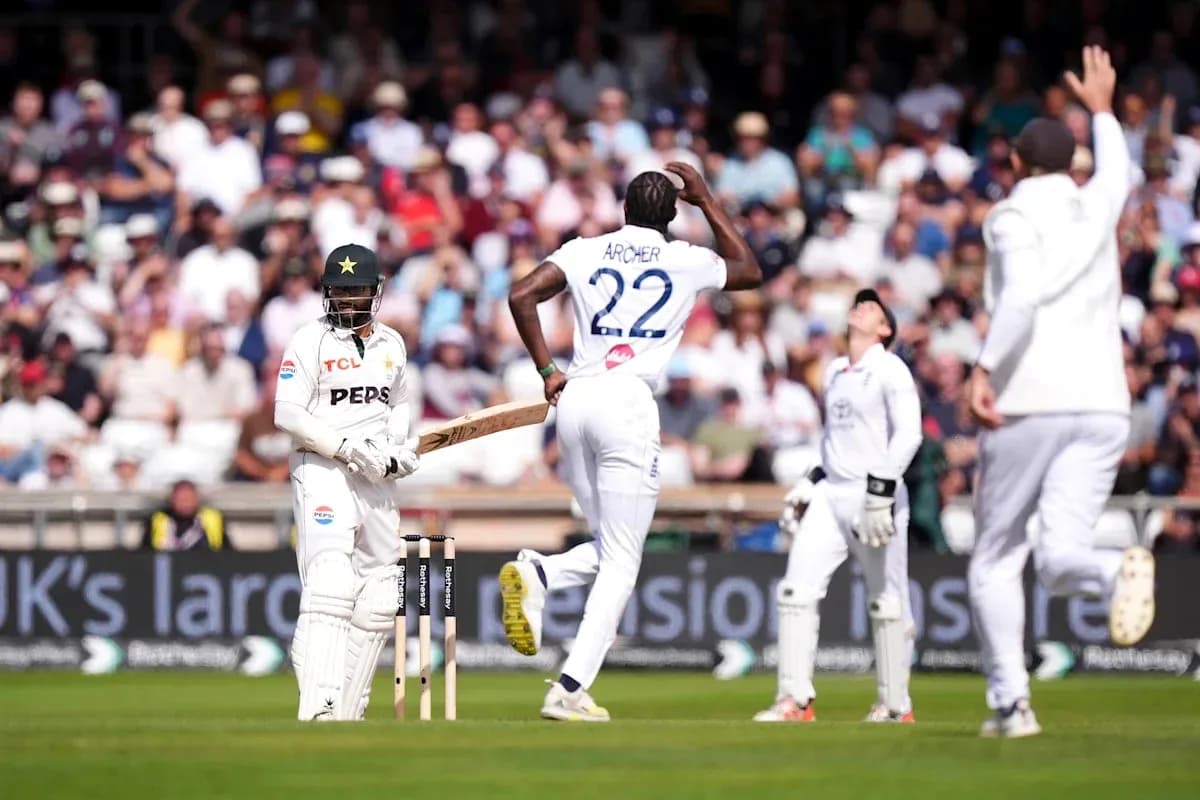
What is not in dispute is the scale of the shake-up. Pakistan were thrashed at Lord’s and Headingley, and the reaction from the board was swift and brutal.
Seven players were ordered home. The Test coach, Sarfaraz Ahmed, was removed and replaced by Mike Hesson. Bowling coach Umar Gul was also jettisoned, with Ashley Noffke brought in to take charge of the attack.
It was the kind of mid-series overhaul that has become synonymous with Pakistan cricket: dramatic, divisive, and impossible to ignore.
Noffke, parachuted into the middle of the storm, insisted he was not part of any off-field investigation as the team prepared for the third and final Test in Birmingham, starting Wednesday.
“I sit outside of that decision-making model,” he told reporters after training at Edgbaston.
Then came the line that summed up life inside Pakistan cricket.
“There’s one thing that I’ve learnt about being in Pakistan and coaching for a period of time — nearly 15 months now with the white ball team — is there’s always something going on in the background. And whether or not it’s in or out of our control, most of the time it’s out of the player's control, they need to focus on the cricket that they have in front of them because there's some really great opportunities here for young cricketers that are highly skilled.”
The coach’s priority is obvious: shut out the noise, salvage something from the series, and give the next wave of players a platform.
Selection upheaval splits opinion
Inside Pakistan, though, the debate has already moved to whether the PCB has overreached.
Selector Aaqib Javed and PCB chairman Mohsin Naqvi have publicly defended the decision to rip up the squad mid-tour, arguing that change was necessary after the heavy defeats. Former stars Shahid Afridi and Shoaib Malik have taken the opposite view, criticizing the timing and the message it sends.
The human cost of the reset is stark.
Wicketkeeper-batter Mohammad Rizwan, opening batter Imam-ul-Haq, and Salman Ali Agha — who captained the side in the first Test — were among the first batch of seven players told to leave before Hesson had even joined up with the squad in the UK.
Fast bowler Khurram Shahzad and left-arm spinner Ali Usman, both involved in the first two Tests, were also released. All-rounder Aamir Jamal and Mohammad Awais were sent home without facing a ball in either Lord’s or Headingley.
For some, the tour ends not with a chance to respond, but with a boarding pass and more questions than answers.
Third Test under a cloud
Pakistan now head to Birmingham with a new coaching team, a reshaped squad, and an internal inquiry hanging over the tour.
The players who remain have been told to focus on cricket. The board has promised to handle discipline “internally.” Former greats are already picking apart the decisions on television.
What happens over five days at Edgbaston will decide the series. What happens after the inquiry could shape Pakistan cricket far longer.