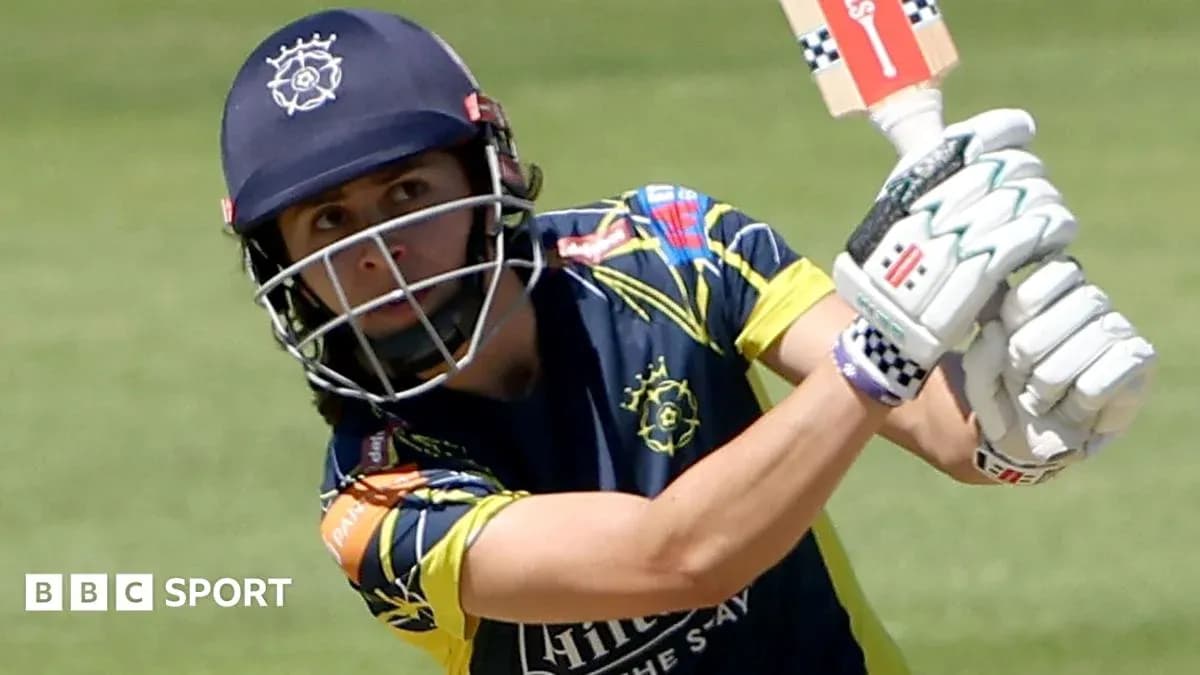

Shreevats Goswami: The Unfulfilled Promise of Indian Cricket
At 19 years and one day old, Shreevats Goswami walked into the chaos and colour of the inaugural IPL and batted like he owned the stage.
Left-handed, slight of frame, still fresh from an Under-19 World Cup win, he faced a Delhi attack led by Glenn McGrath and peeled off 52 from 42 balls for Royal Challengers Bangalore. It was bold, busy, fearless batting. He walked away with the Player of the Match award. His team lost. His stock soared.
On nights like that, Indian careers are supposed to begin, not drift.
The boy who kept answering every question
Goswami’s rise was never about a one-off hot streak. By the time he reached the 2008 Under-19 World Cup, he had already built a serious youth résumé: 97 against South Africa, 104 against Bangladesh on India’s youth tour. The numbers were loud, the technique tidy, the temperament obvious.
In Malaysia, he became one of the pillars of Virat Kohli’s side. The semi-final against New Zealand, packed with future internationals like Kane Williamson, Tim Southee, Trent Boult and Corey Anderson, was the kind of pressure game that separates promise from pedigree. Goswami top-scored with 51 in a tense chase. Kohli, the captain who would go on to define an era, made 43.
India lifted the trophy. The left-hander had done more than enough to be tagged as one of the faces of that generation.
Then came the IPL. Just after his 19th birthday, he walked out for RCB and struck that debut fifty. By the end of the season, he had been named the tournament’s Best Under-19 Player — the first in a line of what is now the Emerging Player of the Season award. The league had found its next young star. Or so it seemed.
The real weight of his case, though, arrived away from the spotlight.
In the 2009-10 Vijay Hazare Trophy, Goswami turned a domestic one-day season into a personal statement. Seven innings for Bengal. Three centuries, one fifty, 568 runs. He topped the run charts across the competition and made 81 in the final against Tamil Nadu. At 20, he had ticked every box a young Indian batter could dream of: Under-19 World Cup winner, IPL breakout, and now the leading scorer in the country’s premier one-day tournament.
The India call never came. Not even India A. Not even the Emerging squad.
Later, he would look back at that season and point to timing. It felt less like an excuse and more like a hard fact of the era he played in.
Dhoni at the top, Saha at home
For any wicketkeeper-batter trying to break into India’s senior side in that period, one name blocked the door: MS Dhoni.
Dhoni was not just India’s captain and first-choice keeper. He was the heartbeat of the side, a finisher, a strategist, a phenomenon. There was no vacancy, no debate, no real conversation to be had.
At state level, the story repeated itself.
In Bengal colours, Goswami ran into Wriddhiman Saha, who would go on to become India’s premier Test wicketkeeper for a spell. Saha’s glovework earned him national honours and, for long stretches, Bengal’s keeping spot. Goswami could bat, he could keep, he could grind and he could attack — but he was often the second option in his own dressing room.
His first-class numbers tell a similar story of almost-but-not-quite. Across 61 matches, he scored 3,019 runs at an average just over 32. Respectable. Solid. Not the kind of dominance that forces selectors to tear up plans.
There were peaks, and they were high. In 2016, with Bengal in trouble against Madhya Pradesh, Goswami produced the innings of his red-ball life: an unbeaten 225. It was the sort of knock that usually changes conversations around a player.
The problem was that it arrived as a spike, not part of an unbroken curve.
White-ball cricket, though, kept reminding everyone what he could do.
In the 2014-15 Vijay Hazare Trophy, he was relentless: 447 runs in six innings, averaging 111.75, with two hundreds and two fifties. Only Manish Pandey scored more that season. Two years later, he carved 101 in the Vijay Hazare semi-final against a Jharkhand side captained by Dhoni himself, adding 198 for the opening wicket with Abhimanyu Easwaran and driving Bengal into the final.
He kept delivering seasons that, on paper, should have nudged him closer to the next level. The door stayed shut.
India A at 28, and a window that never opened
The India A chance that should have followed his 568-run season arrived almost a decade later, in 2017. Goswami was 28 by then, no longer the teenager with the wind at his back.
Again, timing worked against him. Dhoni still hovered over the landscape, while a new wave of wicketkeepers had already begun to surge through. Rishabh Pant, fearless and destructive, had become part of the India A set-up and the future in that role seemed to belong to his generation.
Goswami finally got the badge, the tracksuit, the level he had chased for years. It did not turn into the springboard he needed. A senior India cap never followed.
His IPL story mirrored that arc.
After the explosive introduction with RCB in 2008, he never quite secured a permanent place. Across stints with Royal Challengers Bangalore, Kolkata Knight Riders, Rajasthan Royals and Sunrisers Hyderabad, he played just 31 IPL matches, scoring 293 runs. Flashes, cameos, a role here and there — but no long run, no defining season.
There was, though, one neat full-circle moment.
In the 2020 IPL Eliminator, Sunrisers Hyderabad turned to Goswami when Saha was unavailable. Against RCB, he took the catch that dismissed Kohli early. More than 12 years after the two had lifted the Under-19 World Cup together, their careers briefly intersected again on a high-stakes night — one as a global icon, the other as a specialist pick for a knockout game.
The gap between what once seemed possible and what actually unfolded had never looked wider.
A career shaped by collisions, not collapse
Goswami ended his first-class career in 2023. There was no single injury that wrecked him. No scandal, no dramatic fall. His story is subtler, and in many ways harsher.
It is the story of a gifted cricketer whose path collided with an all-time great in Dhoni, a top-tier Test keeper in Saha, and a new generation of aggressive keepers led by Pant. It is the story of a player who kept producing — an Under-19 World Cup winner, an IPL debut half-centurion, the inaugural winner of what is now the Emerging Player of the Season, the leading scorer in an entire Vijay Hazare Trophy — and still watched the India cap stay out of reach.
For every Kohli who turns youth promise into legend, there is a Goswami, whose numbers, moments and medals insist he belonged in the conversation, even if his name never made it to the final list.