Varun Chakravarthy: Late Bloomer Embracing New Challenges
Varun Chakravarthy has never quite moved to cricket’s standard clock.
He debuted for India at 29, an age when most T20 specialists are already deep into their international mileage. Now 35, with a T20 World Cup medal in his bag and a body patched up from a brutal year, he still talks like a man at the start, not the end, of something.
"At this stage of my career, I still feel I'm in my first half of my career because I started cricket very late. So I still feel there's a long way to go," he told TimesofIndia.com in an interaction facilitated by equipment manufacturer ASICS.
The numbers back up the impact, if not the timeline. Chakravarthy finished as India’s joint-highest wicket-taker at the T20 World Cup on home soil, claiming 14 wickets in a campaign that underlined his status as one of the most difficult spinners to line up in the format. Then came an IPL season played through hairline fractures in his left hand and toe, followed by something entirely new: a Grade 2 left hamstring injury, the first muscle tear of his career, that finally forced him to stop.
For a man who built his reputation on mystery, the last 12 months have been startlingly transparent: pain, rehab, doubt, and the quiet, stubborn decision to start again.
Learning to trust the body again
Until this summer, Chakravarthy’s relationship with injury was simple. If something hurt, it was usually because something had hit him.
"This is actually my first ever muscle injury. So all of my injuries have been impact injuries and other accidents that have happened on field," he said.
A torn hamstring changed the script. No collision, no freak moment. Just a body that finally pushed back. The spinner headed to the BCCI Centre of Excellence in Bengaluru, where the work became as much mental as physical.
"The expertise at CoE helped me and people helped me to gain my confidence. Every person working there helped me," he explained. "Definitely, I spent a lot of time there and did a lot of running and did a lot of strength training, which helped me."
For someone whose bowling is built on rhythm, angles and disguise, a medical clearance is only half the battle. The rest lies in believing the leg will hold when he loads up at the crease, that the pivot won’t betray him when he tries to rip the ball.
"Yeah, it will take some time to gain confidence. But once you gain confidence, you just start becoming more expressive and that's how it is," he said.
He refuses to file rehab under “lost time”. In his world, a forced break is a rare luxury.
"When you're away, you can start sharpening your skills. You can upskill yourself, which you don't get much time to do when you're playing continuously."
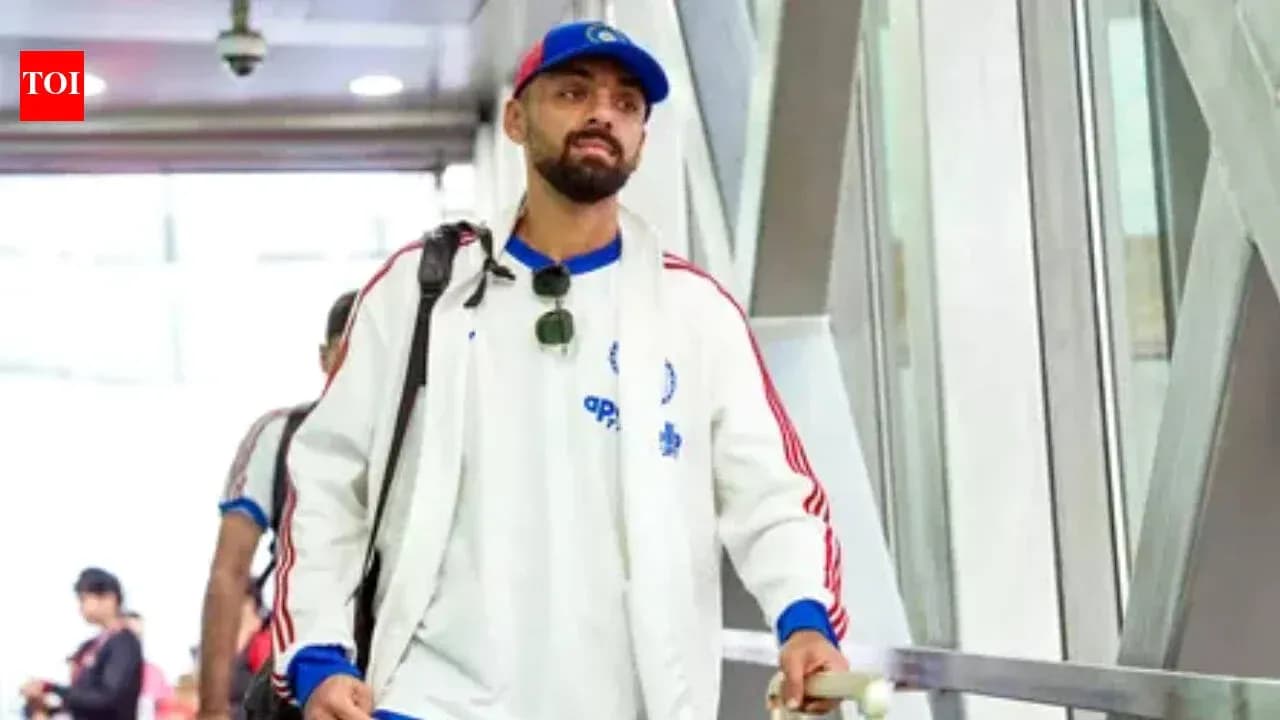
Now fully recovered from the hamstring injury suffered during the England T20I series, he steps back into a crowded calendar: three T20Is against Afghanistan, a historic one-off international against Japan, and then the Asian Games in Aichi-Nagoya, where defending champions India enter straight into the quarterfinals. The schedule is tight. The opportunity, enormous.
The spinner who starts from the feet
Most mystery spinners talk about wrists, fingers, release points. Chakravarthy begins lower. Right at the ground.
"For a bowler, shoes are the biggest equipment they can have. Batters, they have many other equipments, but for a bowler, it's the shoes only," he said.
His partnership with ASICS may sit in the commercial space, but his switch to the brand came earlier, around 2022, long before the formal deal in January 2026. That timing says something. So does the way he breaks down footwear like an engineer studying load-bearing structures.
"As a spinner, your feet start becoming little broader as in it starts changing shape once you pivot because the spinners have to pivot more after landing. So broad shoes in the toe area that is very important," he explained.
He talks of a supportive heel counter, of lighter weight, of how those details translate into balance at the crease and stability through the action. It sounds clinical, almost cold, until you remember his pre-cricket life: an architect who has simply replaced blueprints with bowling plans.
Analytical. Process-driven. Always hunting for tiny improvements that add up over time. That’s his version of flair.
A different kind of tournament, a different kind of curiosity
The Asian Games, starting September 19, offer Chakravarthy something he has never had, even at ICC events: a village full of athletes from every imaginable discipline, all living and preparing side by side.
"It's my first time in Japan. I've never been to Japan and any games also. So all I've played is ICC tournaments and ACC tournaments," he said, the excitement clear.
"I'm very much looking forward to meeting other athletes also from other different sports and all those things."
This is not standard cricketer talk. He isn’t just thinking about nets, match-ups and match days.
"I want to see how a 100-metre athlete prepares himself, how a badminton professional prepares himself or herself," he said.
In a cricket calendar that rarely pauses, that kind of cross-sport curiosity is almost a rebellion. He wants to watch, to learn, to steal ideas from sprinters and shuttlers and whoever else will let him peek behind the curtain.
It might help more than he lets on. The pitches at Korogi Sports Park are expected to behave differently from familiar Indian surfaces. Lengths will shift. Pace off the pitch will change. Pre-set plans won’t last long if conditions don’t match the script. Chakravarthy knows adaptability, not reputation, will decide how India’s bowlers go.
For now, though, the late starter stands at another beginning: body rebuilt, mind sharpened, itinerary packed. At 35, he insists he is only halfway through his story.
Given how long it took him to even reach the first page, who is going to argue with him now?