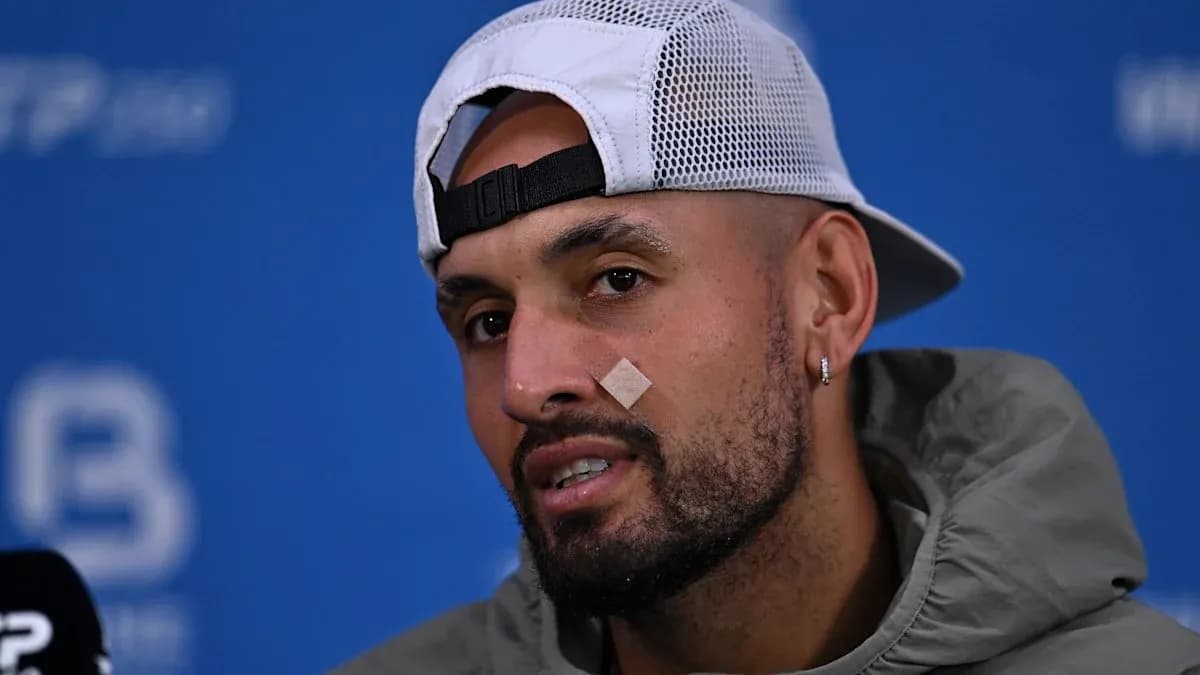
Nick Kyrgios Returns to Tennis After One-Month Ban
Nick Kyrgios is free to return to professional tennis after accepting a one‑month ban for testing positive to cocaine.
The Australian, long one of the sport’s most combustible figures, had been provisionally suspended since August 4. That meant his punishment officially expired on Thursday, clearing the way for a comeback that raises as many questions as it answers.
The International Tennis Integrity Agency (ITIA) confirmed the decision on Friday morning.
Under the terms of the sanction, Kyrgios must complete a treatment program. If he fails to do so, the one‑month ban can be reinstated and the case reopened. The 31‑year‑old tested positive for a metabolite of cocaine during an ATP Tour event in Mallorca in June.
Kyrgios told ITIA investigators he had taken cocaine on a night out before the tournament began, not during competition. The ITIA consulted World Anti-Doping Agency (WADA) scientists, who concluded the level detected in his sample matched that version of events.
That detail proved crucial. Because the drug use was accepted as having occurred out of competition, the integrity body opted for a more lenient penalty. Under WADA rules, the default suspension for this type of violation is three months, but it can be reduced to one if the player agrees to and undertakes a treatment program.
“I made a huge mistake and I take full responsibility for it,” he wrote.
He also opened a window into his mindset, admitting the physical decline that has dragged him away from the top of the sport has been difficult to process.
“My body hasn’t been able to do what my mind expects it to do... Coming to terms with being near the end of my career has been harder than I ever imagined.”
If he hoped for understanding from his peers, it never arrived.
On a tour where memories are long, Kyrgios’ own history of publicly criticising other players who failed drug tests came back at him. Sympathy was in short supply. Former world No.1 Simona Halep was among those to take aim after the news emerged.
At the US Open this week, Stefanos Tsitsipas went a step further, suggesting Kyrgios’ drug use was widely known in locker-room circles. Tsitsipas and Karen Khachanov both said they could not feel sorry for a former rival who had so often been the one casting judgment.
It is a stark comedown for a player who once threatened to tear up tennis’ established order. Kyrgios climbed as high as No.13 in the world and, at Wimbledon in 2022, pushed all the way to the men’s final before losing to Novak Djokovic in a tense, high‑quality contest that seemed to signal a late‑career surge.
Instead, his body broke down. A run of injuries has stripped him of rhythm, relevance and ranking. He now sits at No.918, a number that underlines how far he has drifted from the game’s sharp end.
The ban is over. The treatment program awaits. The real test, though, is whether there is anything left of Nick Kyrgios the contender, or only the echo of what he might have been.