Probst's Battle with ACC Over Rotator Cuff Injury
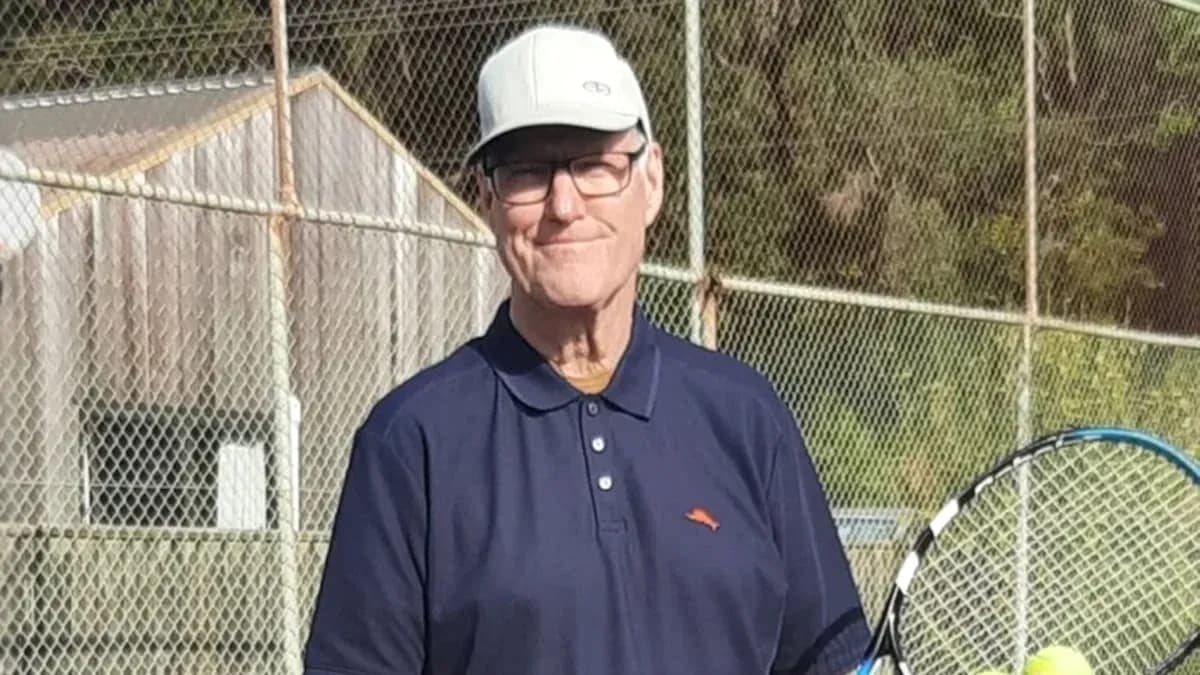
On a summer day in February 2024, in a family doubles match that should have been nothing more than bragging rights and banter, everything changed for Probst on a single serve.
He was three-quarters of the way through the first set, partnering his wife against his daughter and son‑in‑law. A former competitive tennis player, he did what he’s done since childhood: tossed the ball up and went after it. This one, he says, came off the racquet at about 112km/h – noticeably heavier than anything else he’d hit that day.
The moment the ball left the strings, he felt it.
“Right after I hit the serve, I thought, wow, my shoulder hurts.”
He tried to play on. Competitors do. But by the next set, the pain had taken over. He could no longer hit a backhand without wincing. The match ended; the damage didn’t.
Over the following month, as the pain refused to fade, Probst went in search of answers. An X-ray and ultrasound came first, then a consultation with an orthopaedic surgeon. The verdict was clear and harsh: an MRI showed a full-thickness tear of the supraspinatus tendon with 16mm tendon retraction, tendinopathy and muscle atrophy. The surgeon recommended surgical repair.
ACC said no.
In January 2025, the agency declined cover, leaning on advice from its clinical adviser, a physiotherapist. The key point of contention: how the injury happened. The mechanism of injury recorded in the file – “hitting the ball awkwardly and hurting his shoulder” and, elsewhere, “an awkward overhead shot and wrenching his shoulder” – was judged not to involve the sort of unexpected high-energy force usually linked to a traumatic rotator cuff tear.
The physiotherapist also highlighted tendon retraction, tendinopathy, muscle changes and Probst’s age, reading them as signs that degeneration, not a single accident, sat at the heart of the problem.
Probst bristled at that description. To him, it stripped the incident of its violence. It turned a fierce, full-blooded serve into a mishit lob.
He’d spent his life on courts and in pools. Before the injury, he swam three times a week, surfed, paddled, played tennis regularly. He says he had no shoulder issues. Then came that one serve, and everything stopped: tennis, swimming, surfing, paddling, even routine pulling or lifting with his right arm.
He decided to fight the decision himself.
“Because it was wrong,” he said of his choice to keep pushing. “When people are trying to get away with something that is incorrect and take advantage of people’s unwillingness or inability to challenge stuff, that just gets me fired up.”
He took on ACC alone at first, then brought in a lawyer as the case dragged on. The review that followed would prove decisive.
The reviewer sided with him.
After examining the evidence, the review found that Probst’s rotator cuff tear was caused by the February 2024 accident, not wholly or substantially by any pre-existing or degenerative condition. The reasoning cut straight into ACC’s earlier assessment.
The reviewer noted that ACC’s clinical adviser had not properly considered the mechanism of injury as Probst described it. On top of that, the adviser did not have the original ultrasound images or the initial physiotherapy notes when forming his opinion. The picture he worked from was incomplete.
Crucially, the reviewer pointed to the immediate pain Probst felt after the serve and the clear timing between the accident and the onset of symptoms. Here was a man “incredibly active for his age,” with no history of shoulder trouble, suddenly sidelined right after a single, specific incident. The MRI report, the reviewer added, did not show moderate or severe degeneration.
“Ultimately, [the ACC physiotherapist] has misunderstood the mechanism of injury, has commented without a full clinical picture, and has not provided any reasoning on why he considers that the injury was caused wholly or substantially by degeneration, with a no more than minimal contribution by the accident event,” the decision stated.
The reviewer also drew a sharp contrast between the experts. Probst’s orthopaedic surgeon had examined him in person. The physiotherapist had conducted a paper review. On the question of a complex shoulder tear, the reviewer found the surgeon better qualified to give an opinion.
ACC, for its part, acknowledged the complexity.
ACC head of service operations Phil Riley said cases like Probst’s often sit in a grey area.
“Cases like Mr Probst’s, where ACC is assessing whether a condition was caused by an accident or degenerative changes can be clinically complex, and clinical professionals may reach different conclusions despite assessing the same information,” he said.
Riley stressed that treating specialists play an important role, but their views are weighed alongside other medical information, and ACC can seek further specialist advice. He noted that ACC had worked with orthopaedic specialists to develop guidelines “to help support consistent and accurate decision making.”
In Probst’s case, Riley said, ACC had assessed the available clinical evidence – including those guidelines – and initially “were unable to determine that Mr Probst’s condition was caused by his accident.”
The turning point came at the review hearing, where Probst supplied additional information. After that, ACC changed its stance.
“We accept the reviewer’s decision and have approved cover and funded Mr Probst’s surgery,” Riley said.
For Probst, the decision brought relief, but not triumph.
“I was happy that the time and the money that I’d expended, and the mental effort had paid off, that you could prevail against an unjust decision,” he said. “But it is bittersweet because it could have been done a year earlier and I could have risked further injury during that time period.”
The numbers underline why his story matters to others in similar battles. ACC figures show the proportion of rotator cuff surgery purchase orders declined jumped from 22% in 2024 to 35% in 2025. Across all orthopaedic surgery, the decline rate rose from 18% to 26%.
Money, too, left its mark. The reviewer awarded Probst $1218.13 in review costs, yet after ACC’s contribution he still carried $3206.87 in legal bills.
Riley pointed out that reviews themselves are free to lodge. Clients do not need a lawyer, he said, and can represent themselves or lean on an advocate, family member or other representative. ACC may contribute to review-related costs and offers a free Navigation Service for independent guidance and support.
Probst knows many won’t want to go through what he did. He also knows some feel they have no choice.
He chose to speak publicly after hearing from others who believed their ACC claims had been wrongly declined. His message to them is blunt, forged from a year of frustration and a hard-won verdict.
“Challenge it.”