Joe Salisbury Retires: A Great in British Doubles Tennis
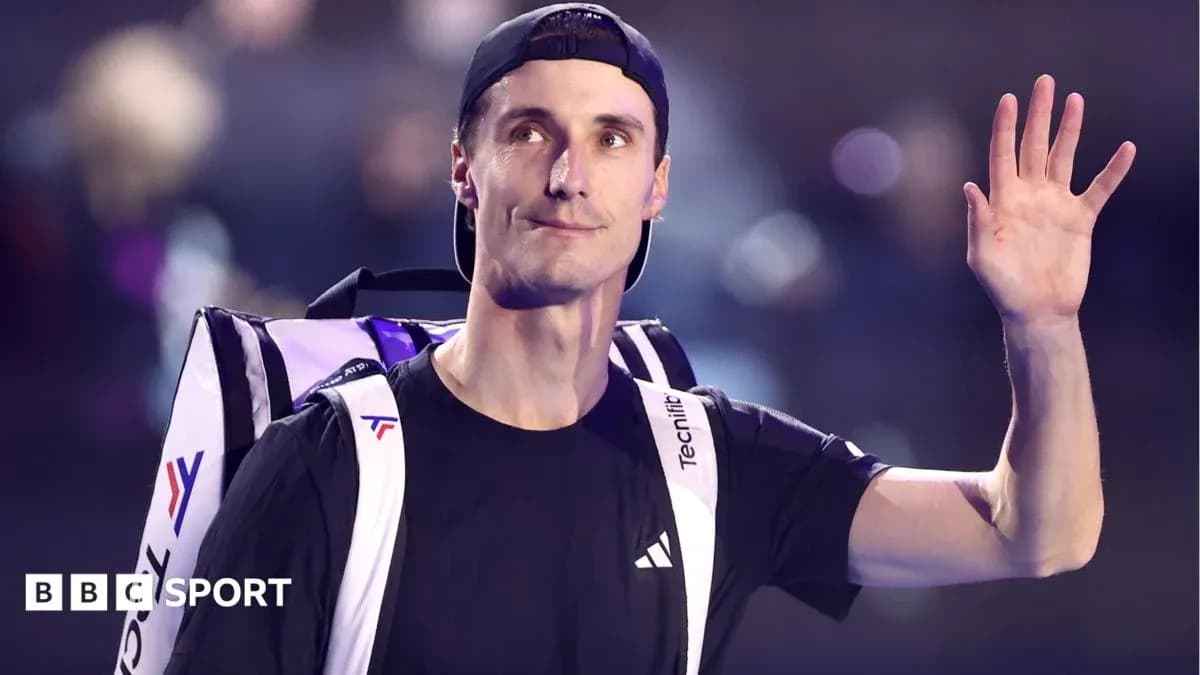
Joe Salisbury walked away from professional tennis in the only place that ever really made sense for his farewell – under the lights of the US Open, with Rajeev Ram by his side.
The 34-year-old Briton, a former world number one in doubles and a six-time Grand Slam doubles champion, chose this year’s tournament in New York as his final event. He and Ram, his long-time partner and friend, pushed through to the semi-finals, one last deep run for a pair that had defined an era on the doubles court.
They leave behind a remarkable imprint on Flushing Meadows. In 2023, Salisbury and Ram became the first team in history to win three consecutive US Open men’s doubles titles, a streak that elevated them from a successful duo to a reference point in the modern game. The Arthur Ashe night sessions, the roars from the stands, the pressure points at the business end of the fortnight – that was their stage.
Salisbury’s record stands up to any scrutiny. He retires as Britain’s most successful men’s doubles player of the Open Era, a status built not on a single purple patch but on sustained excellence. Alongside Ram, he captured the 2020 Australian Open men’s doubles crown, then added two mixed doubles titles with Desirae Krawczyk to round out his Grand Slam collection.
Seventeen tour-level titles tell one story. The back-to-back triumphs at the season-ending ATP Finals in 2022 and 2023 tell another. Winning in November, against the very best pairs, when everyone knows everyone else’s patterns and weaknesses, is the hallmark of a complete doubles player. Salisbury and Ram kept finding answers.
The decision to stop did not arrive overnight. Salisbury has spoken openly about weighing up his future and about the strain that life on tour had begun to exert. Earlier this year he stepped away for three months, explaining to BBC Sport that anxiety had crept into his travelling life, bringing with it what he described as a “feeling of dread” on the road, even if he did not believe it had significantly damaged his tennis.
For an athlete whose job demands constant movement – new city, new hotel, new court – that feeling cuts deep. The rankings don’t show it. The trophies don’t explain it. But it shapes the person carrying the racquet.
By the time he announced his retirement, Salisbury sounded at peace with what came next. He described himself as “very happy with the decision” and used his Instagram post to look back without bitterness or doubt.
“Tennis has been my life for as long as I can remember and I have been incredibly fortunate to have had all the opportunities, experiences and success that I have,” he wrote, reflecting on a career that took him around the world and into the sport’s most prestigious arenas. “To be able to travel the world and call playing tennis my job has been a dream come true and I never believed I could have lived the life and had the career that I have.
“I gave it my all and know I can be proud and look back with no regrets.”
That last line lands with particular weight. Doubles players often operate in the shadows of the singles stars, yet Salisbury carved out a career that demands recognition in its own right. He turned a specialist’s craft – the sharp volley, the quick read at the net, the understanding of angles and space – into a pathway to the very top of his discipline.
There will be debates about where he ranks among Britain’s greats in the team format, but the numbers are stubborn. World number one. Six majors. Seventeen titles. Two ATP Finals crowns. Three straight US Opens in men’s doubles, a feat no one had achieved before.
He leaves with his legacy intact, his partnership with Ram etched into the recent history of the sport, and his own sense of timing preserved. Not dragged out. Not forced. A champion choosing his moment.
The next chapter belongs to him now, away from the constant churn of airports and practice courts. The record books already know what he did. The question that remains is how long it will be before Britain sees another doubles player scale those same heights.